
Understanding What 'Affordable Non-Toxic' Actually Means for Menopausal Skin
The clean beauty market creates confusion by conflating 'non-toxic' with 'effective,' while menopausal skin needs both affordability and performance that conventional brands rarely deliver together. True non-toxic makeup avoids parabens, phthalates, synthetic fragrances, and hormone disruptors—ingredients particularly problematic during hormonal transitions. However, 'organic' certification focuses on agricultural sourcing, not skin compatibility, meaning organic products can still irritate menopausal skin or perform poorly despite clean ingredients.
The affordability challenge intensifies because clean formulations typically cost more to develop and source. Brands charging $45+ for foundation justify prices through marketing rather than ingredient cost—many budget options use identical clean ingredient suppliers. For menopausal skin specifically, you need formulas that address declining collagen and reduced sebum production while avoiding irritants, making product selection more nuanced than simply choosing the cheapest 'organic' label. Understanding these distinctions prevents wasting money on ineffective products that meet clean standards but fail on aging skin.
The science matters here: menopausal skin becomes 30% thinner and more permeable, meaning ingredients absorb more readily—both beneficial actives and potential irritants. This physiological change makes clean beauty more relevant than marketing hype suggests, but only if products actually perform. Explore comprehensive guidance in our complete makeup guide for menopausal skin changes.
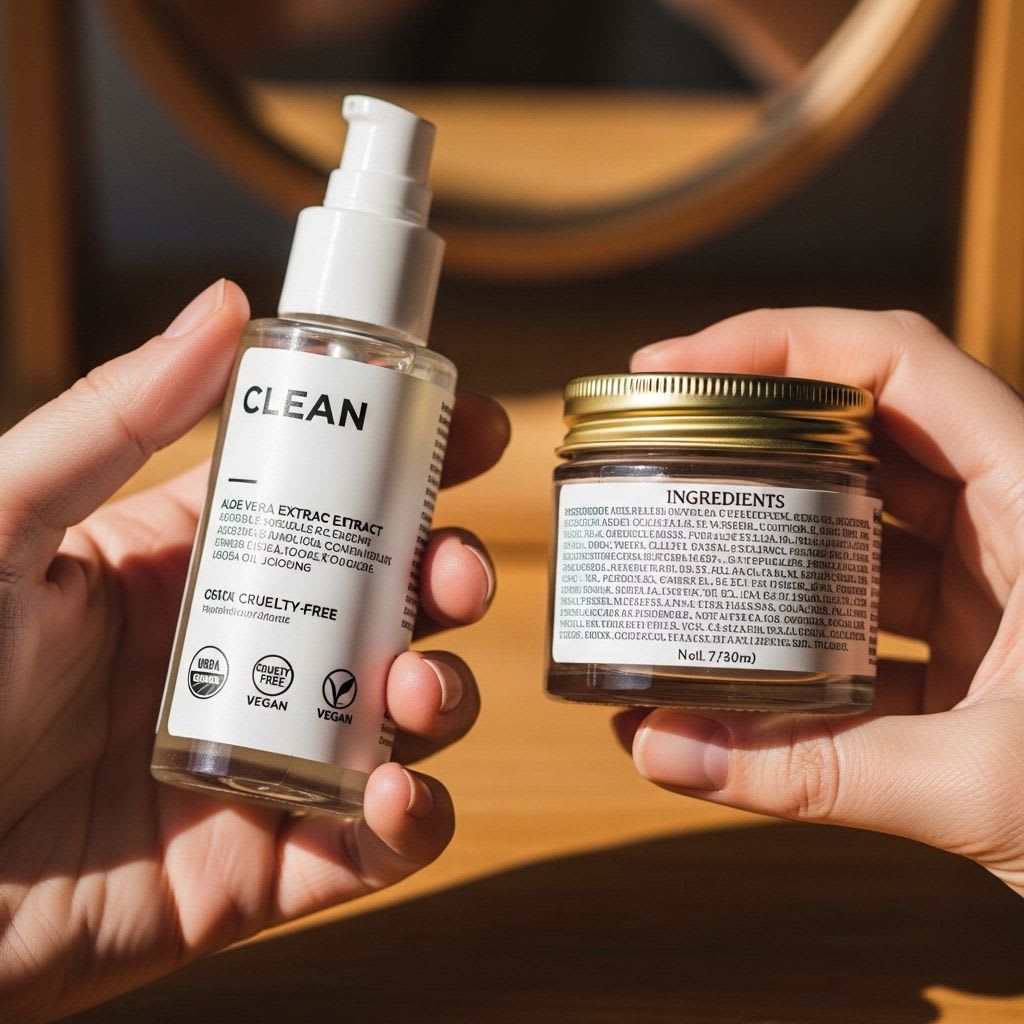
Common Myths About Budget Clean Beauty and What Research Shows
Myth: Affordable Clean Makeup Can't Perform as Well as Luxury Brands
The perception that effective non-toxic makeup requires luxury pricing stems from marketing, not formulation science. Many affordable clean brands source from the same ingredient suppliers as high-end competitors—the price difference reflects packaging, retail placement, and advertising budgets rather than formula quality. For menopausal skin specifically, performance depends on hydrating bases and light-reflecting pigments, both available at multiple price points.
What actually matters: ingredient concentration and formula stability, not brand prestige. A $15 clean foundation with hyaluronic acid and mineral pigments can outperform a $60 option that prioritizes exotic botanical extracts over functional hydration. The contradiction is that luxury clean brands often include unnecessary botanical ingredients to justify pricing, while budget options focus on proven actives that benefit aging skin. Testing reveals comparable wear time and coverage when formulas address menopausal skin's core needs—moisture retention and non-settling pigments.
Myth: 'Organic' Automatically Means Better for Sensitive Menopausal Skin
Organic certification addresses agricultural practices, not skin reactivity—many organic ingredients like essential oils and plant extracts trigger sensitivity in menopausal skin more than synthetic alternatives. The declining estrogen that makes skin thinner also compromises its barrier function, meaning organic fragrance compounds can cause irritation despite their natural origin. Women report reactions to certified organic makeup containing lavender oil or citrus extracts while tolerating synthetic fragrance-free formulas perfectly.
The evidence shows that fragrance-free and minimal-ingredient formulas outperform heavily botanical organic products for reactive menopausal skin. A clean makeup with 12 synthetic-but-safe ingredients often causes fewer issues than an organic product with 40 plant extracts. This isn't an argument against organic—it's recognition that certification doesn't equal compatibility. For budget shopping, prioritize ingredient simplicity over organic labels, especially if you experience increased skin sensitivity during hormonal changes. Learn more about suitable formulas in our guide to clean makeup for mature skin.
Practical Strategies for Finding Affordable Clean Makeup That Works
Prioritize These Three Product Categories for Maximum Impact
Budget constraints require strategic choices—some clean swaps matter more for menopausal skin than others. Foundation, concealer, and mascara deserve investment in non-toxic formulas because they contact large skin areas, stay on for hours, and with mascara, sit near mucous membranes. These three products create the most exposure to potentially problematic ingredients while also requiring performance on changing skin texture.
For other categories, conventional options may suffice until budget allows expansion. Eyeshadow and lip color involve smaller quantities and less skin contact, making them lower priority for clean swaps unless you experience specific reactions. This staged approach lets you invest in quality non-toxic base products that genuinely improve how makeup wears on menopausal skin, rather than spreading budget across products where clean formulation matters less.
Decode Ingredient Lists Rather Than Trusting Marketing Claims
Affordable clean makeup often lacks the marketing polish of luxury brands, requiring you to evaluate ingredients directly. Look for foundations listing hyaluronic acid, glycerin, or squalane in the first seven ingredients—these provide the hydration menopausal skin needs. Avoid products with 'fragrance' or 'parfum' listed anywhere, as these terms hide proprietary blends that commonly irritate sensitive skin.
For pigments, mineral-based options (iron oxides, titanium dioxide, mica) prove safer and more stable than synthetic dyes, though both can be non-toxic depending on processing. The practical difference for aging skin is that mineral pigments tend to sit better on textured skin without emphasizing wrinkles. Budget brands increasingly use these same minerals, making ingredient reading more valuable than brand recognition. Beginners often overlook that ingredient order matters—a product listing hyaluronic acid as the twentieth ingredient provides minimal hydration despite the marketing claim.
When Budget Clean Beauty Fails: The Performance Trade-Off
The honest limitation: some affordable clean makeup performs poorly on menopausal skin despite safe ingredients. Budget formulas may lack the sophisticated delivery systems that keep hydrating ingredients stable and effective throughout wear. This manifests as foundation that separates within hours, concealer that settles into fine lines, or cream products that feel dry despite containing oils.
The trade-off becomes personal: do you value clean ingredients over all-day wear, or is performance non-negotiable? Some women accept touching up clean makeup twice daily rather than using longer-wearing conventional formulas. Others find this impractical and invest in one or two higher-priced clean products for base makeup while using affordable options for color cosmetics. There's no universal right answer—your hormonal symptoms, skin reactivity, and lifestyle determine the optimal balance between clean ingredients, affordability, and performance on menopausal skin.