Why Your Concealer Makes Blemishes More Obvious
The best concealer for blemishes faces a paradox that most formulas fail to solve: it must provide enough coverage to hide redness and discoloration while remaining thin enough not to emphasize the three-dimensional texture that active breakouts create. Standard concealers are designed for flat discoloration like dark circles or hyperpigmentation—when applied to raised, inflamed blemishes, they create a highlighted bump effect where the concealer catches light on the elevated surface, making the pimple more noticeable than bare skin would. Additionally, most concealers contain oils or emollients for blendability that can clog pores and worsen breakouts, creating a cycle where your coverage product actively contributes to new blemishes.
Here's what dermatologists understand about best concealer for covering acne that beauty marketing rarely explains: effective blemish concealment requires a three-step approach rather than single-product coverage. First, color correction neutralizes the redness or purple inflammation that makes blemishes visible. Second, targeted concealer application covers the corrected area without spreading product onto surrounding clear skin. Third, strategic powder setting prevents the concealer from sliding off the oils that inflamed skin produces while healing. Skipping any of these steps—particularly color correction, which most people ignore—is why your concealer looks obvious and fails to provide lasting coverage on active breakouts.
The critical factor most advice misses: best concealer for red spots must contain treatment ingredients alongside coverage pigments. Concealers with salicylic acid, sulfur, or tea tree oil actively treat the blemish while covering it, reducing inflammation and speeding healing so you need less concealer with each passing day. These medicated concealers cost more but deliver dual benefits—immediate cosmetic improvement plus therapeutic action that conventional concealers lack. Over time, consistent use of treatment concealers can actually reduce breakout frequency and severity, making them investment pieces rather than just cosmetic band-aids for ongoing skin issues.
The Green Corrector Secret for Red Blemishes
Red, inflamed blemishes require green color correction before any concealer application—this is the non-negotiable step that transforms results but gets skipped because it seems complicated. The red pigmentation in inflamed acne cannot be adequately covered by skin-toned concealer alone without using so much product that you create an obvious cakey spot. Instead, apply a small amount of green corrector precisely on the red area using a tiny brush or cotton swab. The green neutralizes the red through color theory, allowing your concealer to work as true coverage rather than having to fight underlying inflammation color. You'll need significantly less concealer and achieve more natural-looking results.
For purple or dark post-inflammatory marks, yellow or peach corrector works more effectively than green. These darker marks that linger after active breakouts heal contain different pigmentation requiring different color cancellation. What professional makeup artists know about spot cover up makeup is that matching the corrector to the exact undertone of your blemish matters more than the concealer shade itself. A correctly color-corrected blemish needs only minimal concealer for perfect coverage, while incorrect or skipped color correction requires heavy concealer that inevitably looks obvious and cakey.

Which Concealer Formulas Work for Different Acne-Prone Skin Types
The best concealer for oily skin with breakouts requires mattifying properties without the heavy silicones that can trap oil and create congestion. Look for formulas explicitly labeled non-comedogenic that use oil-absorbing ingredients like kaolin clay, silica, or rice powder to control shine throughout the day. These concealers feel drier during application than traditional creamy formulas but maintain their coverage as your natural oils emerge, whereas emollient-rich concealers slide off oily skin within hours. The texture may seem less luxurious, but the performance on oily, blemish-prone skin dramatically outperforms conventional concealers that weren't engineered for your specific skin behavior.
For best concealer for dry acne prone skin specifically—a combination that happens frequently during hormonal fluctuations or when using drying acne treatments—you need formulas that provide hydration without comedogenic oils. Concealers containing hyaluronic acid, glycerin, or squalane deliver moisture that prevents flaking around blemishes while maintaining coverage. These hybrid formulas are harder to find because most blemish concealers assume oily skin, but they're essential if you're using retinoids, benzoyl peroxide, or other treatments that compromise your moisture barrier while treating breakouts. Without adequate hydration, concealer emphasizes the dry, flaky texture around healing blemishes, making them more visible.
- Matte concealers with salicylic acid: Best for oily, acne-prone skin; treats while covering and controls shine without sliding
- Hydrating concealers with non-comedogenic oils: Ideal for dry, acne-prone skin using drying treatments; prevents flaking around blemishes
- Serum concealers with lightweight coverage: Excellent for combination skin; buildable coverage that doesn't emphasize texture in dry zones
- Green color correctors: Essential first step for all red, inflamed blemishes regardless of skin type
- Avoid: Heavy cream concealers with oils: Clog pores, worsen breakouts, and slide off oily zones while looking cakey on textured blemishes
The best concealer for combination skin with blemishes requires a zoned approach rather than one-formula-fits-all. Use mattifying, oil-controlling concealer on breakouts in your T-zone where oil production triggers acne. Use hydrating concealer on blemishes in drier areas like your cheeks or jawline where breakouts might stem from barrier disruption rather than excess oil. This targeted strategy accommodates combination skin's unpredictable behavior and prevents the common mistakes of over-drying already-dry areas or adding oils to already-oily zones. Yes, it means owning two concealers, but the improvement in how makeup performs on your specific skin pattern makes the investment worthwhile.
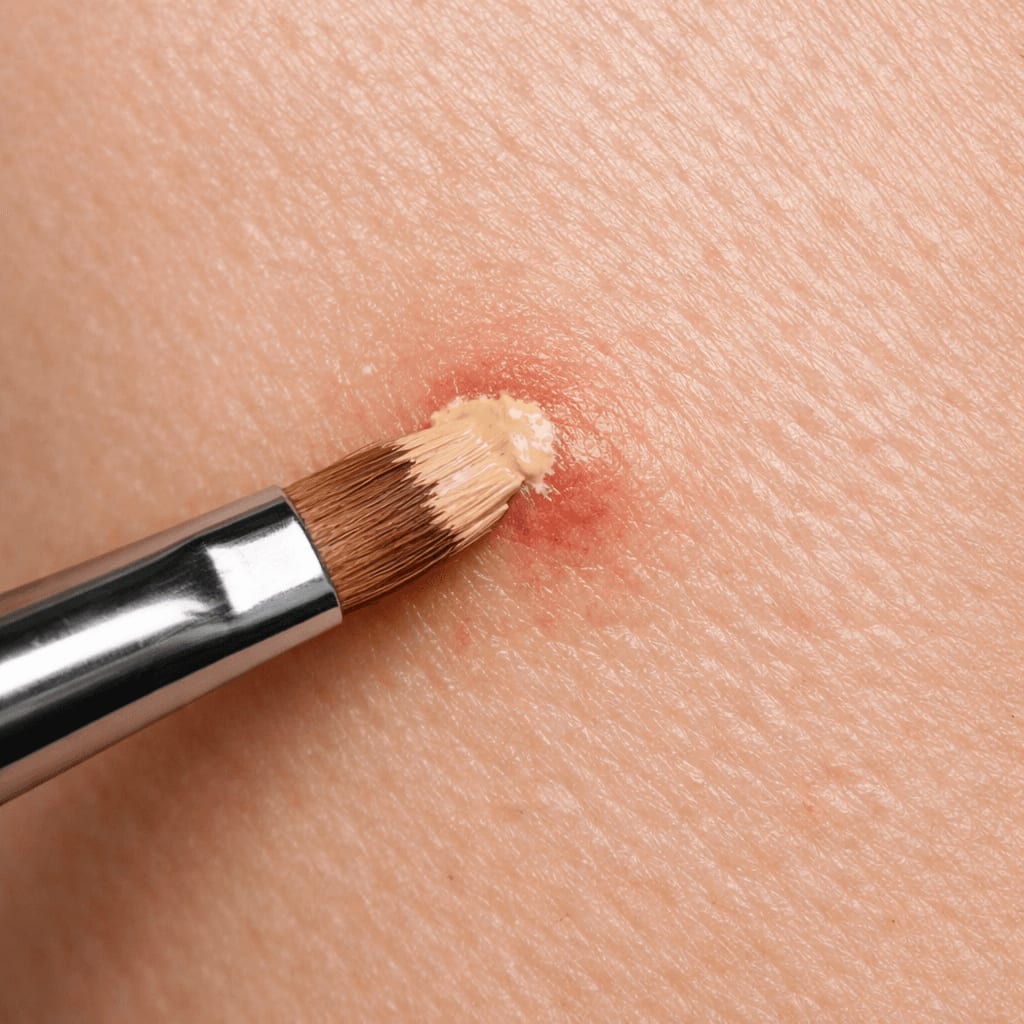
Application technique matters as much as formula choice for best spot concealer results. Use a small, firm synthetic brush to place concealer precisely on the blemish after color correction, building coverage through multiple thin layers. Avoid the common mistake of spreading concealer in a large circle around the blemish—this wastes product and creates an obvious patch. Instead, keep concealer only on the actual discolored or raised area, blending just the very edges with a gentle patting motion. This precise placement ensures only the blemish gets covered while surrounding clear skin remains natural, preventing the obvious concealer-spot appearance that happens with over-application.
If hormonal changes are contributing to your breakouts, particularly during perimenopause when fluctuating estrogen triggers adult acne patterns, explore our guide to skincare for oily menopausal skin that addresses the underlying causes of hormonal breakouts alongside coverage strategies.
When Standard Blemish Concealer Advice Completely Fails
The universal recommendation to use full-coverage concealer on all blemishes fails for textured, bumpy skin because heavy coverage emphasizes three-dimensional irregularities rather than hiding them. The best concealer for bumpy skin with active breakouts actually requires medium coverage applied in strategic layers after aggressive color correction. The color correction does most of the visual minimizing work by neutralizing redness, allowing lighter concealer to complete the coverage without the heavy buildup that highlights texture. For severely textured acne, skip concealer on the raised portions entirely and focus only on color-correcting and concealing the flat red areas around bumps, which creates better overall camouflage than attempting to cover texture with thick product.
Another scenario where conventional wisdom backfires: the advice to use the same concealer shade as your foundation for blemish coverage. This recommendation ignores that inflamed skin often has warmer undertones than your overall complexion due to increased blood flow. Matching concealer exactly to your foundation on warm-toned inflamed blemishes can create an ashy, gray cast that makes the blemish more obvious. For red, inflamed breakouts, choose concealer with yellow undertones slightly warmer than your foundation, which counteracts residual redness that color corrector doesn't fully neutralize and creates more seamless blending with your natural skin tone.
The critical contradiction between beauty tutorials and real acne coverage: those dramatic Instagram transformations showing complete blemish disappearance use professional lighting, filters, and often additional photo editing that doesn't reflect real-world appearance. In natural lighting with normal face movement, even perfect concealer application will show some shadowing or texture on severely inflamed or raised blemishes. The goal should be minimizing visibility to the point where blemishes blend into your overall complexion rather than being immediately noticeable, not achieving the impossible standard of photographic invisibility that requires post-production manipulation to achieve.
What actually fails that nobody discusses: assuming best concealer for oily skin with full coverage means loading on product until the blemish disappears. On oily skin, heavy concealer application breaks down rapidly as oils dissolve the product, creating patchy, separated coverage within hours. Instead, use thin layers of mattifying concealer over properly color-corrected blemishes, setting thoroughly with powder between layers. This builds transfer-resistant coverage that grips oily skin rather than sliding off, and it maintains coverage throughout the day because each thin layer has properly set rather than remaining mobile and prone to separation.
The hidden challenge with blemish concealment during hormonal fluctuations: your skin's oil production, pH, and inflammatory response change throughout your cycle, meaning the concealer that worked perfectly last week might fail this week. Women in perimenopause experience particularly unpredictable skin behavior as hormone levels fluctuate wildly, sometimes requiring different concealer formulas during different phases of their cycle. Keep both mattifying and hydrating concealer options available rather than assuming one product will work consistently, and adjust your approach based on your skin's current state rather than following a rigid routine that doesn't accommodate hormonal variability.
For those prioritizing clean, non-toxic ingredients while managing acne-prone skin, particularly during hormonal transitions when sensitivity increases, explore our guide to clean makeup for mature skin that addresses ingredient safety alongside effective coverage for changing skin concerns.