
Why Finding Concealer for Dark Skin Is Uniquely Challenging
The search for the best concealer for dark skin reveals a systemic failure in the beauty industry that extends far beyond limited shade ranges. While brands have expanded their offerings in recent years, most still approach dark skin as an afterthought—adding deeper shades to existing formulas rather than developing products specifically designed for melanin-rich skin's unique characteristics. Dark skin has distinct properties: higher melanin content provides natural UV protection and antioxidant benefits, but also means hyperpigmentation from inflammation or hormonal changes appears more prominently and persists longer. Additionally, the undertone complexity in dark skin surpasses what most brands acknowledge—you're not simply warm, cool, or neutral, but often a combination that shifts depending on the specific area of your face.
What dermatological research reveals about good concealer for brown skin specifically after 40: melanin-rich skin ages differently than lighter skin, showing less visible wrinkling but more pronounced discoloration as hormonal changes occur. During menopause, estrogen decline triggers increased melanin production in some areas while depleting it in others, creating uneven tone that standard concealers can't address because they're formulated with a single undertone assumption. Your under-eye circles might have purple-blue undertones, while your hyperpigmentation reads as warm brown or reddish, requiring completely different corrector shades—yet most tutorials show one concealer application for all concerns.
The critical issue that standard shade-matching advice ignores: dark skin rarely matches foundation and concealer from the same shade family because facial areas oxidize differently. Your foundation might be a perfect match on your jawline, but that same depth concealer looks ashy under your eyes where skin is thinner and undertones show differently. This means finding a good concealer for dark skin requires understanding that concealer depth and undertone often need to be different from your foundation, not matched to it. For comprehensive guidance on makeup during hormonal changes, see our complete makeup guide for menopausal skin changes.
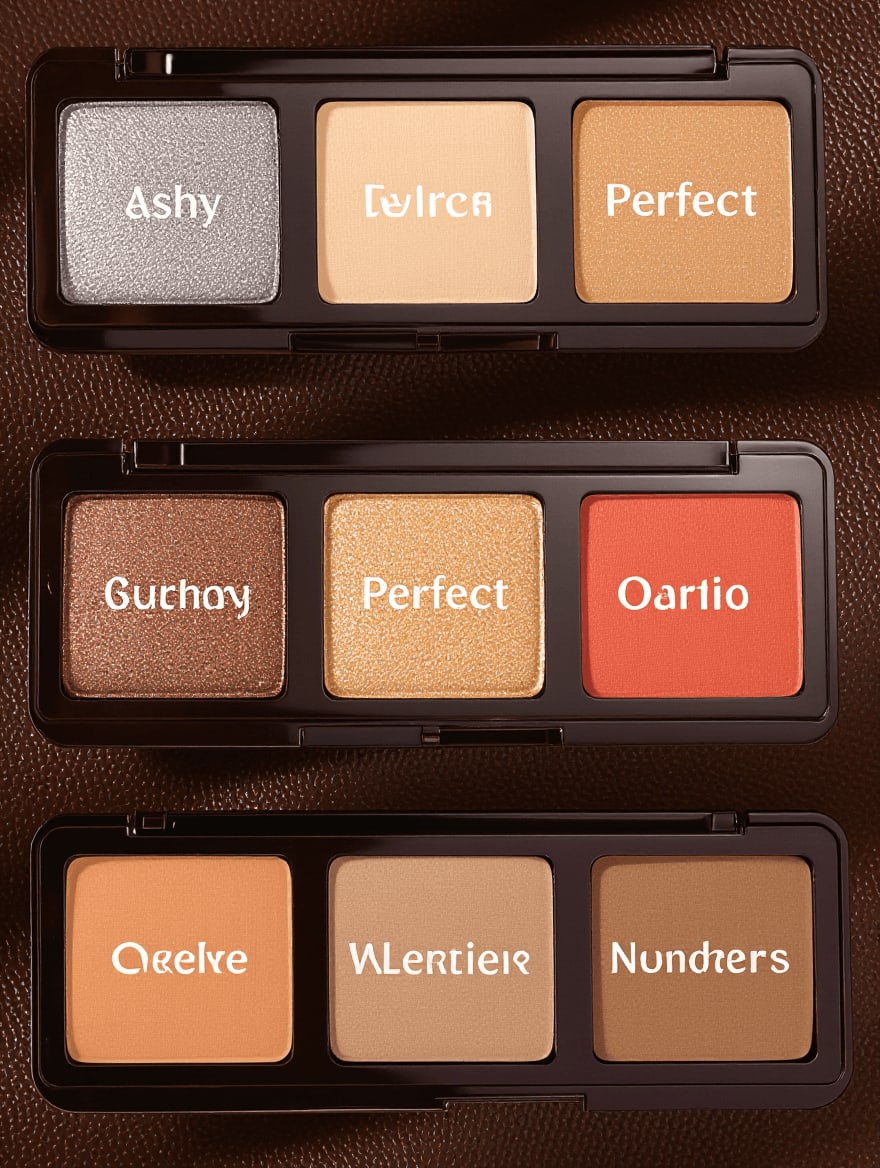
The Concealer Myths Keeping You From Your Perfect Match
Myth 1: Go Two Shades Lighter for Brightening
The ubiquitous advice to use concealer two shades lighter than your foundation creates the most common mistake in dark skin makeup: the dreaded gray cast or ashy appearance under eyes. This guidance was developed for light-to-medium skin tones where two shades lighter still contains enough pigment to look natural. On dark skin, going two shades lighter often means crossing into a completely different undertone family—you move from golden-brown to beige-gray, or from rich espresso to muddy taupe. What experienced practitioners do differently is match concealer to the area you're concealing, not to your foundation, and create brightness through undertone correction and light-reflecting particles rather than simply going lighter in depth.
Myth 2: Orange Corrector Works for All Dark Circles
Here's what beginners misunderstand about color correction for dark skin: the advice to use orange or red correctors assumes your dark circles have blue-purple undertones. But on melanin-rich skin, dark circles often present as brown hyperpigmentation rather than vascular darkness, particularly after 40 when hormonal changes increase melanin production in the under-eye area. Orange corrector on brown darkness creates a muddy, unnatural result. The contradiction between standard advice and reality shows that many dark-skinned women need peach or salmon correctors for vascular darkness, but require brightening concealers without correctors for hyperpigmentation-based darkness. Some need different approaches for each eye depending on where melanin has concentrated.
Myth 3: Full Coverage Concealer Is Always Better
The misconception about coverage intensity: heavy, full-coverage concealers promise to hide all discoloration in one application, which sounds ideal when dealing with significant hyperpigmentation common in mature dark skin. But what actually happens is that thick concealer creates distinct edges that are more noticeable on dark skin's natural depth variation, emphasizes texture on areas where mature skin has thinned, and often oxidizes throughout the day to become even more orange or gray than initial application. The trade-off that professionals understand is that medium coverage applied in strategic layers provides better real-world results—it allows you to build coverage only where needed, maintains skin texture visibility so makeup doesn't look mask-like, and adapts better to the oxidation that happens more noticeably on dark skin.
The Complete Strategy for Finding Your Perfect Concealer
The most effective approach to concealer selection for dark skin requires understanding that you likely need multiple concealers serving different purposes, not one universal shade. Your under-eye area, hyperpigmentation spots, blemishes, and areas of redness each may require different undertones and depths to correct properly. This represents a significant investment compared to the one-concealer approach that works for lighter skin tones, but it's the only way to achieve natural-looking coverage that doesn't create the patchwork effect common in dark skin makeup gone wrong.
Your essential concealer wardrobe should include:
- Under-eye concealer with peach or salmon undertones: Choose a shade that matches your under-eye area when you press it gently—this reveals the true color beneath surface darkness. The undertone should neutralize the blue or purple cast if you have vascular darkness. Look for formulas with light-reflecting particles that create brightness optically rather than through stark color contrast. Hydrating formulas prevent creasing on the delicate under-eye area.
- Spot concealer that matches your foundation exactly:For covering blemishes, acne scars, and areas of inflammation, you need a concealer that disappears into your foundation seamlessly. This should have medium-to-full coverage and a formula firm enough to stay put on raised texture. Avoid anything too emollient which will slide off throughout the day.
- Brightening concealer one shade lighter with neutral undertones:This is specifically for strategic highlighting—center of forehead, bridge of nose, chin, cupid's bow. Going only one shade lighter and maintaining undertone consistency prevents the ashy appearance that plagues dark skin when following standard highlighting advice. Use this sparingly and blend thoroughly.
Application technique matters as much as shade selection. Always apply concealer to moisturized skin—dark skin shows dryness and flaking more prominently than light skin, and concealer emphasizes any dehydration. Use a small concealer brush or your ring finger to press product into skin rather than swiping across it, which disturbs foundation underneath. Build coverage gradually with thin layers rather than attempting full opacity in one application. Set only the under-eye area with translucent powder if needed, avoiding powder on hyperpigmented areas which can appear chalky. For ethically-sourced concealer options, explore our guide to cruelty-free vegan makeup for mature skin.
When Standard Concealer Approaches Fail
Here's the edge case that derails even expert shade-matching: some women with dark skin experience such extreme oxidation that concealer shades appearing perfect in-store or upon initial application turn noticeably orange, gray, or ashy within 2-3 hours as the formula interacts with their specific skin chemistry. This happens more frequently on mature dark skin during hormonal fluctuations, when pH changes and increased inflammation alter how products react with melanin. Standard advice assumes concealer will maintain its initial appearance or darken slightly—it doesn't account for the dramatic color shifts some dark-skinned women experience. The solution requires testing concealers for their end-state color, not their initial appearance: apply in-store and wait at minimum 30 minutes before purchasing, ideally returning several times throughout the day to observe changes. Request samples whenever possible and test at home for a full 8-hour wear period. Additionally, some women discover that certain undertone families oxidize worse than others on their specific skin—for instance, yellow-based concealers might turn orange while red-based ones stay true, or vice versa. This requires systematic testing across undertone categories, not just depth variations. The limitation is that this process demands significant time investment and often means purchasing multiple products that ultimately don't work before finding one that does. Unlike lighter skin where concealer matching is relatively straightforward, dark skin concealer selection can require months of trial and dozens of products to identify formulas that maintain integrity on your specific chemistry. Some women find this journey frustrating enough that they abandon concealer entirely, using only foundation and accepting less coverage. Others invest in custom-blended concealers from specialized retailers, which provide perfect matches but at significant cost. Neither solution is ideal, but both represent pragmatic responses to an industry that still hasn't adequately addressed the concealer needs of mature women with dark skin. The reality is that until brands formulate specifically for melanin-rich skin's oxidation patterns rather than simply expanding shade ranges of existing formulas, finding the perfect concealer for dark skin will remain more challenging and expensive than it should be.