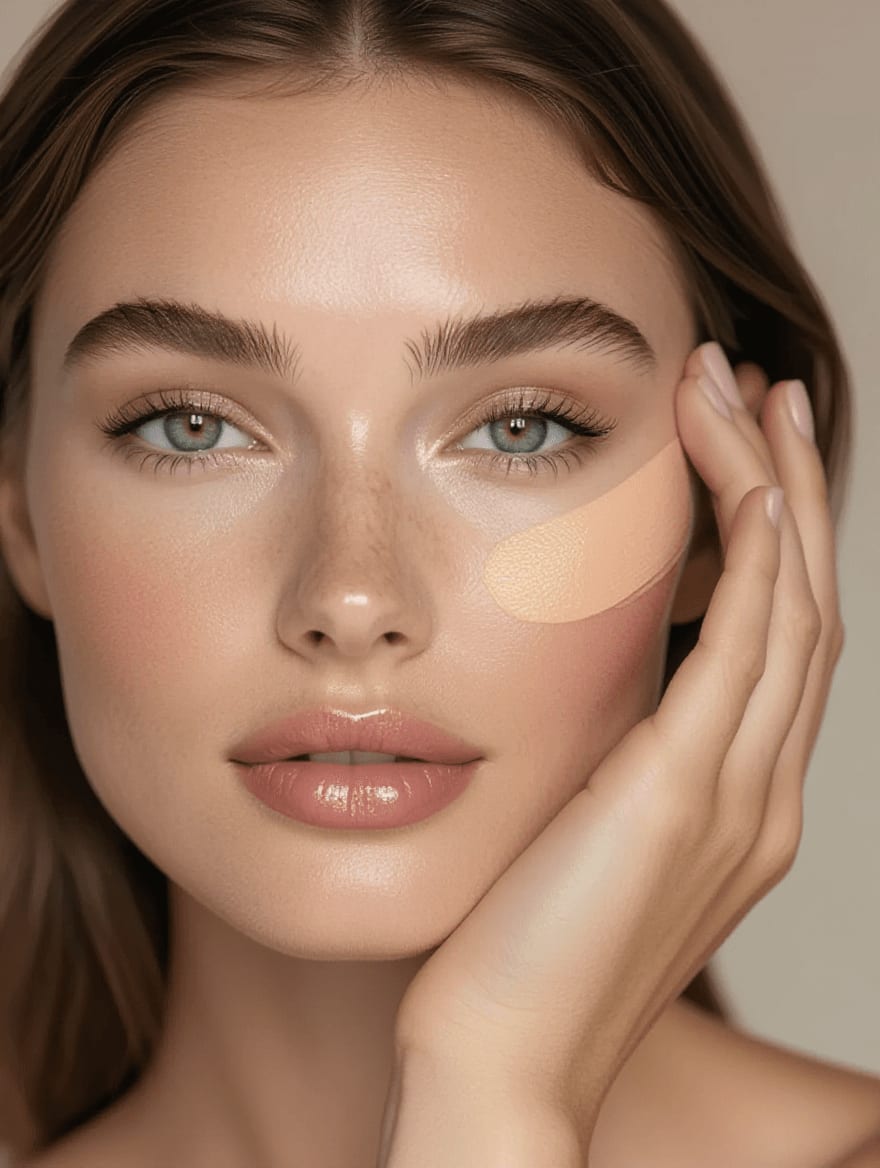
Why Finding Concealer for Fair Skin Is Uniquely Difficult
Women with fair to pale skin face a frustrating paradox: most makeup lines offer multiple "light" shades, yet almost none actually match. The industry standard for fair concealer remains 2-3 shades too dark or wrong in undertone, forcing pale-skinned women to choose between concealers that oxidize orange within hours or formulas so pink they look like salmon against natural skin. This isn't about being "hard to match"—it reflects how shade ranges are developed using medium skin as the baseline, then extrapolating lighter shades by simply adding white pigment without adjusting undertone complexity.
Fair skin presents additional challenges that darker shades mask more easily. Every undertone mismatch becomes immediately visible because there's minimal melanin to blend discrepancies. The same concealer that looks natural on medium skin appears stark and obvious on pale skin, where the contrast between covered and uncovered areas is dramatic. Additionally, fair skin often correlates with increased translucency—you can see blood vessels, redness, and discoloration more clearly, which means concealer must not only match the surface tone but also neutralize what shows through from beneath.
The situation worsens after 40 when hormonal changes affect both skin tone and texture. Menopause often shifts undertones cooler as blood flow changes, making previously acceptable concealers suddenly appear yellow or peachy. Simultaneously, thinning skin increases translucency while developing texture that emphasizes formula choice. What worked in your 30s likely needs replacement. Learn how menopause affects your entire makeup approach in our complete makeup guide for menopause.

Common Myths About Concealer for Pale Skin
Myth 1: Always Choose the Lightest Shade Available
The assumption that fair-skinned women should automatically select shade 1 or "porcelain" creates more problems than it solves. Many brands make their lightest shade extremely pink or neutral-cool, assuming all pale skin shares the same undertone. In reality, fair skin spans the full undertone spectrum—cool pink, neutral, warm yellow, and even olive-fair combinations exist. A fair woman with yellow undertones wearing the palest available pink concealer looks worse than wearing a slightly darker shade in the correct undertone. The key is matching undertone first, depth second, which sometimes means bypassing the lightest option entirely.
Myth 2: Full Coverage Is Better for Hiding Dark Circles
Heavy, full-coverage concealer paradoxically makes under-eye darkness more obvious on fair skin because the stark contrast between concealed and unconcealed areas draws attention to exactly what you're trying to hide. Fair skin shows every edge and transition, so thick concealer creates a visible "mask" effect. The professional approach involves buildable, medium-coverage formulas applied in thin layers—this allows gradual color correction while maintaining skin-like translucency. Additionally, full-coverage concealers contain more pigment and oils that commonly oxidize, which is why that perfect morning match turns orange by afternoon on pale skin.
The Undertone Reality Nobody Explains
Most undertone advice oversimplifies fair skin into pink versus yellow, but the truth is more complex. Many fair-skinned women have neutral undertones with regional variation—their face might read pink from redness and broken capillaries while their neck and chest are yellow-neutral. Others have olive undertones despite fair depth, meaning they need green-tinged concealers that most "fair" ranges completely lack. This is why the vein test and jewelry tests often contradict each other on fair skin—you're likely dealing with mixed undertones that require custom mixing or strategic layering of different concealer tones rather than a single perfect match.
Practical Selection Strategies That Actually Work
The Jawline Test for True Undertone Matching
Skip the wrist and test concealer where it actually matters: along your jawline in natural daylight. Apply three different undertones—one pink, one neutral, one yellow—and photograph them after 2-3 hours. The correct match will have disappeared into your skin while incorrect undertones remain visible as distinct stripes. This method accounts for oxidation, which is critical for fair skin where color shifts are dramatic. If all three look wrong, you likely need to mix shades or try a different formula entirely—some concealers simply don't formulate well for the palest end of the spectrum and will never match regardless of shade number.
Formula Selection by Skin Texture and Age
For fair skin under 35 with minimal texture, liquid or serum concealers provide buildable coverage that photographs well and layers easily with other products. However, after 40 or when fine lines develop, these same formulas settle into creases and emphasize texture. Mature fair skin benefits from hydrating cream concealers with light-reflecting particles—not shimmer, but subtle luminosity that diffuses the appearance of fine lines. The formula should feel almost balm-like when warmed between fingers, indicating enough emollients to prevent the caking that happens when dry concealer meets dry mature skin.
- For pink fair skin: Look for descriptors like "porcelain," "fair cool," or "N0" numbering systems; avoid anything labeled "warm" as it will oxidize peachy
- For neutral fair skin: Seek "fair neutral" or "fair beige" shades; test both cool and warm options as neutral can shift either direction depending on lighting
- For yellow-fair or olive-fair skin: Choose "fair warm," "golden fair," or look specifically for brands that include olive undertones in their light range, as these are rare but essential
When Standard Concealers Fail: The Color Correction Approach
For fair skin with severe dark circles—particularly blue-purple genetic circles rather than brownish age-related pigmentation—even the best pale concealer won't fully neutralize the discoloration. This is the scenario where color correction becomes necessary, but most color correcting advice fails on fair skin. Traditional orange or salmon correctors appear as obvious spots under pale concealer. Instead, use the lightest possible peach corrector applied only to the deepest purple areas, then layer a yellow-toned concealer over the entire under-eye. The yellow neutralizes any remaining blue while the flesh-toned top layer blends everything together. This three-step approach sounds complex but it's often the only solution that doesn't require reapplying concealer every few hours as blue shows through single-layer coverage. Explore ethical options in our guide to cruelty-free vegan makeup for mature skin.