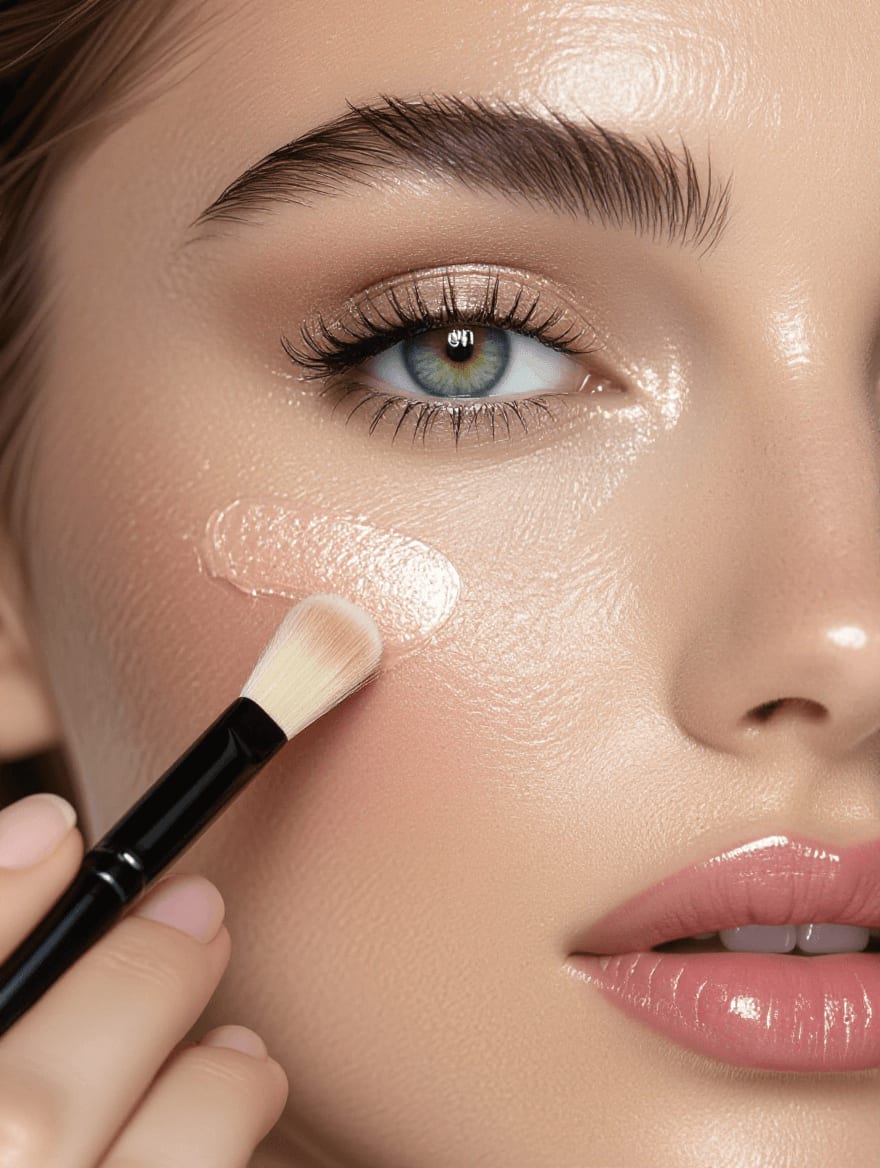
Why Regular Concealer Doesn't Work on Facial Scars
The best concealer for scars on face requires fundamentally different engineering than standard under-eye or blemish concealers because scars present unique coverage challenges that regular formulas cannot address. Scarred tissue has altered texture—sometimes raised, sometimes depressed, always different from surrounding skin—that causes conventional concealer to sit unevenly, emphasizing the very irregularity you're trying to hide. Scar tissue also lacks the normal moisture content and oil production of healthy skin, causing standard concealers to either slide off within hours or cake into the textured surface. Additionally, scars often have distinct coloration—red, purple, brown, or white—that requires color correction before concealment, not just opacity layering.
Here's what professional makeup artists understand about thick concealer for scars that beauty counter recommendations miss: thickness and coverage are not the same thing. Many concealers feel thick and creamy but provide only medium coverage because they contain high percentages of emollients and oils with relatively low pigment concentration. True full-coverage concealer for scars requires high pigment density—typically 30-40% by weight—suspended in formulas that grip skin rather than slide around. These camouflage-grade concealers were originally developed for covering birthmarks, vitiligo, and post-surgical bruising, which is why theatrical and medical-grade makeup lines often outperform conventional beauty brands for serious scar coverage.
The critical factor most advice overlooks: scar concealment success depends on matching both color and texture correction. A scar that's darker than your surrounding skin needs pigment coverage, but a raised scar also needs textural smoothing that concealer alone cannot provide. A depressed scar creates shadows that no amount of concealer can fill—it requires primer with filling properties first, then concealer to even the color. White or hypopigmented scars actually need darkening rather than covering, requiring a different approach entirely. Using one concealer product for all scar types is why your coverage fails—you need a strategic multi-product approach based on your specific scar characteristics.
The Color Correction Foundation of Scar Coverage
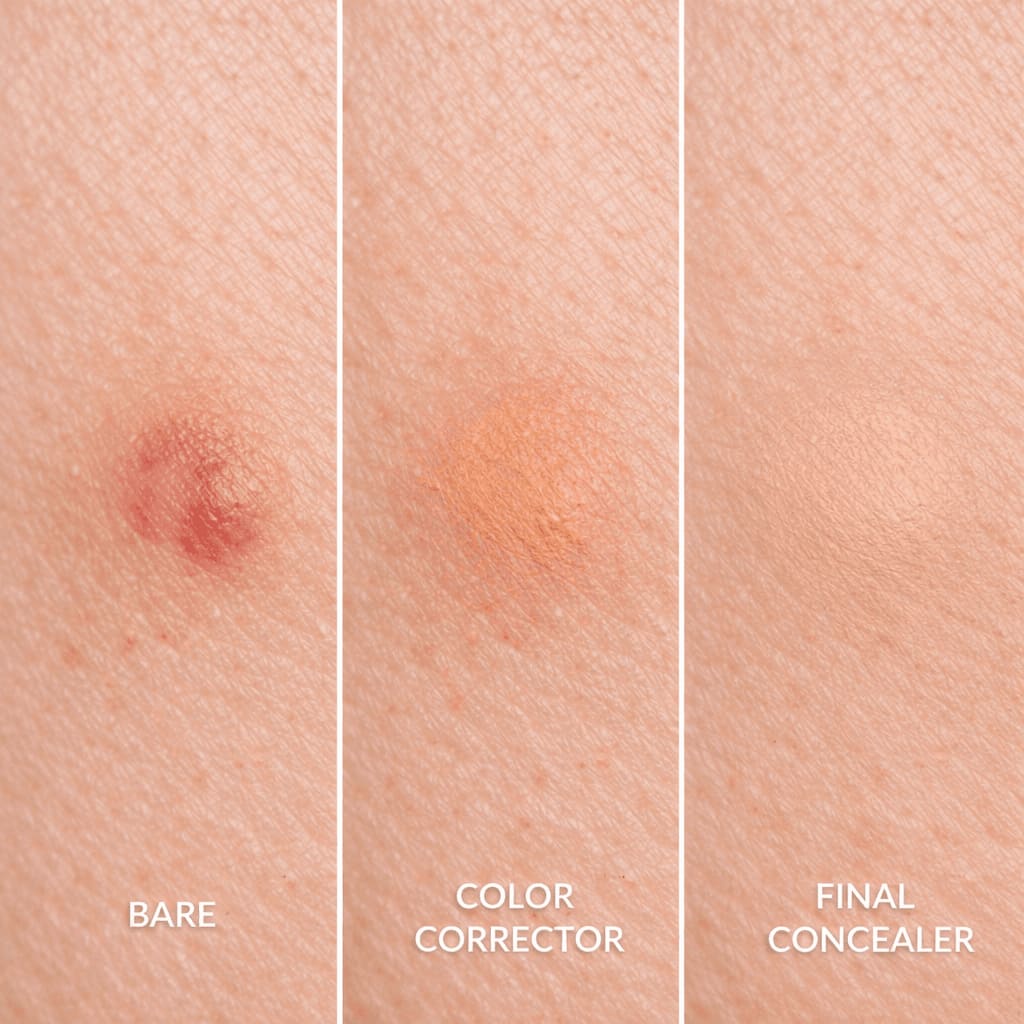
Red or purple scars—whether from recent acne, surgery, or injury—require green or yellow color correction before any concealer application. Attempting to cover red scarring with skin-toned concealer alone requires so many layers that the result looks cakey and obvious. Instead, apply a thin layer of green corrector specifically on the red areas, allowing it to neutralize the undertone. For purple scars, yellow corrector works more effectively than green. This color theory approach allows your actual concealer to work as true coverage rather than fighting underlying color problems, meaning you need less product and achieve more natural-looking results.
Brown or hyperpigmented scars present a different challenge because they're caused by excess melanin production in the scar tissue, not just surface discoloration. These scars require concealers with genuine opacity rather than sheerness, and they often need peach or orange correctors first if the brown has cool undertones. What dermatologists observe but cosmetic companies rarely emphasize: hyperpigmented scars on deeper skin tones actually require orange correctors rather than lighter concealers, counteracting the ashy appearance that happens when you try to lighten dark scars with pale concealers that don't match your natural undertone.
Which Concealer Formulas Provide Genuine Scar Coverage
Camouflage concealers represent a distinct product category from standard beauty concealers, engineered specifically for covering significant discoloration and scarring. These formulas contain pigment concentrations 2-3 times higher than regular concealers, creating genuine opacity in thin layers rather than requiring heavy buildup. The texture feels drier and more paste-like than beauty concealers because they're designed to stay exactly where you place them without migrating throughout the day—essential for scar coverage where you need precise placement on irregular tissue. Brands specializing in medical-grade coverage offer shade ranges that actually match diverse skin tones accurately, unlike beauty brands that often lack nuanced undertone options for darker complexions.
For acne scars specifically, you're dealing with multiple types simultaneously—red or brown post-inflammatory marks, depressed ice-pick scars, raised keloid scars—each requiring different treatment. Post-inflammatory hyperpigmentation responds to high-coverage concealer after color correction. Depressed scars need silicone-based primer to fill the depression before concealer application. Raised scars actually require less concealer than you'd expect because additional product emphasizes the elevation; instead, use a thin layer of concealer precisely on the scar with foundation over your entire face to create uniform coverage that minimizes the height difference through color matching rather than heavy concealer buildup.
- Camouflage cream concealers: Medical-grade formulas with 30-40% pigment concentration; provide genuine opacity in thin layers
- Waterproof theatrical concealers: Designed for stage and film; offer extreme longevity and sweat-resistance ideal for scar coverage
- Cream-to-powder concealers: Set to transfer-resistant finish; excellent for body scars or areas prone to rubbing
- Silicone-based primers for textured scars: Fill depressions and smooth raised areas before concealer application
- Avoid: Liquid or serum concealers: Too sheer for meaningful scar coverage and slide off textured scar tissue within hours
Application technique transforms how effectively concealer covers scars. Use a small, firm synthetic brush to stipple concealer directly onto the scar, building coverage through multiple thin layers rather than one thick application. Stippling deposits pigment precisely where needed without disturbing any color corrector underneath or spreading product onto surrounding unscarred skin. Allow each layer thirty seconds to set before applying the next, which prevents the product overload that causes sliding and separation. Once you achieve adequate coverage on the scar, blend only the very edges into surrounding skin using gentle patting motions—the goal is seamless edges, not blending the entire concealer into oblivion.
Setting is non-negotiable for long-lasting scar coverage. Even the most tenacious concealer will eventually migrate on scar tissue's altered surface without proper setting. Press finely-milled translucent powder into the concealed area using a damp beauty sponge, which sets the concealer without disturbing your careful layering. For extreme longevity—all-day wear in humid conditions or for special events—spray your powder puff or sponge with setting spray before pressing powder, creating a virtually waterproof seal. This technique, borrowed from theatrical makeup, can make properly applied camouflage concealer genuinely transfer-resistant and capable of lasting 12+ hours without touch-ups.
If you're concerned about ingredient safety and cruelty-free options while managing scars, explore our guide to cruelty-free and vegan makeup options that addresses ethical beauty choices alongside coverage needs for all skin types and concerns.
When Standard Scar Concealer Advice Completely Fails
The universal recommendation to use full-coverage concealer directly on scars fails for white or hypopigmented scars because these lack pigment rather than having too much. Attempting to cover a white scar with regular concealer—even full-coverage formulas—just deposits beige product on top of white tissue, making the scar look chalky and even more obvious. White scars actually require darkening to match surrounding skin, which means mixing your concealer with a drop of foundation several shades deeper than your skin tone, or using self-tanner precisely on the scar to add pigment before any concealer application. This counterintuitive approach of darkening rather than covering creates significantly more natural-looking results.
Another scenario where conventional wisdom backfires: the advice to match concealer exactly to your skin tone for scar coverage. This works only for scars that are simply darker than surrounding skin without textural changes. For raised scars, matching your skin tone exactly draws attention to the elevation because the concealer sits at a different plane than your face, catching light differently. For raised scars, use concealer one shade darker than your skin tone on the scar itself, which creates subtle shadowing that minimizes the appearance of elevation. Then apply your regular foundation over your entire face including the scar, which creates uniform color while the strategic darker concealer underneath counteracts the raised profile.
The critical contradiction between Instagram tutorials and real scar coverage: those dramatic before-and-after concealer videos showing complete scar disappearance are filmed in controlled lighting with extensive filters and editing. In real-world three-dimensional movement and varied lighting conditions, even the best concealer cannot make scars completely invisible if they have significant textural differences from surrounding skin. The goal of scar concealment should be minimizing visibility to the point where scars blend into your overall complexion rather than being the first thing people notice, not achieving photographic perfection that's impossible to maintain in daily life.
What actually fails that nobody discusses: assuming thicker concealer automatically provides better coverage. Some of the thickest, most expensive concealers are thick with emollients and moisturizing ingredients but relatively low in actual pigment, providing a luxurious feel without corresponding opacity. The texture you feel has no correlation with coverage capability—some thin, almost watery camouflage concealers contain more pigment than paste-like luxury formulas. Read ingredient lists for actual pigment content like iron oxides, titanium dioxide, and mica listed high in the formula, which indicates genuine coverage rather than just rich texture.
The hidden challenge with scar concealment during hormonal transitions: declining estrogen affects wound healing and can cause existing scars to become more pigmented or inflamed as collagen production changes. Scars you successfully concealed with minimal effort at 40 might require different approaches at 55 as your skin's healing capacity shifts. Additionally, hormonal changes can trigger adult acne creating new scarring alongside existing marks, requiring you to address both fresh post-inflammatory hyperpigmentation and older established scars with different concealer approaches. This evolving scar landscape means your concealer strategy needs regular reassessment rather than assuming the products that worked previously will continue performing adequately.
For comprehensive strategies on managing all aspects of makeup application during hormonal changes, including how specialized products like scar concealer integrate with your daily routine, see our complete makeup guide for menopausal skin changes that addresses how declining estrogen affects everything from healing to pigmentation to product performance.