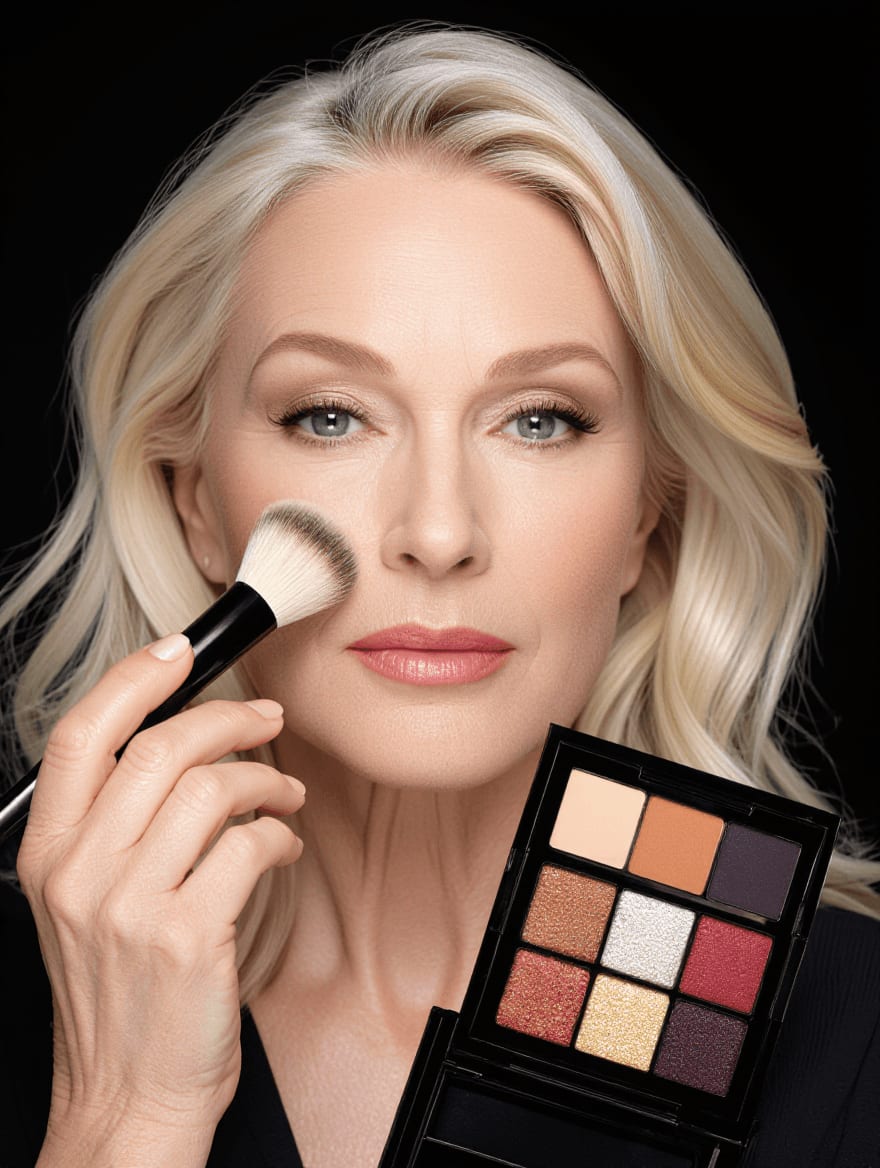
Why Standard Eyeshadow Fails Mature Hooded Eyes
The challenge of finding the best eyeshadow for mature hooded eyes isn't just about hooding—it's about the intersection of three age-related changes happening simultaneously. Eyelid skin thins and loses elasticity, creating more pronounced folds. Collagen depletion causes crepiness that catches powder. Meanwhile, decreased oil production means eyeshadow primers that worked in your 30s now emphasize texture rather than smooth it. Most eyeshadow recommendations ignore this compound problem, treating hooded eyes and mature skin as separate issues.
What dermatological research reveals about aging eyelids: the skin here is already the thinnest on your body at 0.5mm, and it loses approximately 1% of thickness annually after age 50. This creates a surface that transfers creases from powder eyeshadow within hours, sometimes minutes. The science explains why cream-to-powder formulas work better—they bond with skin before setting, creating flexibility that moves with your eyelid rather than cracking into fine lines. Yet most eyeshadow palettes for mature skin still contain traditional powder formulas because they're cheaper to manufacture.
The hooding factor adds another layer of complexity. When your mobile lid disappears behind the hood, anything you apply there becomes invisible when your eyes are open. This wastes product and creates makeup that looks dramatically different between mirror application and real-world viewing. The critical insight most tutorials miss: you're not actually doing eyeshadow for hooded eyes—you're creating optical architecture on the visible space above the hood. For comprehensive eye makeup strategies during hormonal changes, see our complete makeup guide for menopause.
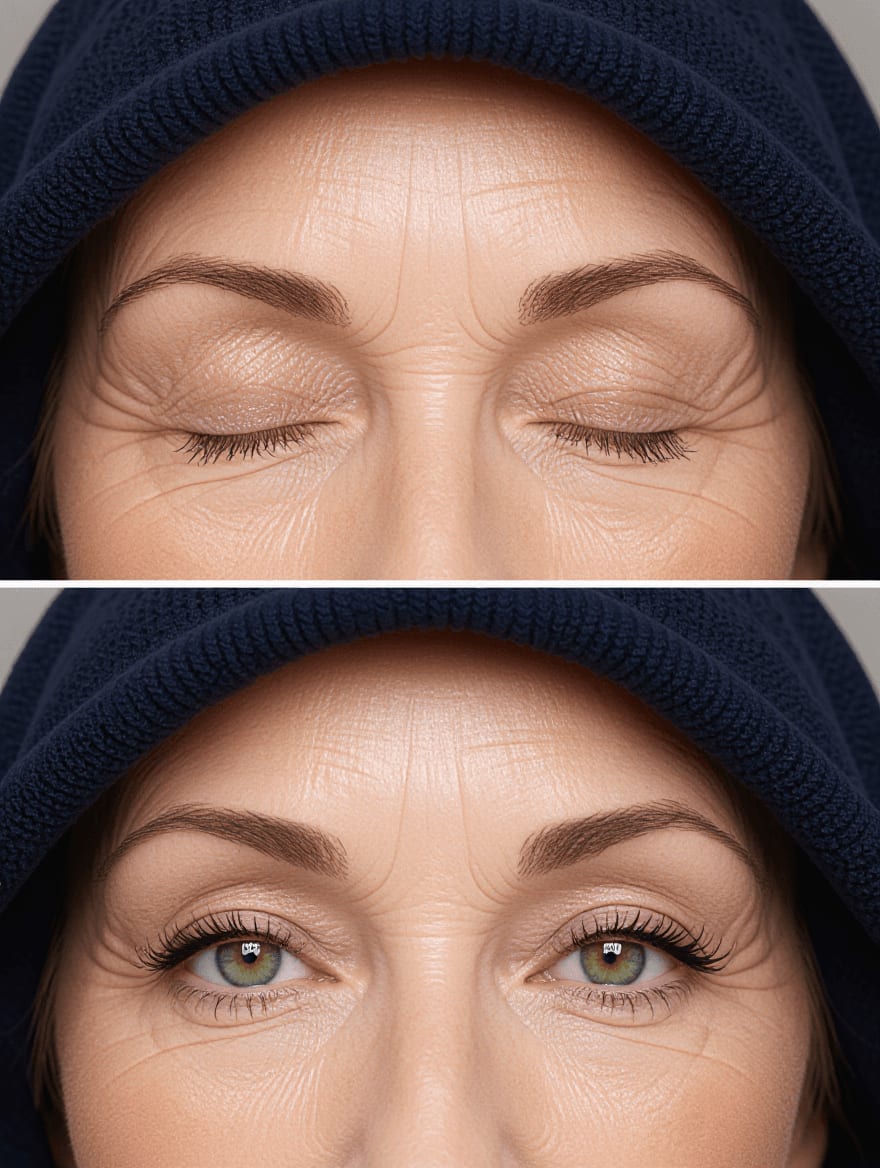
The Eyeshadow Myths Wasting Your Time and Money
Myth 1: Shimmer Eyeshadow Emphasizes Wrinkles
The blanket advice to avoid shimmer on mature eyes contradicts what professional makeup artists actually use. The problem isn't shimmer itself—it's large glitter particles that settle into creases. Finely-milled satin finishes with micro-shimmer actually diffuse light across texture, creating optical smoothness. Think champagne or soft bronze with particles under 25 microns versus chunky glitter bombs. The trade-off? Subtle shimmer requires careful color selection—too light looks ashy on mature skin, too dark creates harsh shadows in already-deepened creases.
Myth 2: You Need Eye Primer for Longevity
Here's what beginners misunderstand: traditional silicone-based primers create a slick surface that paradoxically increases creasing on mature hooded lids. The hood constantly presses against the mobile lid, and silicone acts like a slip-and-slide for eyeshadow migration. Experienced users either skip primer entirely on mature lids or use a tiny amount of concealer as a tacky base instead. The concealer method provides grip without the texture-emphasizing effect of primer, though you sacrifice about 2 hours of extended wear time.
Myth 3: Dark Colors Make Hooded Eyes Look Smaller
The contradiction between common advice and reality: deep matte shades applied above the hood actually create the illusion of a lifted crease, making eyes appear larger. The mistake isn't using dark colors—it's placing them on the mobile lid where they disappear. What actually makes hooded eyes look smaller is using only light colors everywhere, which creates a flat, undefined appearance. Strategic darkness in the right locations (the visible crease area when eyes are open) provides essential definition that aging eyes lose naturally.
Formulas and Techniques That Actually Work
The most effective eyeshadow palettes for mature hooded eyes share specific formulation characteristics: creamy powder texture that's neither too soft (causes fallout) nor too hard (requires pressure that tugs delicate skin), buildable pigmentation that allows gradual intensity, and matte-to-satin finishes that provide dimension without emphasizing texture. Ingredient-wise, look for formulas containing dimethicone or cyclopentasiloxane for slip during application, combined with binding agents like zinc stearate that ensure adherence once set.
Color selection matters more than palette size. What experienced practitioners prioritize:
- Medium transition shades in warm browns or taupes: These become your workhorse colors for defining the visible crease area. Avoid cool-toned grays that read as bruise-like on mature skin with reduced circulation.
- Lid shades slightly deeper than your skin tone: Champagne, soft bronze, or muted rose provide subtle definition without competing with your defined crease. Skip pure white or silver which emphasize crepiness.
- One deep matte for outer-V definition: This anchors your look and prevents the washed-out appearance that plagues mature eye makeup. Apply with a small brush only to the outer corner of your visible area.
Application technique requires abandoning traditional placement rules. Look straight ahead into a mirror at eye level—this is your canvas, not the hidden mobile lid. Apply your medium transition shade where you see your natural fold when eyes are open, extending slightly above. Build intensity gradually with small amounts, as mature lids absorb less product. Use your ring finger to gently pat (never swipe) shimmer shades onto the center of the visible lid area, which creates dimension without accentuating texture. For ethically-sourced options, explore cruelty-free vegan makeup for mature skin.
When Standard Hooded Eye Techniques Fail
Here's the edge case that derails typical tutorials: some mature women develop asymmetric hooding where one eye has significantly more drape than the other, often following years of sleeping on one side or after eyelid surgery healing. Standard mirrored application creates visibly uneven results because the hood on each eye obscures different amounts of the mobile lid. The solution requires mapping each eye individually—apply color while looking straight ahead, checking visibility on that specific eye before moving to the other. This means your left and right eyes may have different color placement, which feels wrong but photographs identically. The limitation? It requires 3-5 extra minutes per application and abandoning the muscle-memory symmetry most women develop over decades. Some find this adaptive approach liberating, while others struggle with the perceived imperfection of non-mirrored technique, even when final results are superior.