
Why Most Face Mists Worsen Menopausal Dryness
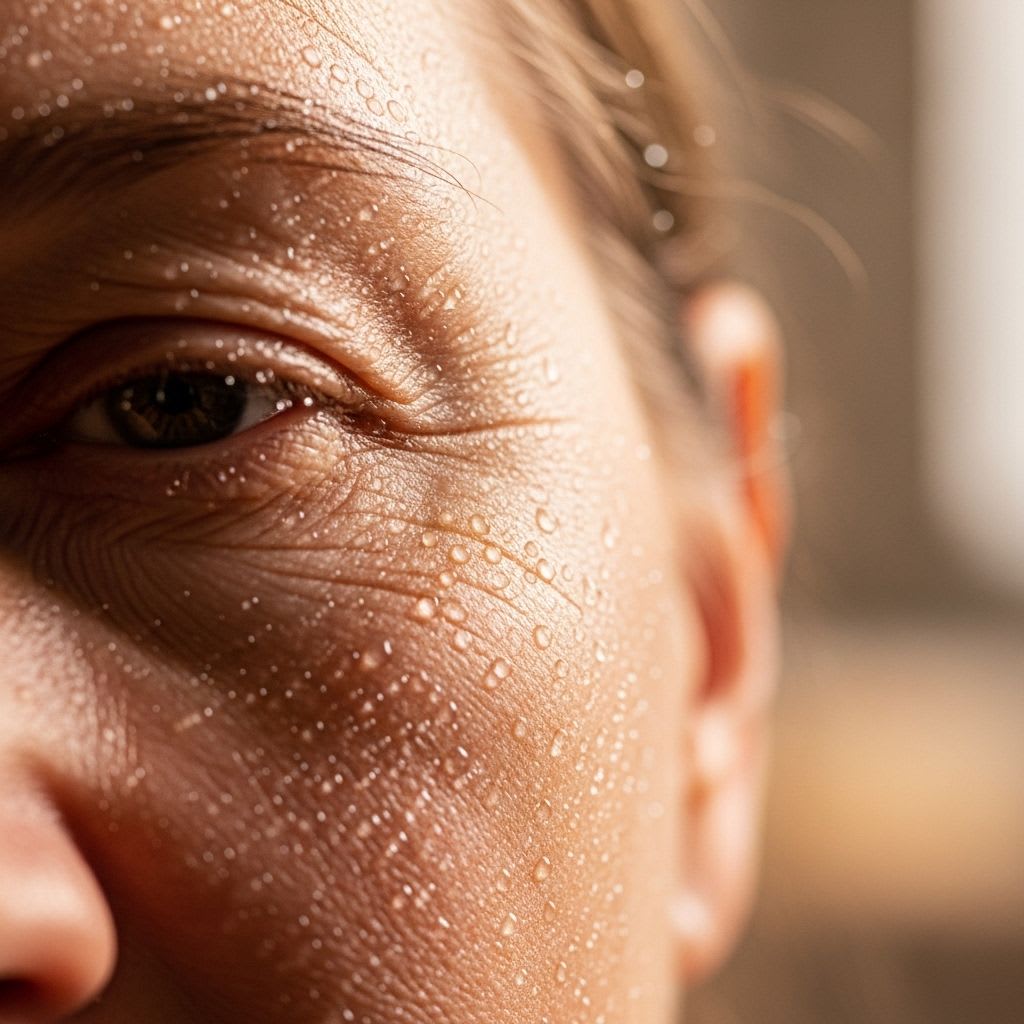
The harsh reality: most face mists marketed as hydrating actually dehydrate menopausal skin within 15 minutes of application. This happens because estrogen decline compromises the skin barrier, reducing its ability to retain moisture by up to 40%. When you spray water-based mist onto this compromised barrier, the water evaporates rapidly—and it takes existing skin moisture with it through a process called transepidermal water loss. You end up drier than before the spray.
The confusion stems from mist marketing that shows refreshed, glowing skin immediately after application. That immediate dewiness is real but temporary—the critical question is what happens 20 minutes later. For menopausal skin specifically, plain water mists or those containing primarily fragrance and botanical extracts without humectants become counterproductive. The tightness you feel 30 minutes after misting isn't coincidence—it's your skin crying out for the moisture it just lost. Understanding your complete skincare foundation helps; explore our complete guide to menopausal skincare.
What differentiates effective mists from harmful ones is ingredient composition. Mists need humectants like hyaluronic acid, glycerin, or sodium PCA that actively pull moisture into skin and hold it there. They also need occlusive agents—even in small amounts—like squalane or lightweight oils that prevent immediate evaporation. Without both components, you're essentially misting your face with expensive water that makes dehydration worse.
Common Myths About Face Mists During Menopause
Myth: Thermal Spring Water Mists Are Universally Hydrating
Thermal spring water sprays enjoy cult status in skincare, but they're particularly problematic for menopausal skin. These mists contain only mineralized water with no humectants or occlusives. While the minerals may provide temporary soothing for irritation, they offer zero moisture retention. The water evaporates completely within minutes, often leaving skin tighter than before application. Women report feeling refreshed initially but notice increased dryness by afternoon when used regularly.
What works instead: if you love the ritual of misting, immediately follow any thermal water spray with a hyaluronic acid serum while skin is still damp. The water provides the moisture source that hyaluronic acid needs to plump skin effectively. Used alone, thermal sprays waste money and worsen the exact problem they claim to solve for menopausal skin.
Myth: More Frequent Misting Equals Better Hydration
The recommendation to mist throughout the day sounds logical until you understand cumulative moisture loss. Each misting cycle that evaporates pulls a small amount of skin moisture with it. Misting 6-8 times daily without proper humectants creates chronic low-grade dehydration that damages the skin barrier over weeks. This is the opposite of what menopausal skin needs—it requires fewer, more effective hydration moments rather than constant ineffective ones.
Evidence-based approach: mist only 1-2 times daily using a humectant-rich formula, and always seal with moisturizer within 60 seconds. This strategic timing traps the mist's moisture before evaporation occurs. The exception is setting spray over makeup, which serves a different purpose—it contains film-forming polymers that lock makeup rather than hydrate skin, and that's appropriate for that use case.
What Actually Works: Ingredient Requirements and Application
Essential Ingredients for Menopausal Skin Hydration
Effective face mists for menopausal skin must contain at least two of these humectants: hyaluronic acid (holds 1000x its weight in water), glycerin (prevents moisture evaporation), or sodium PCA (naturally occurring in skin, excellent penetration). Additionally, beneficial mists include niacinamide to support barrier repair or ceramides to rebuild lipid structure. Check ingredient lists carefully—humectants should appear in the first 5 ingredients, not at the end where they're present in negligible amounts.
For daytime use over makeup, look for mists with light-reflecting particles or antioxidants like vitamin C or green tea extract—these provide dual benefits of refreshing appearance and protecting against environmental damage. Avoid mists with high alcohol content (often listed as 'alcohol denat' in the first 7 ingredients), which evaporate rapidly and strip moisture. Your complete makeup routine matters too; see our makeup guide for menopausal skin changes.
The Critical Timing Window That Determines Success
Application timing separates effective hydration from wasted product. The 60-second rule is absolute: after misting, you have roughly one minute before evaporation begins to seal that moisture into skin. For maximum effect, mist damp skin immediately after cleansing, then apply serum within 30 seconds and moisturizer within the next 30 seconds. This layering while skin remains damp amplifies each product's hydration by 300% compared to applying to dry skin.
For throughout-the-day refreshment, the strategy differs: mist lightly, then press a few drops of facial oil into skin over the mist. The oil traps the water immediately, preventing evaporation while providing the occlusive protection menopausal skin desperately needs. This technique works over makeup too—the oil won't disturb foundation if you press gently rather than rubbing. This represents a fundamental shift from pre-menopausal routines where misting alone sufficed.
When Face Mists Fail Completely: The Severe Dehydration Exception
There's an edge case where even perfectly formulated mists worsen skin condition: severe barrier damage from over-exfoliation, harsh treatments, or extreme hormonal fluctuations. When skin is so compromised that it stings upon water contact or feels tight immediately after any product application, the barrier cannot hold moisture regardless of humectant strength. The honest limitation is that mists cannot repair what's fundamentally broken—they can only maintain already-functional skin.
During these periods, skip all mists entirely and focus on barrier repair with ceramide-rich balms and gentle cleansing. Resume misting only when skin can tolerate water contact without stinging. This temporary retreat from misting, though counterintuitive when skin feels desperately dry, allows faster recovery than continuing to challenge a damaged barrier. The trade-off is accepting 1-2 weeks of minimal routine for long-term skin health restoration.