
Why Oily Mature Skin Is Different From Young Oily Skin
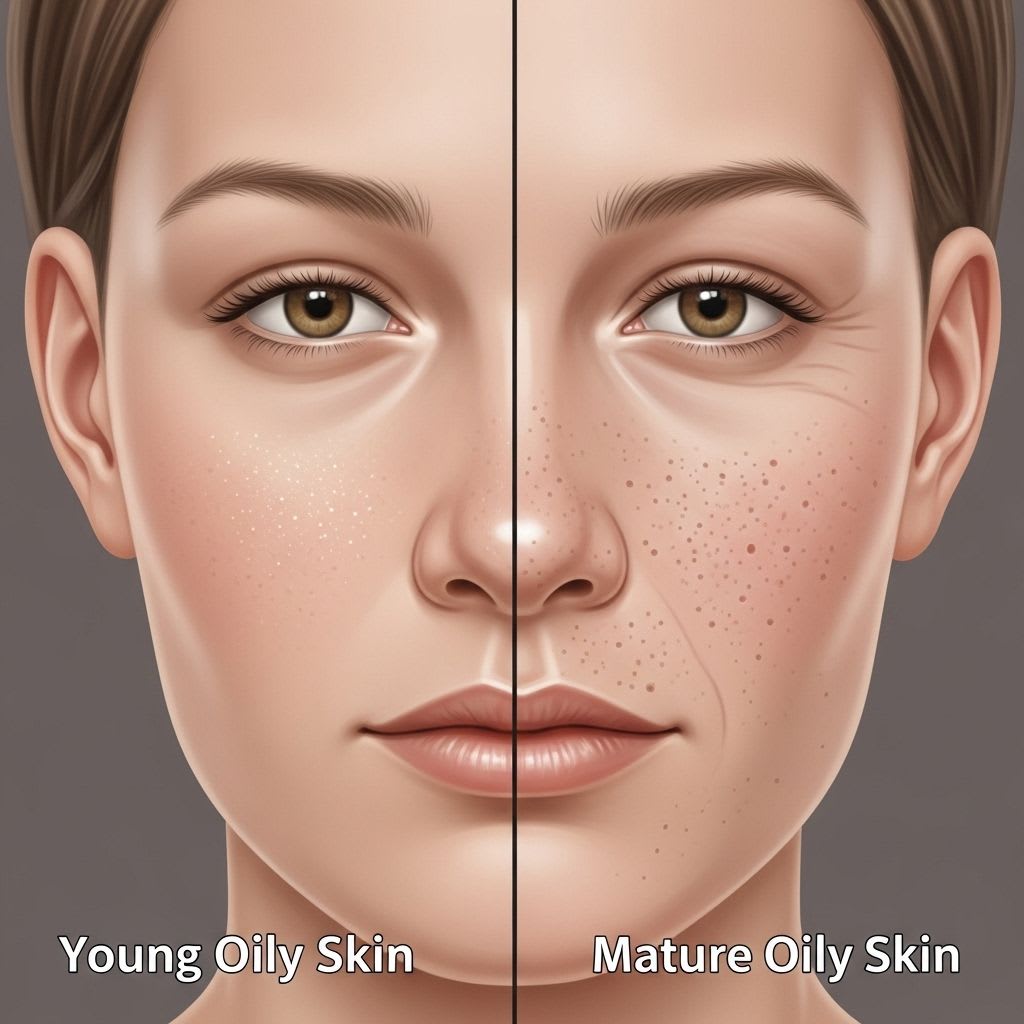
The small percentage of women who retain oily skin during menopause face a unique foundation challenge that standard oil-control formulas don't address: they need shine control without texture emphasis. While young oily skin produces excess sebum on smooth, elastic skin with tight pores, mature oily skin combines oil production with enlarged pores, fine lines, and compromised collagen that creates texture. Traditional oil-control foundations use aggressive mattifying agents like silica, clay, or high-concentration silicones that absorb oil beautifully on smooth young skin but settle into mature skin texture, emphasizing every pore and wrinkle while controlling shine.
The paradox intensifies because most women's skin becomes drier during menopause, making oil-control foundation recommendations scarce for the mature demographic. Nearly all mature-skin-focused foundation advice assumes dryness and recommends hydrating formulas—leaving the minority with persistent oily skin to navigate products designed either for young oily faces or dry mature faces, neither of which suit their specific combination. Additionally, hormonal oiliness during menopause often manifests differently than youthful sebum production, appearing as breakthrough shine in specific zones while other areas remain relatively dry.
What beginners misunderstand is assuming their oily skin works the same at 50 as it did at 25, leading them to repurchase the same oil-control foundations that worked previously. However, the skin structure underneath the oil has changed—even if sebum production remains high, you're dealing with enlarged pores, decreased elasticity, and fine lines that young oily skin didn't have. This requires foundations that control oil while working with texture rather than against it, a specification most oil-control formulas don't meet. Understanding this distinction prevents the common mistake of using increasingly mattifying products that control shine but make you look older through texture emphasis. Learn about comprehensive skin changes in our complete guide to makeup during menopausal changes.
Common Foundation Mistakes for Oily Mature Skin
Myth: Ultra-Matte Formulas Work Best for Oil Control
The instinct to choose the most mattifying foundation available backfires on mature oily skin because ultra-matte finishes emphasize texture catastrophically. Foundations labeled 'ultra-matte,' 'extreme matte,' or 'velvet matte' contain maximum concentrations of oil-absorbing ingredients that create a completely flat finish—this looks modern and fresh on smooth young skin but turns mature skin into an obviously made-up, texture-emphasized surface. The complete absence of any light reflection makes enlarged pores appear as dark spots, fine lines look carved in, and the overall effect ages rather than enhances regardless of how well shine is controlled.
What works better for mature oily skin is natural-matte or satin-matte finishes that control oil while maintaining subtle light reflection that diffuses texture. These formulas contain moderate oil-absorbing ingredients that prevent shine without creating the completely flat appearance ultra-matte products produce. Brands like Estée Lauder Double Wear (regular, not Maximum Coverage) or Giorgio Armani Luminous Silk (despite the name, it's actually satin-matte on oily skin) control oil while maintaining the slight luminosity that makes mature skin look healthy. The trade-off is accepting some natural skin-like sheen rather than completely matte finish, but looking age-appropriate and polished rather than obviously powdered.
Myth: Oil-Free Formulas Are Always Best for Oily Skin
The 'oil-free' designation seems logical for oily skin but creates problems on mature texture because oil-free formulas often lack the slip needed to glide over enlarged pores and fine lines smoothly. These formulas replace oils with silicones or water-based emulsions that can feel chalky or draggy during application on textured mature skin, emphasizing rather than smoothing pores. Additionally, completely oil-free formulas sometimes trigger reactive sebum production as skin tries to compensate for perceived dryness—creating more breakthrough oil than oil-controlling formulas with minimal emollients would.
The evidence-based choice for mature oily skin is lightweight formulas with minimal non-comedogenic oils that provide smooth application without triggering breakouts. Ingredients like squalane, dimethicone, or cyclomethicone help foundation glide over texture while still controlling overall shine better than completely oil-free formulas. The key is checking that oils are listed toward the end of ingredient lists, not at the beginning—you want enough for application smoothness without heavy oiliness. This nuanced approach works better than rigidly avoiding all oils, which often creates worse texture issues than it solves in oil control.
Myth: Full Coverage Controls Shine Better Than Light Coverage
There's no correlation between coverage level and oil control—full coverage foundations don't absorb more oil than light coverage in the same finish category. Oil control comes from specific mattifying ingredients, not from pigment concentration. Many women choose heavy full-coverage matte foundations believing they'll control oil longer, but these thick formulas often settle into enlarged pores on mature skin, creating texture emphasis that's worse than the shine they're trying to prevent. The heavy product buildup in pores can actually trap oil underneath, leading to breakthrough shine and potential breakouts.
The optimal approach for mature oily skin is light-to-medium coverage with excellent oil control rather than full coverage formulas. This provides adequate evening of tone and redness coverage while minimizing product buildup in textured areas. Use strategic concealing for specific concerns like age spots or blemishes rather than coating the entire face with heavy foundation. Foundations like NARS Natural Radiant Longwear or MAC Studio Fix Fluid provide this balance—enough coverage for mature skin needs without the pore-clogging thickness that exacerbates texture issues. The honest limitation is accepting that some imperfections may be slightly visible, but the overall appearance is more natural and youthful than perfect coverage with obvious texture emphasis.
Best Foundation Approach for Oily Mature Menopausal Skin
Formula Selection: Natural-Matte with Pore-Blurring Technology
The ideal foundation for oily mature skin combines oil control with pore-blurring polymers that minimize texture appearance while absorbing excess sebum. Look for foundations listing ingredients like dimethicone crosspolymer, polymethyl methacrylate, or nylon-12—these create a smoothing film over enlarged pores without the heavy feel or extreme mattifying effect that ages mature skin. The finish should be described as 'natural matte,' 'satin,' or 'semi-matte' rather than 'ultra-matte' or 'flat matte.' This provides oil control lasting 6-8 hours while maintaining the slight luminosity that prevents the aging flat-powder appearance.
Specific formula recommendations include long-wear foundations with balanced oil control like Lancôme Teint Idole Ultra Wear, Maybelline SuperStay Full Coverage, or Revlon ColorStay for Combination/Oily Skin. These provide genuine oil absorption without the texture-emphasizing extremes of ultra-matte formulas. For clean beauty preferences, explore options in our guide to cruelty-free makeup for mature skin. The key is testing how formulas perform specifically on enlarged pores and fine lines—swatching on your hand reveals nothing about mature skin compatibility. Test on your face in natural light, checking both immediate appearance and how the foundation looks after 4-6 hours.
Application Technique: Minimizing Product in Textured Zones
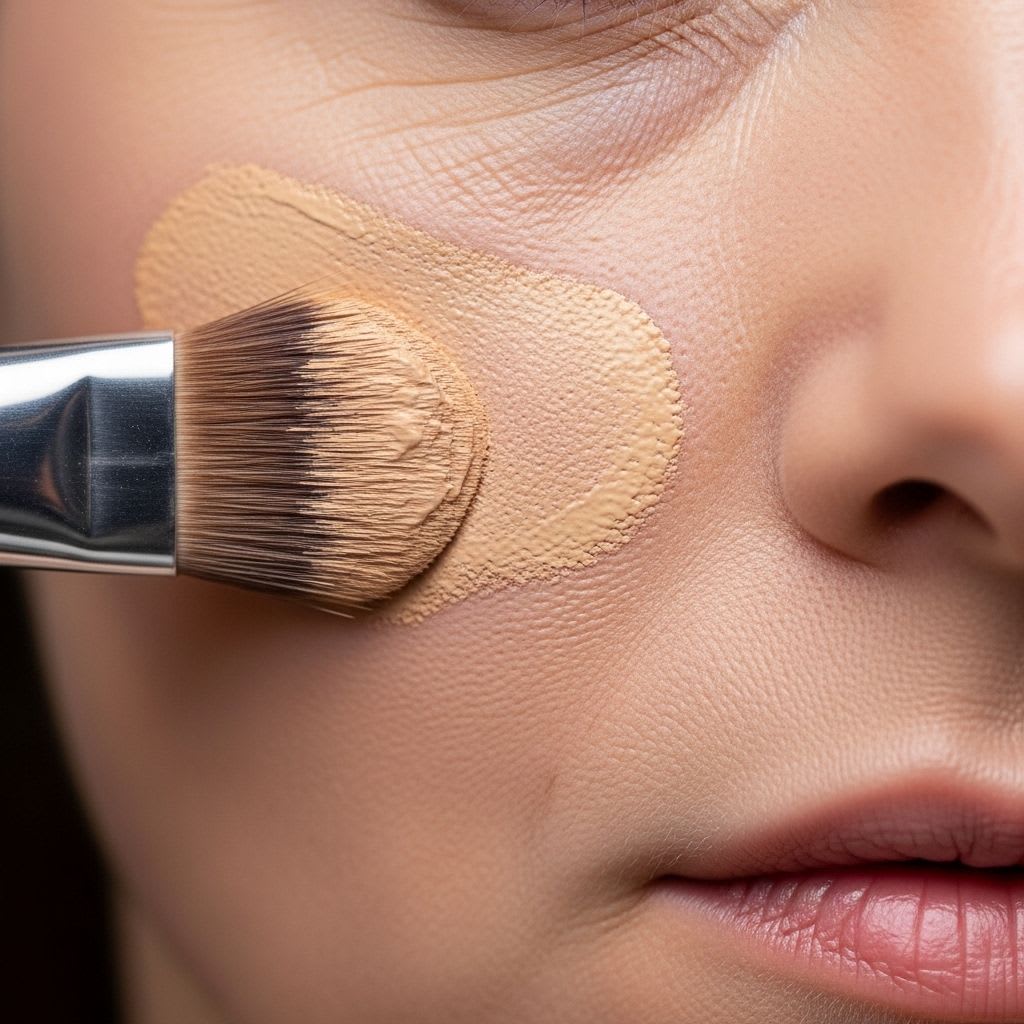
Application method matters more than formula choice for mature oily skin. Use stippling or pressing motions rather than rubbing foundation into skin, especially over enlarged pores and textured areas. Apply foundation with a dense stippling brush or damp beauty sponge using gentle bouncing motions that deposit product on the surface without forcing it into pores. This prevents the caking and texture emphasis that sliding or rubbing application creates. For areas with the worst texture like nose pores or forehead lines, use even less product—sometimes just pressing the sponge across with no additional foundation picks up and redistributes existing coverage without buildup.
Critical setting strategy: use translucent powder only on true oil zones, not uniformly across the face. Even with oily mature skin, some areas like around eyes or on cheeks may be relatively dry—powdering these areas emphasizes wrinkles without providing oil control benefit. Apply minimal loose translucent powder just to T-zone or wherever breakthrough oil occurs, leaving other areas unpowdered. This selective approach maximizes shine control where needed while minimizing the texture emphasis powder creates on mature skin. The technique requires more precision than uniform powder application but delivers superior results.
When Oil Control Requires Medical Intervention
For women experiencing severe oiliness during menopause that no foundation controls adequately, the issue may be hormonal imbalance requiring medical attention rather than makeup solution. Excessive oil production during menopause can indicate androgen dominance, PCOS, or other endocrine issues that makeup cannot address effectively. If you're blotting oil every 2-3 hours despite matte foundation and powder, or experiencing sudden-onset severe oiliness that wasn't present earlier in menopause, consulting an endocrinologist or gynecologist may be more effective than searching for the perfect oil-control foundation.
The honest acknowledgment is that foundation has limits in controlling severe sebum production—at a certain threshold, the skin produces more oil than any topical product can absorb without creating worse texture problems through product buildup. Treatments like prescription retinoids, spironolactone for hormonal control, or even professional treatments like laser therapy may provide better long-term solutions than constantly fighting breakthrough oil with increasingly heavy makeup. Meanwhile, realistic expectations matter: accept that touch-ups may be necessary and that some shine is normal and healthy-looking, better than the texture emphasis that excessive oil-control products create. The goal is controlled, manageable oiliness rather than completely matte skin, which rarely looks natural or youthful on mature faces regardless of oil production levels.