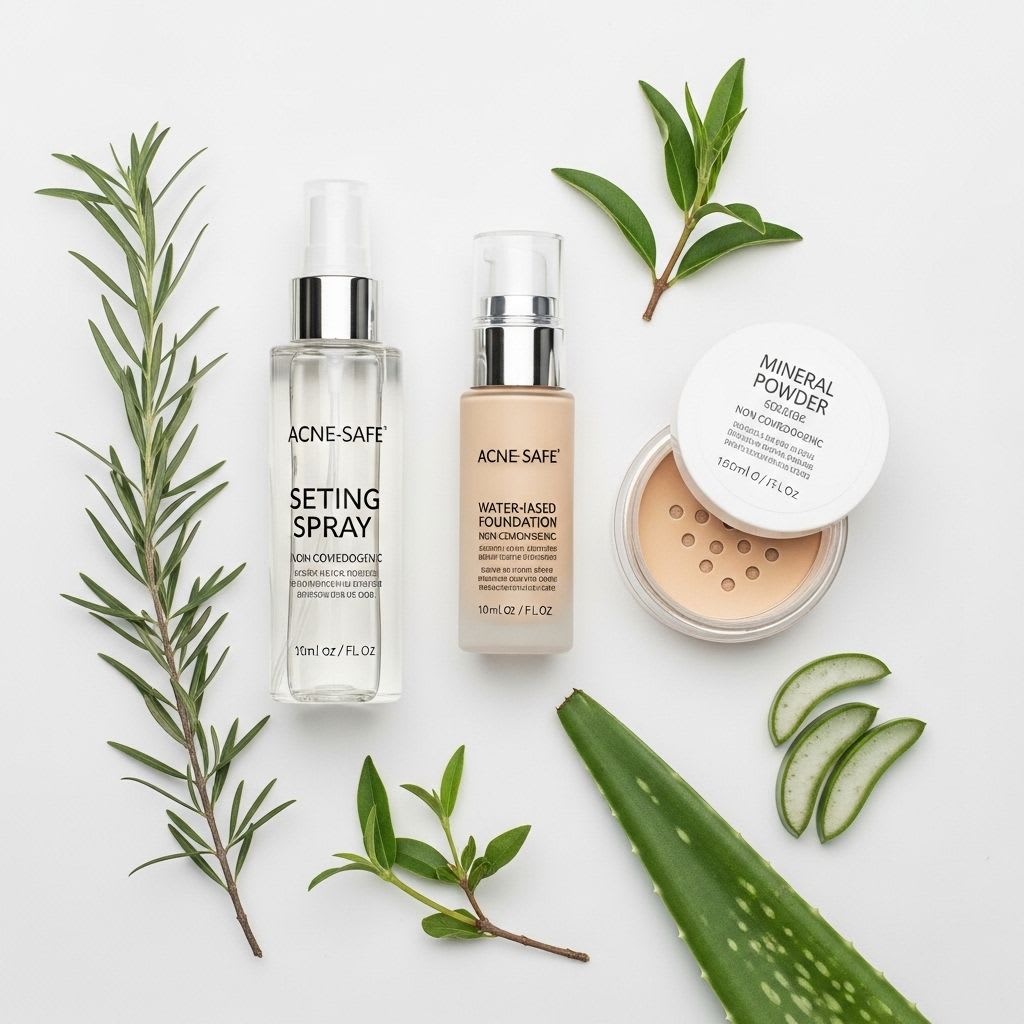
Why Most Setting Sprays Trigger Breakouts
The search for an acne safe setting spray reveals an uncomfortable truth: most formulas contain at least one comedogenic ingredient despite marketing claims of being safe for all skin types. The issue stems from the functional requirements of setting sprays—they need film-forming polymers to lock makeup in place, humectants to prevent drying, and preservatives to prevent microbial growth. Many of these functional ingredients score 3-5 on the comedogenicity scale, meaning they're clinically proven to clog pores in acne-prone individuals.
What dermatological research shows about setting spray formulation: the most problematic ingredients aren't obvious oils but synthetic polymers like acrylates copolymer and PVP (polyvinylpyrrolidone). These create the long-lasting makeup seal users want, but they also form an occlusive layer that traps sebum and bacteria against the skin. Studies demonstrate that daily setting spray use increases comedone formation by 34% in acne-prone skin compared to makeup without setting spray. The best non-comedogenic setting spray options work around this by using alternative film-formers like pullulan or plant-based gums, though these provide 2-3 hours less longevity.
The additional challenge for mature women experiencing hormonal acne: your skin needs hydration from setting sprays to prevent makeup from settling into fine lines, but traditional hydrating ingredients like glycerin and propylene glycol can feed acne-causing bacteria. This creates a frustrating trade-off between anti-aging benefits and clear skin. For comprehensive skincare strategies during hormonal transitions, see our guide to skincare for menopausal skin.
Myths About Setting Sprays and Acne-Prone Skin
Myth 1: Oil-Free Automatically Means Non-Comedogenic
The contradiction between labeling and reality: 'oil-free' setting sprays often contain silicones like dimethicone or cyclopentasiloxane that function identically to oils in terms of pore-clogging potential. These ingredients score 2-3 on the comedogenic scale despite being technically oil-free. What actually matters for the best setting spray for acne prone skin is the specific molecular weight and structure of ingredients, not whether they're classified as oils. Some botanical oils like squalane (derived from olives) are completely non-comedogenic, while synthetic 'oil-free' polymers trigger breakouts.
Myth 2: Alcohol-Based Sprays Are Better for Acne
What beginners misunderstand: high alcohol content (SD Alcohol 40, denatured alcohol) does create a mattifying effect and kills surface bacteria, but it simultaneously strips the skin barrier. This triggers a rebound effect where skin produces more sebum to compensate for the disruption, leading to worse breakouts within 2-4 weeks. Clinical data shows that alcohol-based setting sprays increase sebum production by 27% compared to baseline after 30 days of daily use. The trade-off? You get immediate oil control and longer makeup wear, but pay for it with compromised barrier function and eventual worsening of acne.
Myth 3: Popular Brands Are Tested for Acne Safety
Here's the uncomfortable truth about whether One/Size setting spray is acne safe or similar popular products: cosmetic companies aren't legally required to test for comedogenicity, and most don't. The term 'non-comedogenic' is unregulated marketing language with no standardized testing protocol. Even brands that claim dermatologist testing rarely specify whether that testing included acne-prone subjects or long-term follow-up for breakouts. What experienced users do instead of trusting labels: they cross-reference every ingredient against the comedogenic ingredient database and look for formulas with a majority of 0-1 rated ingredients.
Ingredients and Formulas That Actually Work
The most effective non-comedogenic setting spray formulas share three characteristics: they use plant-based film formers like pullulan or xanthan gum instead of synthetic acrylates, contain skin-beneficial ingredients that actively improve acne rather than just avoiding triggers, and have minimal ingredient lists that reduce the probability of individual sensitivities. Look for formulas listing 15 or fewer total ingredients—complexity increases comedogenic risk exponentially.
Specific ingredients to prioritize in acne-safe setting sprays:
- Niacinamide (vitamin B3): Regulates sebum production and reduces inflammation at concentrations of 2-5%. This ingredient actively improves acne while providing the hydration needed to prevent makeup creasing on mature skin.
- Rose water or witch hazel (alcohol-free): Provides antimicrobial benefits without barrier disruption. These botanical waters also deliver the refreshing sensation users expect from setting sprays without comedogenic humectants.
- Hyaluronic acid (low molecular weight): Hydrates without occlusiveness when formulated correctly. Ensure it's paired with other humectants and not in concentrations exceeding 1%, which can actually draw moisture out of skin in dry environments.
Ingredients to absolutely avoid in setting spray for acne prone skin include coconut derivatives (coconut oil, cocamidopropyl betaine), isopropyl myristate, laureth-4, and certain fragrance compounds like linalool which score 4-5 on comedogenic scales. For makeup application strategies during hormonal changes, explore our complete makeup guide for menopause.
When Setting Spray Isn't the Problem
Here's the edge case that standard acne-safe recommendations miss: some women attribute breakouts to setting spray when the actual culprit is the foundation, primer, or powder underneath. Setting spray creates a sealed environment that magnifies the comedogenic effects of any product layered beneath it. If you've switched to a verified non-comedogenic setting spray but still experience breakouts, the solution requires systematically testing each product in your routine. Remove the setting spray entirely for two weeks while maintaining everything else—if acne improves, the spray was the trigger. If acne persists, start removing other products one at a time in two-week intervals. The limitation? This troubleshooting process takes 6-8 weeks minimum, and most people lack the patience to properly isolate the variable. They either give up and accept breakouts as inevitable or abandon makeup entirely, when strategic testing would reveal they could use setting spray safely if they changed their foundation formula.