Why Under Eye Primer Becomes Critical After 40
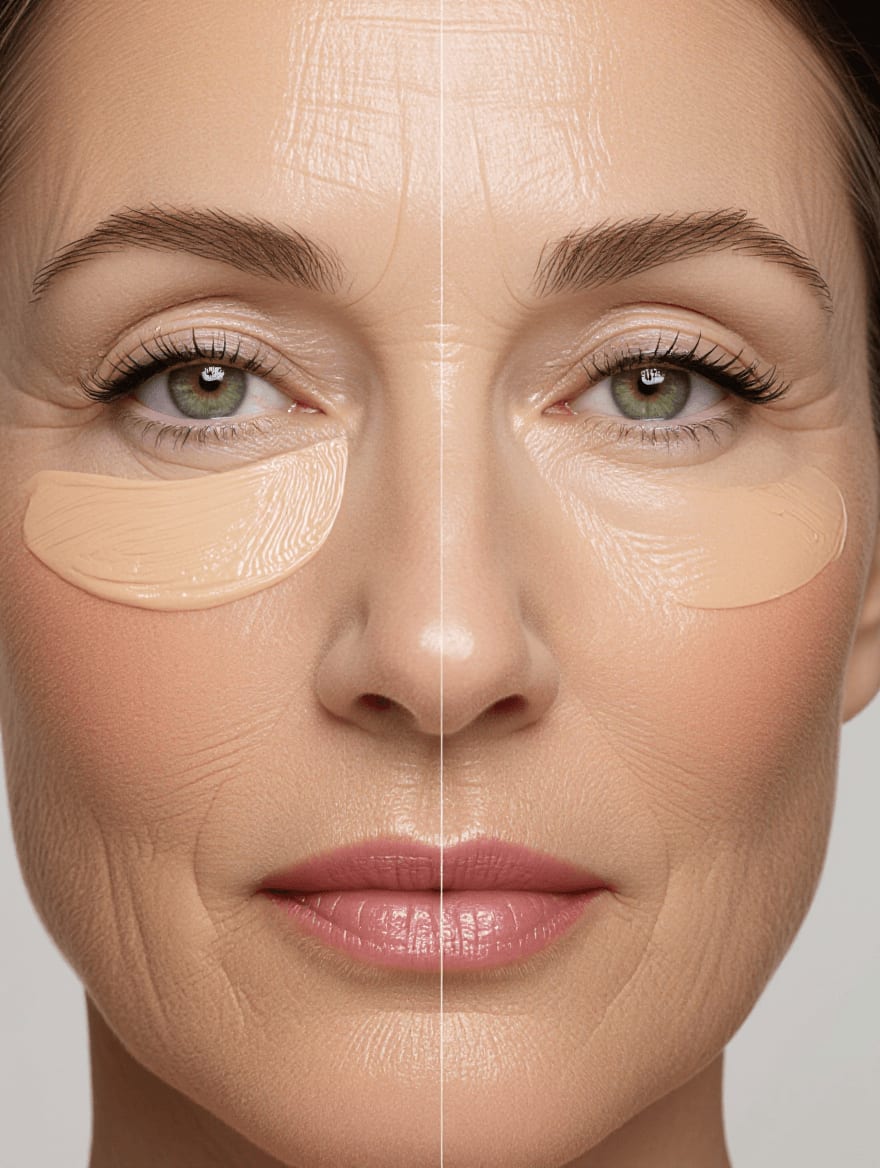
The search for the best under eye primer for mature skin reflects a frustrating reality: the under-eye area that once held concealer flawlessly for 12+ hours now shows creasing within two hours, regardless of which concealer you use. This isn't about product quality declining—it's about fundamental structural changes in the thinnest, most delicate skin on your face. The under-eye area has only 0.5mm of skin thickness compared to 2mm on your cheeks, and it contains virtually no sebaceous glands, making it naturally dry. After 40, collagen depletion causes this already-thin skin to become even thinner and lose elasticity, while fat pad migration creates hollowing that emphasizes every fine line into which makeup can settle.
What dermatological research reveals about the best under eye primer for dry mature skin specifically: the under-eye area loses moisture 50% faster than other facial areas because it lacks the oil glands that create natural barrier protection. During menopause, this water loss accelerates as estrogen decline reduces hyaluronic acid production in the dermis. The result is skin that's simultaneously crepey from dehydration and deeply lined from collagen loss—a combination that makes traditional silicone-based primers completely ineffective. Those primers create a slippery surface that concealer slides across rather than adhering to, while simultaneously emphasizing texture because they provide zero hydration to plump fine lines.
The critical insight that transforms your approach to under eye primer for mature skin: you're not looking for traditional primer at all—you need a hybrid product that functions as intensive hydration treatment, smoothing base, and adhesion enhancer simultaneously. The 'primer' category has been co-opted by products designed for young skin's concerns (oil control, pore minimization), but mature under-eye skin requires the opposite approach: moisture infusion, texture filling, and flexible grip that moves with facial expressions rather than cracking. For comprehensive primer strategies across your face, see our guide to the best primer for mature skin with wrinkles.
The Under Eye Primer Myths Making Creasing Worse
Myth 1: Silicone Primers Create the Smoothest Base
The conventional wisdom about silicone-based primers creating a smooth, blurred surface made sense when your under-eye skin had natural moisture and elasticity. But on mature dry skin, silicone primers create a slick barrier that prevents concealer from properly adhering while simultaneously failing to address the underlying dehydration causing texture issues. What actually happens is that concealer slides around on the silicone surface rather than setting, migrating into fine lines throughout the day. Meanwhile, the silicone provides zero hydration to plump those lines, so you've created ideal conditions for creasing—dry, textured skin with makeup that won't stay put.
Myth 2: Eye Cream Can Double as Under Eye Primer
Here's what beginners misunderstand about the best under eye primers for mature skin: while both eye cream and primer should hydrate, they serve completely different functions that rich eye creams can't fulfill. Eye creams are designed to absorb fully into skin, delivering active ingredients deep into tissue. Primers need to create a slightly tacky surface layer that grips concealer while still providing slip for blending. Heavy eye creams stay too emollient on the surface, causing concealer to slide, while lightweight eye creams absorb too completely, leaving no gripping layer. The trade-off that professionals understand is you need both—eye cream applied first and fully absorbed, then primer as a separate step creating the ideal concealer base.
Myth 3: More Primer Equals Better Results
The misconception about application quantity: when concealer creases badly, the instinct is to apply more primer thinking additional product will prevent migration. But excess primer on mature under-eye skin paradoxically increases creasing because the product pools in fine lines, creating tiny ridges that concealer then settles into and emphasizes. What experienced practitioners do differently is apply the absolute minimum amount of primer—often just a rice-grain sized amount for both eyes—and press it in with gentle patting motions using the ring finger. This creates an imperceptibly thin layer that provides grip without adding texture or weight that mature skin can't support.
The Under Eye Primer Formula and Technique That Works
The most effective under eye primers for mature skin share specific formulation characteristics that address the compound challenges of thin, dry, lined skin requiring both hydration and concealer adhesion. These formulas balance seemingly contradictory needs: providing enough moisture to plump fine lines while creating sufficient grip for concealer to adhere, offering smoothing benefits without silicone slip, and remaining lightweight enough not to emphasize crepiness. This requires sophisticated ingredient combinations rarely found in mainstream primers marketed to younger consumers.
Your ideal under eye primer should contain:
- Humectants for immediate and sustained hydration: Hyaluronic acid (specifically sodium hyaluronate which penetrates better), glycerin, or panthenol should appear in the first five ingredients. These pull moisture into the skin and maintain hydration throughout wear, preventing the dryness-induced creasing that occurs as the day progresses. Look for multiple molecular weights of hyaluronic acid for both surface and deeper hydration.
- Film-forming polymers that create flexible grip: Ingredients like polyvinyl alcohol or acrylates copolymer create a thin, breathable film that concealer can adhere to without the slip of silicones. These polymers flex with facial movement rather than cracking, preventing the fine-line creasing that occurs with rigid formulas.
- Light-diffusing particles for optical smoothing:Mica, synthetic fluorphlogopite, or titanium dioxide in small amounts scatter light across texture, creating the appearance of smoothness without requiring heavy product application. These work synergistically with concealer's coverage rather than competing with it.
- Peptides or caffeine for long-term benefits:While not essential for immediate function, ingredients like Matrixyl peptides or caffeine provide bonus anti-aging or de-puffing benefits, making your primer double as treatment product. This is particularly valuable for mature skin where every product should contribute to skin health.
Application technique determines whether even perfect formulas succeed or fail on mature under-eye skin. After applying and fully absorbing eye cream (wait 3-5 minutes), dispense a rice-grain amount of primer onto the back of your hand. Use your ring finger to pick up the tiniest amount and gently pat—never rub or drag—onto the under-eye area starting from the inner corner and working outward. Focus on areas with fine lines but avoid over-applying in the deepest creases, as product pooling here guarantees creasing. Allow primer to set for 60-90 seconds before applying concealer—this waiting period is critical for the film-forming polymers to create their gripping layer. For comprehensive makeup strategies during hormonal changes, see our complete makeup guide for menopausal skin changes.
When Even Optimal Primers Fail
Here's the edge case that derails even expert primer selection: some women develop such severe crepiness and deep lines under their eyes—often following significant weight loss, medical treatments, or as genetic predisposition combines with advanced age—that literally no primer can create a smooth enough surface for concealer to perform well. The skin texture is so compromised that any product applied emphasizes rather than improves appearance, regardless of formulation sophistication or application technique. Standard primer advice assumes you're working with fine lines and mild texture, not profound crepiness where skin resembles crumpled tissue paper. When texture reaches this severity, the three-step prep (eye cream, primer, concealer) paradoxically makes things worse because you're layering multiple products onto skin that can't support that much weight without buckling further into its creases. The solution requires abandoning conventional under-eye makeup entirely and pursuing alternative approaches: some women find that using only a light-reflecting concealer without primer, applied in the absolute minimum amount and set immediately with translucent powder, provides better results than the full primer system. Others discover that strategic highlighting on the brow bone and upper cheek creates dimension and draws attention away from under-eyes, allowing them to skip under-eye concealer entirely. Additionally, this level of texture often indicates that topical solutions have reached their limit—medical treatments like radiofrequency skin tightening, laser resurfacing, or lower blepharoplasty may be necessary to improve texture enough for makeup to work effectively again. Some women pursue these interventions specifically to restore their ability to wear under-eye makeup comfortably. Others accept the limitations and adapt their makeup routines to emphasize other features while minimizing under-eye focus. The limitation extends to emotional impact—when a product category that promised to solve your problem fails despite following all expert guidance, it challenges the narrative that proper technique and product selection can overcome any beauty concern. This forces recognition that sometimes anatomy limits what cosmetics can achieve, requiring either medical intervention or acceptance that certain looks are no longer attainable through makeup alone. Both paths are valid, though neither feels satisfying when you're simply trying to prevent concealer from creasing by lunchtime.