
Why Sensitive Skin Reacts Differently to Makeup During Hormonal Changes
If your skin suddenly rebels against makeup you've worn for years, you're not imagining the change—declining estrogen fundamentally alters your skin's tolerance threshold. Clean makeup for sensitive skin becomes essential rather than optional during perimenopause and beyond because your compromised barrier function allows both beneficial and harmful ingredients to penetrate more deeply. What used to sit harmlessly on your skin's surface now triggers inflammatory cascades, manifesting as redness, itching, burning, or breakouts that appear hours after application rather than immediately.
The most critical factor dermatologists emphasize but cosmetic marketing obscures: true sensitivity isn't about your skin being delicate—it's about heightened immune response. Your mast cells become hyperreactive during hormonal transitions, releasing histamine in response to ingredients you previously tolerated. Synthetic fragrances, certain preservatives, and D&C colorants are the most common culprits, but even some natural ingredients like essential oils can trigger reactions in hormonally-sensitized skin. Sensitive skin makeup brands that understand this biology formulate without known irritants regardless of whether they're synthetic or natural, prioritizing gentle preservation systems and fragrance-free formulas.
Here's the misconception that keeps women cycling through products: believing that hypoallergenic or dermatologist-tested claims on conventional makeup guarantee safety for sensitive skin. These terms have no regulatory oversight and often appear on products containing known irritants like synthetic fragrances labeled as parfum or preservatives like methylisothiazolinone that cause contact dermatitis in up to 12% of users. The only reliable indicators are third-party certifications from organizations like the National Eczema Association or EWG Verified, which enforce specific exclusion lists based on documented reaction rates rather than marketing convenience.
The Irritant Hierarchy Nobody Explains Correctly
Not all makeup ingredients carry equal risk for sensitive skin, yet most advice treats them as uniformly problematic. Synthetic fragrances top the irritant hierarchy—they're the single most common cause of cosmetic contact dermatitis and contain phthalates that disrupt hormones already fluctuating during menopause. Even natural fragrance or essential oils can be equally problematic for reactive skin, despite their clean origin. The safest clean makeup for sensitive skin is completely fragrance-free, which means no added scent whatsoever—not even plant-derived aromatics marketed as therapeutic.
Preservatives present a complex challenge because makeup requires microbial protection, yet many preservation systems irritate sensitive skin. Parabens, despite their controversial reputation, actually cause fewer reactions than many 'natural' alternatives like phenoxyethanol or certain essential oil blends used for preservation. The most sophisticated sensitive skin makeup brands use multi-hurdle preservation—combining low concentrations of several gentle preservatives rather than high concentrations of a single aggressive one. Look for products using leuconostol/radish root ferment, sodium benzoate, or potassium sorbate in combination, which provide microbial protection without triggering inflammatory responses in reactive skin.
What Actually Works in Clean Sensitive Skin Formulas
The foundation category requires the most careful selection for sensitive skin because it covers the largest surface area and remains on your face for extended periods. Mineral-based foundations using non-nano zinc oxide and titanium dioxide provide the gentlest coverage option—these ingredients are chemically inert, meaning they sit on your skin's surface rather than interacting with it. However, the critical detail most guides omit: the coating on these mineral particles matters as much as the minerals themselves. Uncoated zinc oxide can generate free radicals when exposed to UV light, actually increasing inflammation. Look for minerals coated with jojoba oil, triethoxycaprylylsilane, or silica, which create a protective barrier without synthetic polymers.
For color cosmetics like blush and eyeshadow, iron oxides represent the safest pigment choice for sensitive skin. These naturally-occurring minerals provide a full spectrum of colors without the synthetic dyes (FD&C and D&C colors) that commonly trigger contact dermatitis. Quality sensitive skin makeup brands use only iron oxides, mica, and titanium dioxide for color, avoiding carmine (crushed insects that cause allergic reactions), synthetic lakes, and coal tar derivatives entirely. The trade-off: colors appear more muted and earthy compared to vivid synthetic pigments, but this limitation actually flatters mature skin better than harsh, highly-saturated shades.
- Non-Nano Zinc Oxide: Provides coverage and sun protection without penetrating skin barrier; choose coated versions to prevent free radical generation
- Squalane (Plant-Derived): Mimics skin's natural oils for smooth application without clogging pores or causing reactions
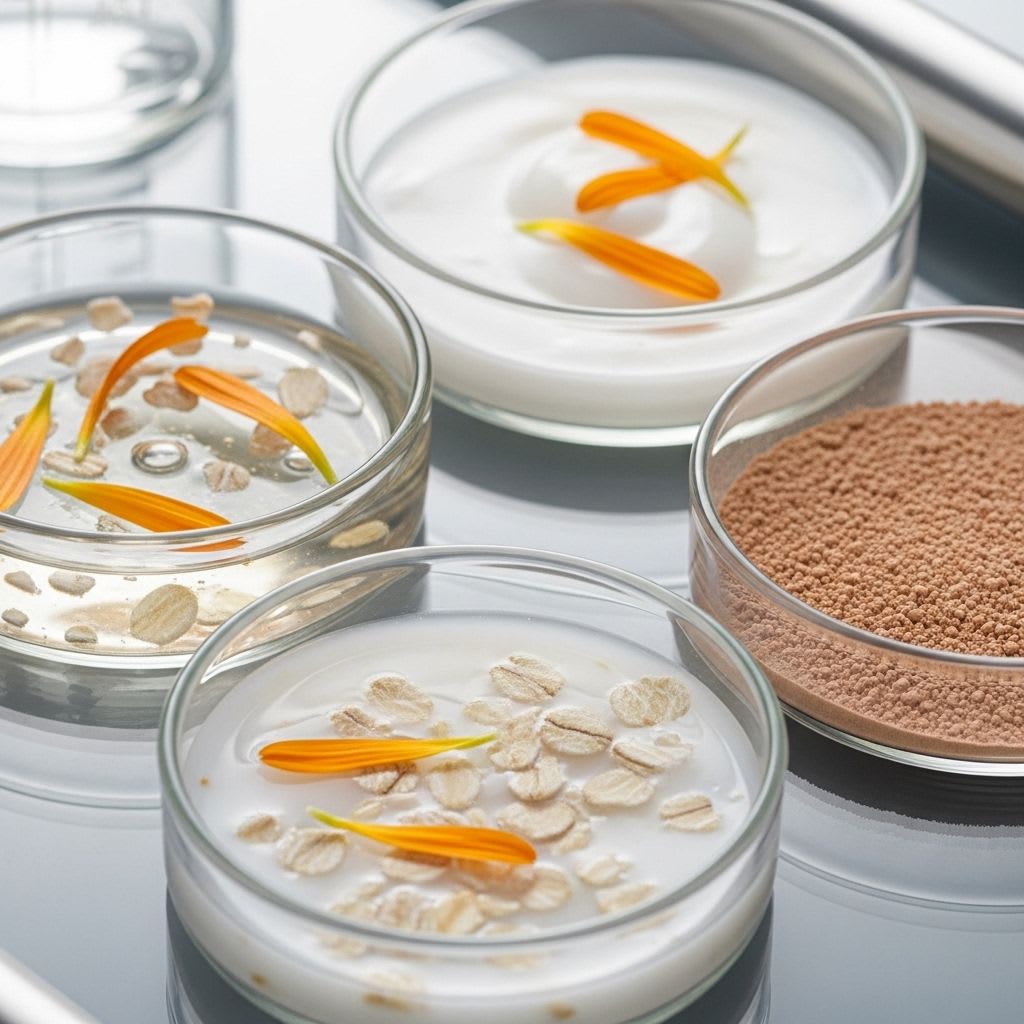
- Colloidal Oatmeal: Clinically proven to reduce inflammation and itching; ideal in foundations for reactive skin
- Avoid: Bismuth Oxychloride: Common in mineral makeup but causes itching and irritation in 20-30% of sensitive skin users
Application tools matter as much as product formulation for preventing sensitive skin reactions. Synthetic brushes harbor fewer bacteria than natural hair bristles and clean more thoroughly, reducing the risk of introducing irritants or pathogens to compromised skin. Dense, duo-fiber brushes allow you to press powder products into skin rather than sweeping across it—the pressing motion deposits pigment without friction that can trigger inflammation in reactive skin. For cream products, clean fingers actually work better than beauty sponges, which can harbor bacteria and require aggressive cleaning agents that leave irritating residue.
To understand how hormonal changes affect your entire makeup approach beyond sensitivity concerns, explore our comprehensive menopause makeup guide that addresses texture changes, color adjustments, and application techniques for hormonally-aging skin.
When Clean Makeup Advice Actually Worsens Sensitivity
The standard recommendation to choose products with the shortest ingredient lists fails for sensitive skin requiring specific active ingredients for coverage and longevity. A five-ingredient mineral powder might seem safer than a fifteen-ingredient cream foundation, but if those five ingredients include uncoated minerals or bismuth oxychloride, you'll experience more irritation than from a longer list of well-chosen, properly formulated components. The clean makeup for sensitive skin that works best often has moderate ingredient counts but complete transparency about sourcing, processing, and purpose for each component.
Another scenario where conventional wisdom backfires: assuming all natural makeup is automatically gentler for sensitive skin. Plant-based preservatives like grapefruit seed extract or certain essential oil blends can be significantly more irritating than synthetic alternatives like caprylyl glycol. Some natural colorants derived from fruits or vegetables can trigger histamine responses in ways synthetic iron oxides never would. The safest approach combines clean ingredient philosophy with individual patch testing—apply new products to your inner arm for 48 hours before using them on your face, regardless of how clean or natural the formula claims to be.
The critical contradiction between marketing and reality: products marketed specifically to sensitive skin often contain supposedly soothing ingredients like lavender, chamomile, or calendula in concentrations too low to provide benefits but high enough to cause reactions in truly reactive skin. These botanical additions serve marketing purposes more than therapeutic ones. The most sophisticated sensitive skin makeup brands keep formulas intentionally minimalist, adding only ingredients with documented safety profiles and proven functional necessity rather than botanical window-dressing that increases reaction risk without improving performance.
What aestheticians observe but rarely articulate: layering multiple clean makeup products can overwhelm sensitive skin even when each individual product is well-tolerated. The cumulative effect of five separate preservative systems, multiple emulsifier blends, and various plant extracts creates a chemical load that triggers inflammation in reactive skin. The solution isn't avoiding makeup but choosing multi-purpose products—a tinted moisturizer with SPF instead of separate sunscreen, primer, and foundation; a cream blush that works for lips instead of separate products. This strategic minimalism reduces total ingredient exposure while maintaining coverage and color.
For women over 50, 60, and 70 navigating both sensitivity and age-appropriate makeup choices, our guide to clean makeup for mature skin addresses the intersection of non-toxic formulation, sensitive skin considerations, and age-specific application techniques for optimal results.