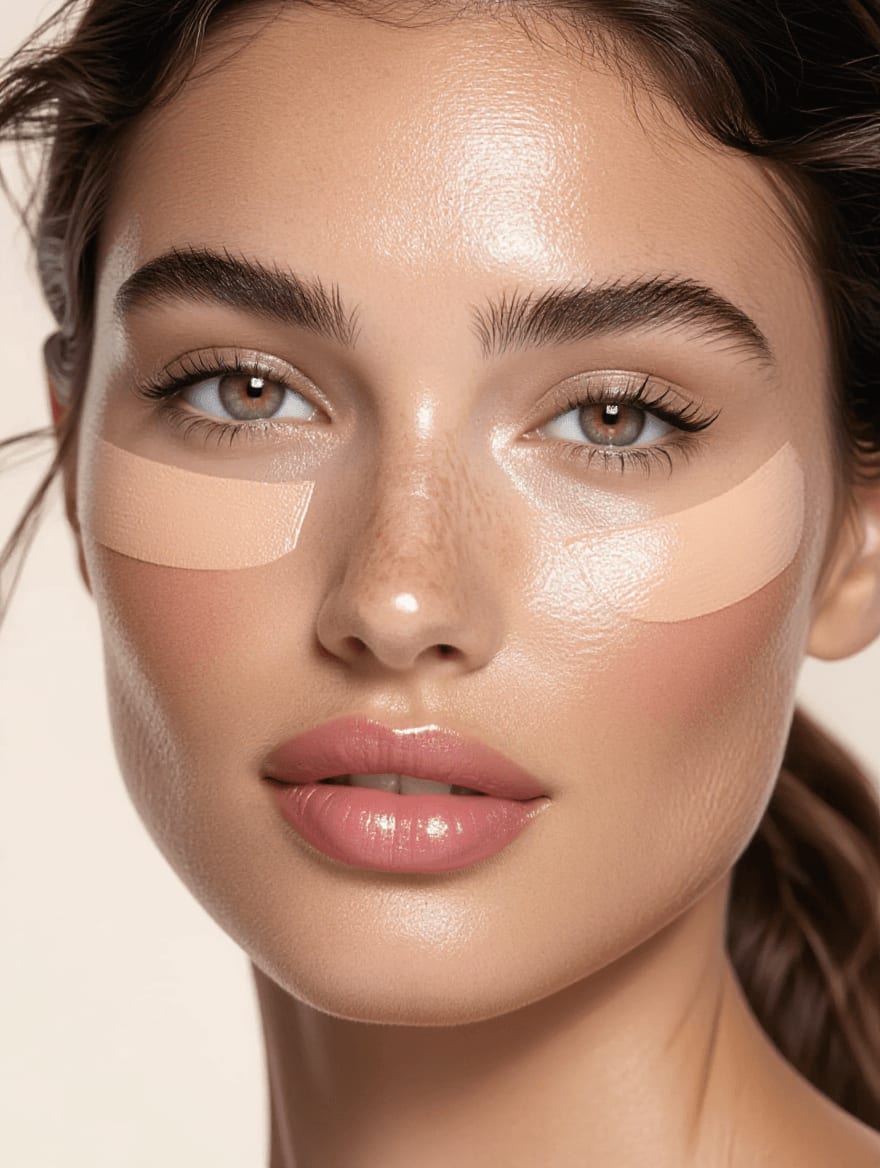
Why Oily Skin Changes After 40 and What That Means for Concealer
Women who've managed oily skin their entire lives often face a confusing shift during perimenopause and menopause: their skin remains oily in some areas while simultaneously developing dryness, texture, and dehydration in others. This combination skin phenomenon fundamentally changes how concealer performs. The same matte formulas that worked beautifully in your 30s now emphasize fine lines around your eyes while your T-zone still produces excess oil that breaks down coverage by midday. This isn't inconsistency in your skin—it's the reality of declining estrogen affecting sebaceous glands unevenly across your face.
Additionally, hormonal fluctuations create unpredictable oil production patterns that make finding the right concealer frustrating. One week your skin absorbs matte concealer beautifully, the next week the same product looks chalky and emphasizes texture you didn't have before. This variability reflects the erratic estrogen and progesterone levels characteristic of perimenopause. Meanwhile, the skin-thinning effects of menopause mean that aggressive oil-control products can now trigger rebound oil production—your skin overcompensates for surface dryness by producing even more sebum, creating a cycle where matte concealers actually worsen the oil problem they're supposed to solve.
The critical insight most oily-skin advice misses is that after 40, you're not simply managing excess oil—you're managing dehydrated oily skin, which requires a completely different approach. Oil and hydration are separate concerns: your skin can produce excess sebum while being desperately dehydrated at the cellular level. Standard matte concealers address the oil but worsen the dehydration, leading to compromised skin barrier function and even more erratic oil production. Understanding this distinction explains why the concealer strategies that worked for years suddenly fail. Learn comprehensive approaches to oily mature skin in our guide to skincare for oily menopausal skin.
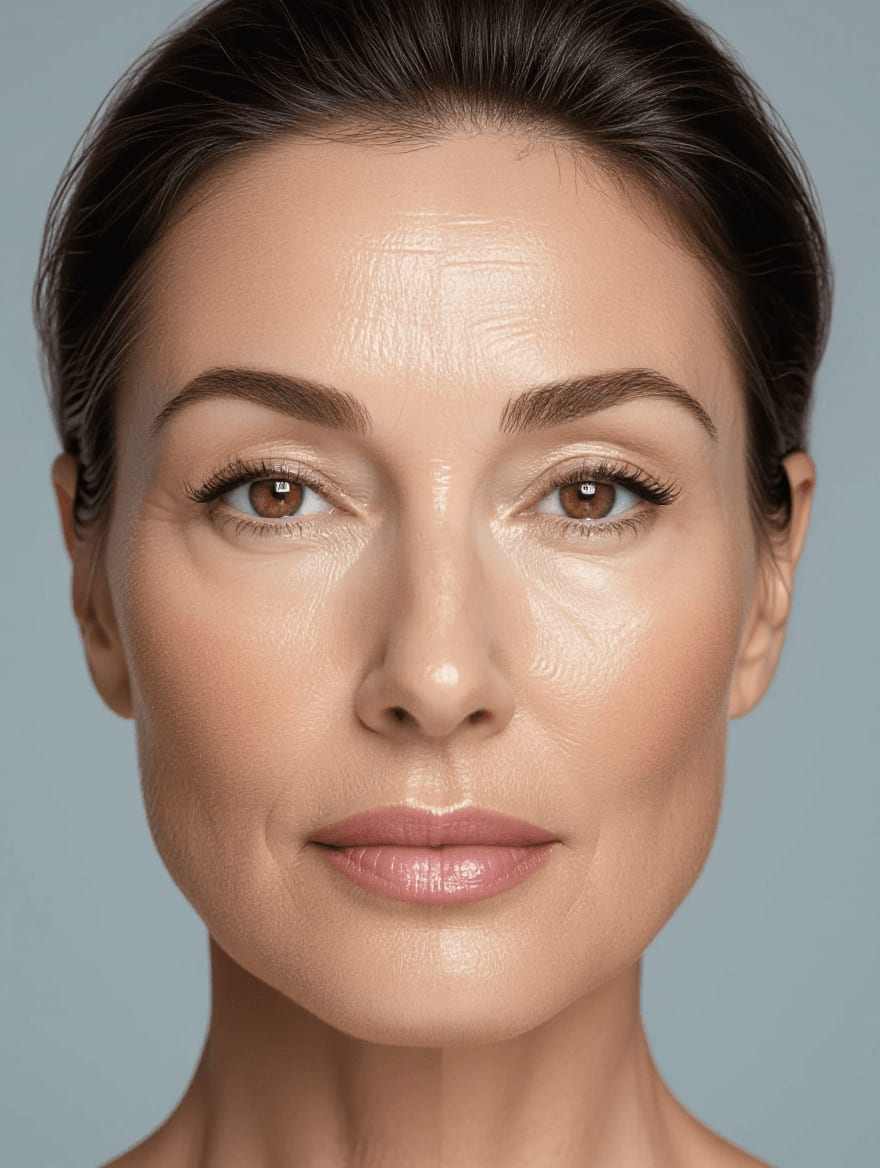
Common Misconceptions About Concealer and Oily Skin
Myth 1: Matte Concealer Is Always Best for Oily Skin
The blanket recommendation to use matte concealers for oily skin becomes actively harmful after 40 when skin texture changes. Ultra-matte formulas achieve their dry-touch finish through high concentrations of absorbent powders and silica—ingredients that soak up oil but also cling to every fine line, dry patch, and textural irregularity. On youthful oily skin with minimal texture, this trade-off works well. On mature oily skin with visible pores, fine lines, and areas of dehydration, matte concealer creates a flat, chalky appearance that paradoxically draws more attention to imperfections than moderate shine would. The key is distinguishing between natural skin luminosity—which looks healthy and youthful—and actual grease, which photographs poorly and feels uncomfortable.
Myth 2: Oil-Free Means Longer-Lasting Coverage
Many women assume oil-free concealers must be superior for oily skin, but this ignores the reality of emulsion chemistry and skin compatibility. Oil-free doesn't mean the product won't break down on oily skin—it just means the formula uses silicones or water as the vehicle instead of botanical or mineral oils. In fact, some oil-based concealers using lightweight oils like squalane actually perform better on mature oily skin because they don't create the moisture barrier disruption that triggers rebound oil production. The determining factor for longevity isn't whether a concealer contains oil but whether it's formulated to resist emulsification—the process where sebum breaks down makeup by mixing with it. Well-formulated products with film-forming polymers resist this regardless of oil content.
The Powder-Setting Trap That Worsens Oil Production
The standard advice to heavily powder oily skin creates a vicious cycle that most beauty content ignores. When you apply thick layers of powder over concealer to control shine, you're sending your skin a signal of surface dehydration. Your sebaceous glands respond by producing more oil to compensate, which breaks through the powder within hours, requiring more powder, triggering more oil—the cycle perpetuates itself. Additionally, on mature skin, heavy powder settling into fine lines creates visible texture that remains even after the oil breaks through, leaving you with both shine and emphasized wrinkles. The solution for oily mature skin is selective, minimal powder—only on areas that genuinely need it, applied with a light hand, and often skipping powder entirely on areas with visible texture like under-eyes and smile lines.
Application Strategies That Work With Oily Mature Skin
The Natural-Finish Formula Selection
For oily skin after 40, the optimal concealer finish is neither fully matte nor dewy but natural or satin—described by brands as "skin-like," "semi-matte," or "velvet." These formulas contain some oil-absorbing ingredients but balance them with hydrating components and light-reflecting particles that diffuse rather than eliminate shine. The result is coverage that looks like healthy skin rather than obvious makeup. When testing formulas, the ideal concealer on oily mature skin should dry down to a soft finish within 2-3 minutes but never look flat or powdery. If it stays tacky beyond 5 minutes, it's too emollient and will migrate. If it dries instantly to a completely matte finish, it will emphasize texture as the day progresses.
The Zone-Specific Application Approach
Stop treating your entire face as uniformly oily and start recognizing zone-specific needs. Your T-zone may still produce significant oil while your under-eyes and outer face are dry or normal. This means you can—and should—use different concealer approaches in different areas. For blemishes and center-face coverage, use your more matte or long-wearing formula applied in thin layers and set with minimal powder. For under-eyes and any areas with visible fine lines, switch to a more hydrating concealer that provides coverage without aggressive oil control. This two-concealer strategy sounds complicated but it's significantly simpler than trying to make a single formula work everywhere and dealing with the inevitable compromise.
- For T-zone and blemishes: Apply concealer, wait 60 seconds for it to set, then use a single light dusting of translucent powder only on these areas—avoid dragging powder into surrounding zones
- For under-eyes on oily skin: Skip powder entirely or use only the tiniest amount on the innermost corner where darkness is deepest—the outer under-eye should remain unset to prevent creasing
- For midday touch-ups:Blot excess oil with blotting papers, then apply fresh powder—never add more concealer over oxidized product as this creates visible layering and emphasizes texture
When Long-Wearing Formulas Backfire: The Adherence Problem
The scenario where concealer advice fails oily mature skin is with ultra-long-wearing or waterproof formulas marketed specifically for oily skin. While these products resist oil breakdown impressively, they achieve longevity through strong film-forming polymers and adhesive ingredients that bond to skin so aggressively they're difficult to remove even with dedicated cleansers. On mature skin, this extreme adherence means the concealer quite literally sticks to texture—clinging to the walls of enlarged pores, settling permanently into fine lines, and emphasizing rough patches. Additionally, these formulas often require makeup removers so strong they strip the skin, triggering even more oil production in a compensatory response. The result is concealer that technically lasts all day but looks progressively worse with each passing hour, and skin that's more oily the next day from over-cleansing. For oily mature skin, moderate longevity with easy removal beats extreme staying power that causes collateral damage. The ideal formula should last 6-8 hours with minor fading—enough for a full day—but come off easily with a gentle cleanser, allowing your skin barrier to recover overnight. Discover complete makeup strategies in our makeup guide for menopause.