
Why Traditional Dewy Makeup Fails on Menopausal Skin
Dewy makeup techniques designed for younger skin backfire dramatically on mature menopausal skin because they assume baseline oil production and plumpness that no longer exist. The glass skin trend popularized on social media relies on naturally elastic, sebum-rich skin that holds moisture and reflects light uniformly. Menopausal skin produces 40% less sebum and has compromised barrier function, meaning the same products that create a gorgeous glow on 25-year-old skin make mature skin look simultaneously greasy and dehydrated—highlighting every wrinkle and texture issue.
The fundamental problem is surface shine versus inner luminosity. Young dewy skin glows because light penetrates hydrated cells and reflects from within. When you apply highlighter or glossy products to dehydrated mature skin, light bounces off the surface instead—creating a wet or oily appearance that sits on top of visible texture rather than diffusing through it. This is why women report looking 'shiny but not glowing' when following standard dewy makeup tutorials. The dewiness reveals rather than softens wrinkles because there's no internal hydration to support the surface effect.
Additionally, menopausal skin changes texture unpredictably—simultaneously dry in some areas (cheeks, around mouth) and unexpectedly oily in others (T-zone, though less so than pre-menopause). Applying uniform dewy products creates patchy results where some areas look perfect while others appear greasy or emphasize pores. Understanding these changes matters because achieving genuine luminosity on mature skin requires completely different product choices and application zones than younger skin. Learn more about makeup adaptation in our complete guide to makeup during menopause.
Common Misconceptions About Achieving Glow on Mature Skin
Myth: More Highlighter Equals More Glow
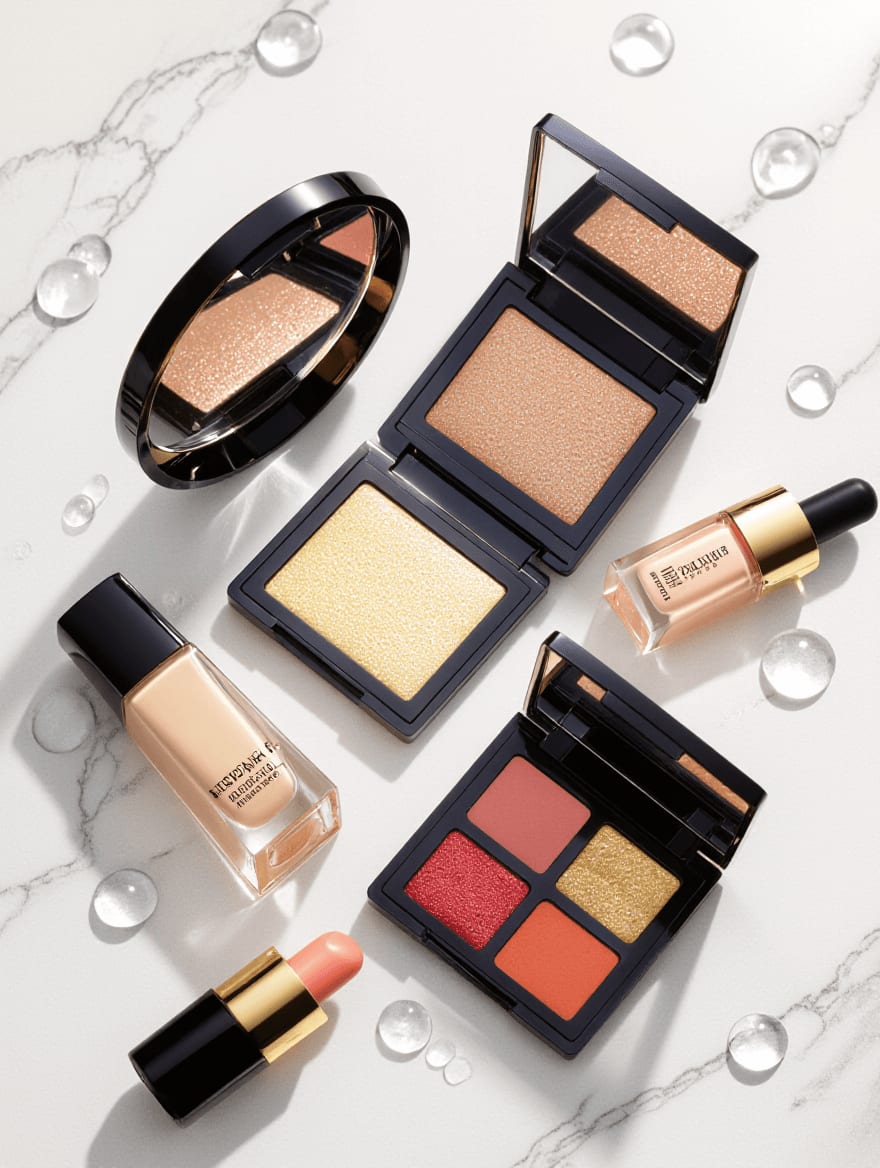
The instinct to pile on highlighter to combat dullness creates the opposite effect on menopausal skin. Heavy highlighter application settles into fine lines, emphasizes skin texture, and creates stripes of shine rather than an all-over glow. The shimmer particles that look ethereal on smooth young skin become glitter specks trapped in wrinkles and enlarged pores. Women consistently report that heavy-handed highlighting makes them look older and more tired rather than radiant.
What works instead is integrated luminosity—mixing a drop of liquid highlighter directly into your foundation for subtle all-over glow, then using minimal additional highlighter only on the highest points of cheekbones. Skip highlighter entirely on the forehead, nose, and chin if these areas show texture. This creates dimension through strategic light placement rather than overwhelming shine. The glow appears to come from within rather than sitting on the surface.
Myth: Dewy Skin Means Skip Setting Spray or Powder
Tutorials often suggest leaving dewy makeup completely unfixed for maximum glow, but this fails catastrophically on mature skin within 1-2 hours. Without any setting, products slide into wrinkles, separate, and create an uneven greasy appearance rather than sustained dewiness. The contradiction is that menopausal skin needs some fixing to maintain the dewy effect, but traditional powder destroys it completely.
The solution is selective setting: use hydrating setting spray on the entire face to lock products in place, then apply minimal translucent powder only to areas that tend toward excess shine (typically sides of nose, center forehead). Leave cheeks, under-eyes, and jawline completely unpowdered. This hybrid approach maintains luminosity where you want it while preventing the slippery, separating effect that ruins dewy makeup on mature skin. Setting spray alone isn't enough—menopausal skin needs the strategic oil control powder provides, just not everywhere.
The Modified Dewy Technique for Menopausal Skin
Foundation Strategy: Satin Finish Over Glossy or Matte
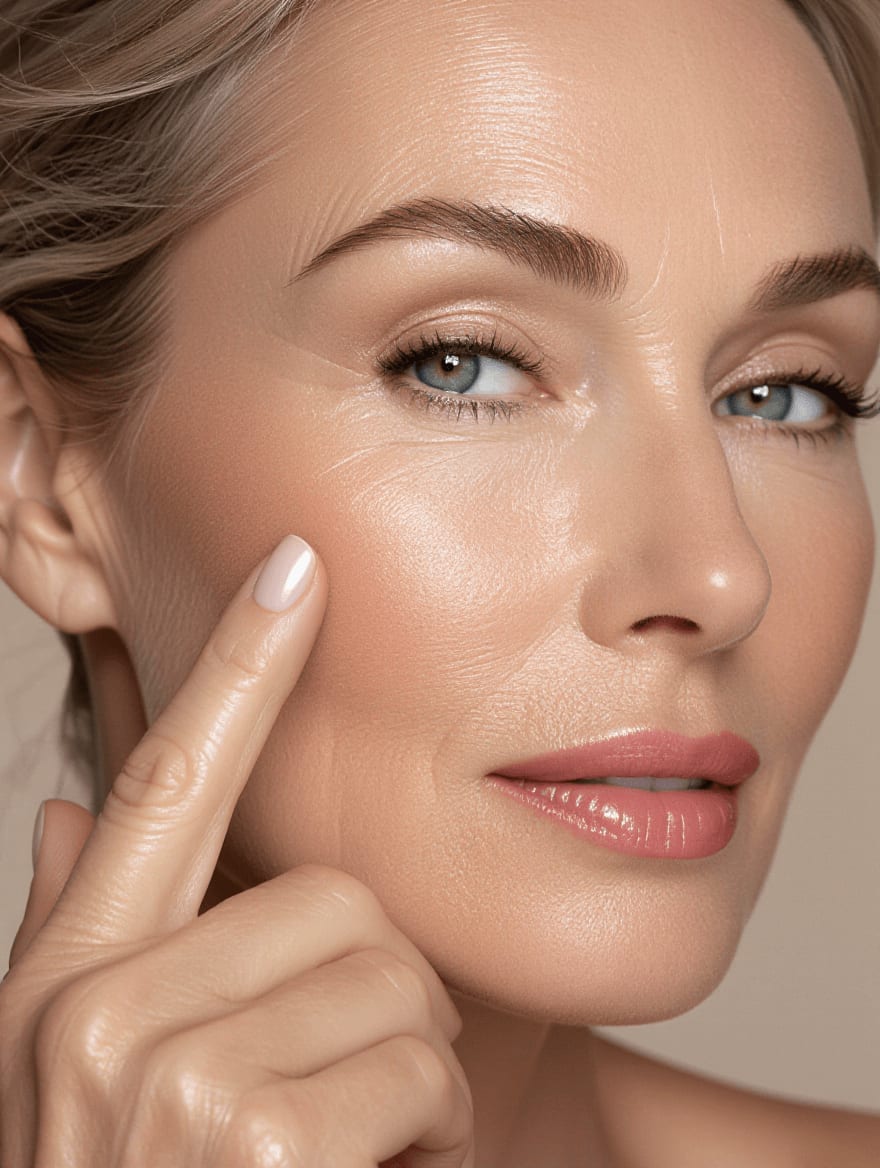
The key to dewy-looking mature skin is choosing foundations labeled 'satin,' 'natural,' or 'luminous' rather than 'dewy' or 'radiant.' This distinction matters because dewy foundations contain oils and slip agents that cause separation on low-sebum menopausal skin, while satin finishes have light-reflecting pigments without excess moisture. Apply with a damp beauty sponge using pressing motions rather than rubbing—this deposits a thin, even layer that mimics skin rather than sitting on top of it. The sponge's moisture content provides just enough dewiness without the greasy effect wet-look products create.
For enhanced glow, mix one drop of liquid illuminator into your foundation on the back of your hand before application. This creates customized subtle luminosity throughout rather than obvious highlighted zones. The ratio matters: one drop per pump of foundation is sufficient—more creates an oily appearance. This internal glow approach works because light particles are distributed evenly through your base rather than concentrated in streaks. Proper skincare preparation is essential for this to work; explore foundation-ready routines in our menopausal skincare guide.
Strategic Placement: Where to Add Glow vs. Where to Avoid
Mature dewy makeup requires facial mapping rather than all-over application. Add additional luminosity only to areas where skin is relatively smooth and where natural light would hit: tops of cheekbones (not apples), bridge of nose (not tip), cupid's bow, and very lightly on brow bones. Use cream highlighters rather than powder for these zones—they blend into skin instead of sitting on the surface, and choose champagne or pearl tones rather than silver or gold which can look metallic and aging on mature skin.
Critically, avoid adding any extra glow to the forehead (especially if wrinkles are present), sides of nose near pores, chin, or anywhere with visible texture. These areas should receive your satin-finish foundation only, with no layered luminosity. This creates strategic dimension—face looks lit from within where skin is smoothest, while textured areas fade into natural shadow rather than being spotlit. The overall effect reads as healthy, hydrated skin rather than obvious makeup. When standard advice fails here is with very textured skin: some women achieve better results with zero additional highlighter, relying solely on foundation luminosity. The trade-off is less dramatic glow but more natural, age-appropriate radiance that doesn't fight with skin reality.
The Real-World Timeline: How Long Dewy Makeup Actually Lasts
Honest disclosure: dewy makeup on menopausal skin lasts 4-6 hours maximum before requiring attention, compared to 8-10+ hours for matte finishes. This is the primary downside nobody admits. The luminosity depends on maintaining surface moisture, which menopausal skin cannot sustain long-term. By mid-afternoon, you'll likely need to mist with hydrating spray and possibly reapply cream highlighter to cheekbones. Some areas may look perfect while others have gone flat or slightly separated.
This maintenance requirement means dewy makeup for mature skin works best for events, occasions, or when you'll be home by early afternoon—not for 12-hour workdays. Experienced practitioners often do hybrid makeup: dewy finish for special occasions, satin or natural finish for daily wear. This isn't failure—it's realistic adaptation to how menopausal skin actually behaves. The effort investment for perfect dewy skin is significant, but when executed properly for the right occasions, the luminous, youthful glow justifies the maintenance for women who value this aesthetic.