
Why Periods Often Get Worse in Your 40s Before They Stop
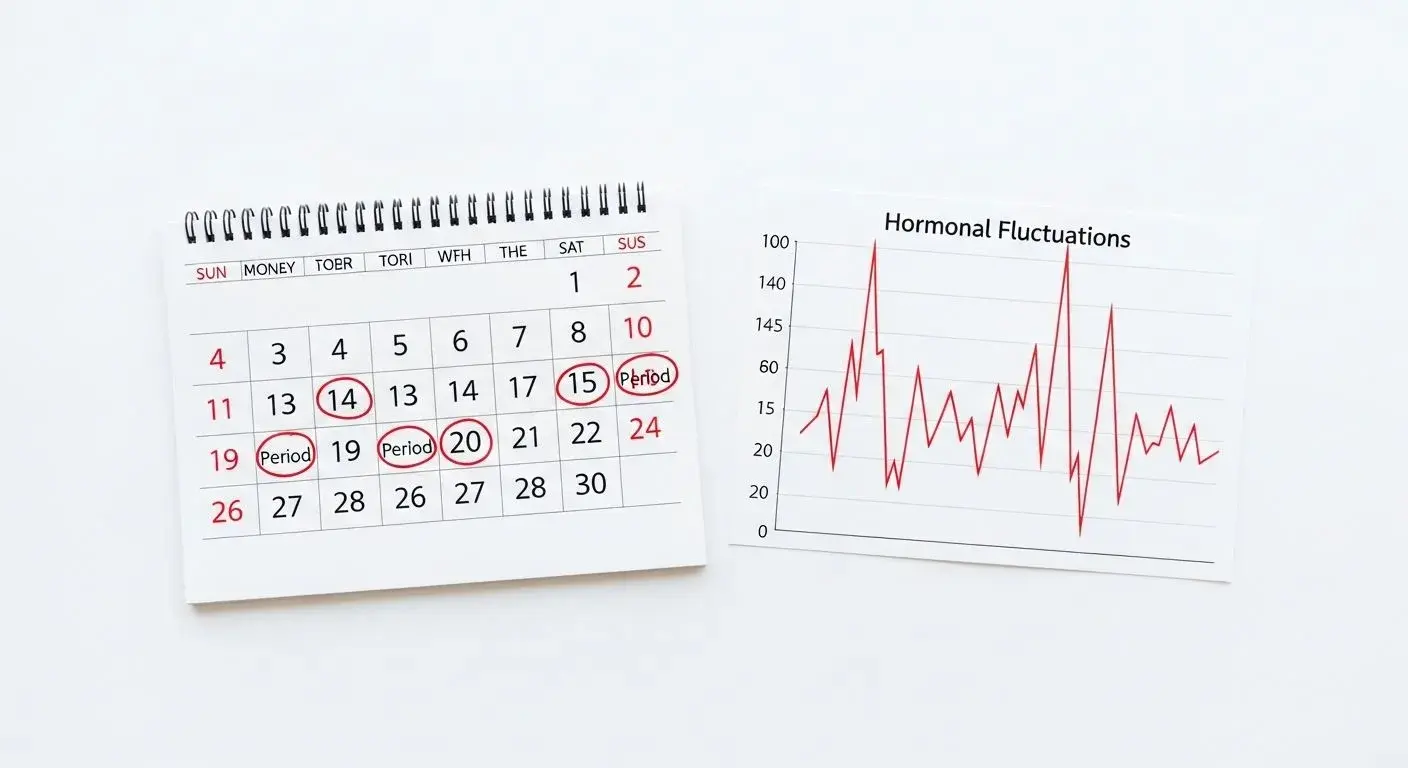
Counterintuitively, many women experience heavier, more painful, or more irregular periods as they enter perimenopause — a stage that eventually leads to periods stopping altogether. The mechanism is hormonal: in early perimenopause, progesterone production becomes erratic and declines faster than estrogen. This creates a relative estrogen dominance — not necessarily high absolute estrogen levels, but an imbalance favouring estrogen over progesterone. Since progesterone normally limits the growth of the uterine lining each cycle, reduced progesterone leads to a thicker endometrium that sheds more heavily. The result is that the very approach of menopause can temporarily make periods worse, not better.
Fibroids, which are also estrogen-sensitive, often grow during perimenopause for the same reason, further amplifying heavy bleeding. Women who notice a sudden step-change in period heaviness — flooding, clots, or soaking through protection within an hour — should have this assessed medically, not attributed to age alone. Perimenopausal heavy bleeding is common but that does not mean it always requires no treatment: iron-deficiency anaemia, fibroids, and endometrial polyps are all treatable causes that worsen quality of life unnecessarily if left unaddressed. If you have noticed your PMS symptoms are intensifying alongside these changes, our article on worsening PMS during perimenopause explains the connection.
Signs Your Period Is Winding Down for Good
The signs that your menstrual cycle is approaching its end are characteristically inconsistent — which is itself the pattern. Cycles that begin skipping months (going from 28 days to 35 to 50 and then missing entirely) are a strong indicator you are in late perimenopause. Lighter, shorter bleeds interspersed with occasional heavy ones are also typical of a declining cycle. Some women experience a final few regular cycles before stopping abruptly; others have an unpredictable taper over years.
A common misconception is that periods simply get progressively lighter until they fade away. For many women the opposite occurs: heavier, irregular periods followed by long gaps. Only once you have reached 12 consecutive period-free months can you confirm menopause. A misconception worth correcting directly: spotting or bleeding after this 12-month window is not a return of your period — it requires medical evaluation without exception, as it can indicate endometrial abnormalities. The sensory changes during this time — including skin changes that affect your complexion — are explored in our guide on unexpected sensory symptoms in menopause.
What Makes Menopause Symptoms Measurably Worse
Several lifestyle factors consistently amplify menopause symptoms across the research literature. Alcohol is one of the strongest: even moderate intake directly increases hot flash frequency, worsens sleep quality, and disrupts the mood stabilisation that the brain is already struggling to maintain with declining estrogen. Smoking accelerates ovarian decline and reduces the efficacy of HRT if used. Poor sleep — whether from night sweats or other causes — compounds every other symptom through its downstream effects on cortisol, inflammation, and insulin sensitivity.
High chronic stress is another significant amplifier: elevated cortisol competes with progesterone at receptor sites, worsens hypothalamic thermoregulation (worsening hot flashes), and accelerates bone density loss. A high-sugar, low-nutrient diet worsens insulin resistance that naturally increases at menopause, contributing to weight gain, fatigue, and mood instability. The trade-off women often face is that the lifestyle changes that most reliably improve symptoms — reducing alcohol, improving sleep, exercising consistently, managing stress — require sustained effort during a period when energy and motivation are often already depleted. Incremental, realistic changes outperform dramatic overhauls for this reason.