
Why Oestrogen Decline Causes Neck Pain During Perimenopause
Oestrogen is not only a reproductive hormone — it is a major regulator of musculoskeletal health throughout the body. It maintains the collagen content of tendons, ligaments, and joint capsules; it modulates the pain sensitivity of nerve endings; and it controls the inflammatory response in synovial tissue. When oestrogen levels fall during perimenopause — often years before the final menstrual period — every one of these functions is disrupted, and the cervical spine (neck) is among the most vulnerable structures.
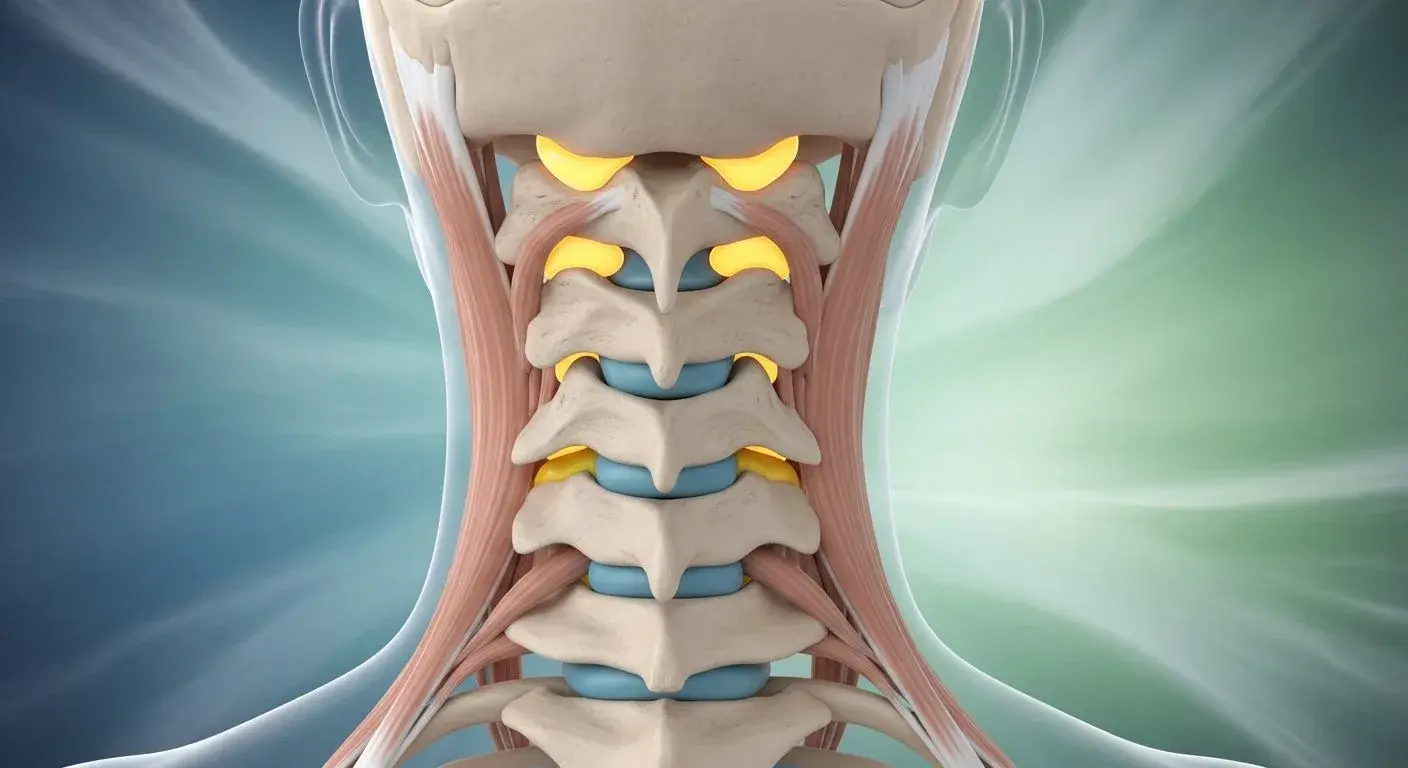
The neck is particularly susceptible because it combines high mobility, significant mechanical load from the weight of the head, and a dense concentration of small facet joints and ligaments that depend on oestrogen for their structural integrity. Many perimenopausal women report a new or worsening stiffness on waking, tension across the upper trapezius, and an aching that does not resolve with usual stretching. These are not posture problems — they are hormonal ones. Perimenopause body aches and joint pain are a well-documented cluster, and neck pain is frequently part of the same hormonal picture.
What Standard Neck Pain Advice Misses for Perimenopausal Women
Generic neck pain advice — improve your workstation, sleep on a supportive pillow, do chin tucks — is not wrong, but it is incomplete for women in perimenopause. These interventions address mechanical load, not the hormonal environment that is making the neck more sensitive and less resilient. Here is where standard guidance falls short:
- Posture correction does not address collagen loss: Correcting head-forward posture reduces mechanical load but does not replace the collagen that oestrogen decline has depleted from cervical discs and ligaments.
- Anti-inflammatory painkillers mask rather than resolve: NSAIDs reduce symptoms temporarily but do not address the hormonal driver. Long-term reliance is problematic and delays appropriate hormonal assessment.
- Strength training needs oestrogen support to work: Neck strengthening exercises are beneficial, but in a low-oestrogen state the tendon-to-bone attachment sites are more prone to micro-injury. Resistance training should be paced carefully and ideally accompanied by hormonal support.
Effective management addresses the hormonal root. Women who achieve significant improvement in perimenopausal neck pain most commonly do so through a combination of HRT, targeted physiotherapy, and stress management — with the hormonal component being the single most impactful intervention. Symptoms of perimenopause checklist includes neck and shoulder pain among the 30-plus recognised symptoms women should track for a GP conversation.
Frequently Asked Questions
Can perimenopause cause neck pain?
Yes, perimenopause causes neck pain in many women. Oestrogen decline reduces collagen in cervical ligaments and increases pain sensitivity in neck joints. Neck stiffness, aching, and tension headaches are all recognised perimenopausal symptoms that often resolve or improve significantly with hormonal treatment.
Does HRT help with menopause neck pain?
Yes, HRT helps many women with menopause-related neck pain. Oestrogen replacement restores some of the anti-inflammatory protection and collagen support that decline during perimenopause. Women often report reduced morning stiffness and joint aching within 3 months of starting HRT, though individual responses vary.
Is neck pain a sign of menopause?
Neck pain can be a sign of perimenopause, particularly when it appears alongside other symptoms such as hot flushes, sleep disruption, or joint aching elsewhere. Always discuss new or worsening neck pain with your GP to rule out structural causes before attributing it to hormonal changes.
What exercises help with perimenopause neck pain?
Gentle cervical mobility exercises, chin tucks, and upper trapezius stretches provide short-term relief. Yoga and Pilates classes that include thoracic spine mobilisation are particularly beneficial for perimenopausal neck pain. Avoid high-impact activities that compress the cervical spine until hormonal support is in place.
Sources
- Oestrogen and Musculoskeletal Pain: A Review. pubmed.ncbi.nlm.nih.gov — PubMed / NIH
- Perimenopause Symptoms and Joint Health. menopausesociety.org — The Menopause Society
- Neck Pain Causes, Diagnosis, and Treatment. mayoclinic.org — Mayo Clinic