
What Does a Healthy Female Hairline Actually Look Like?
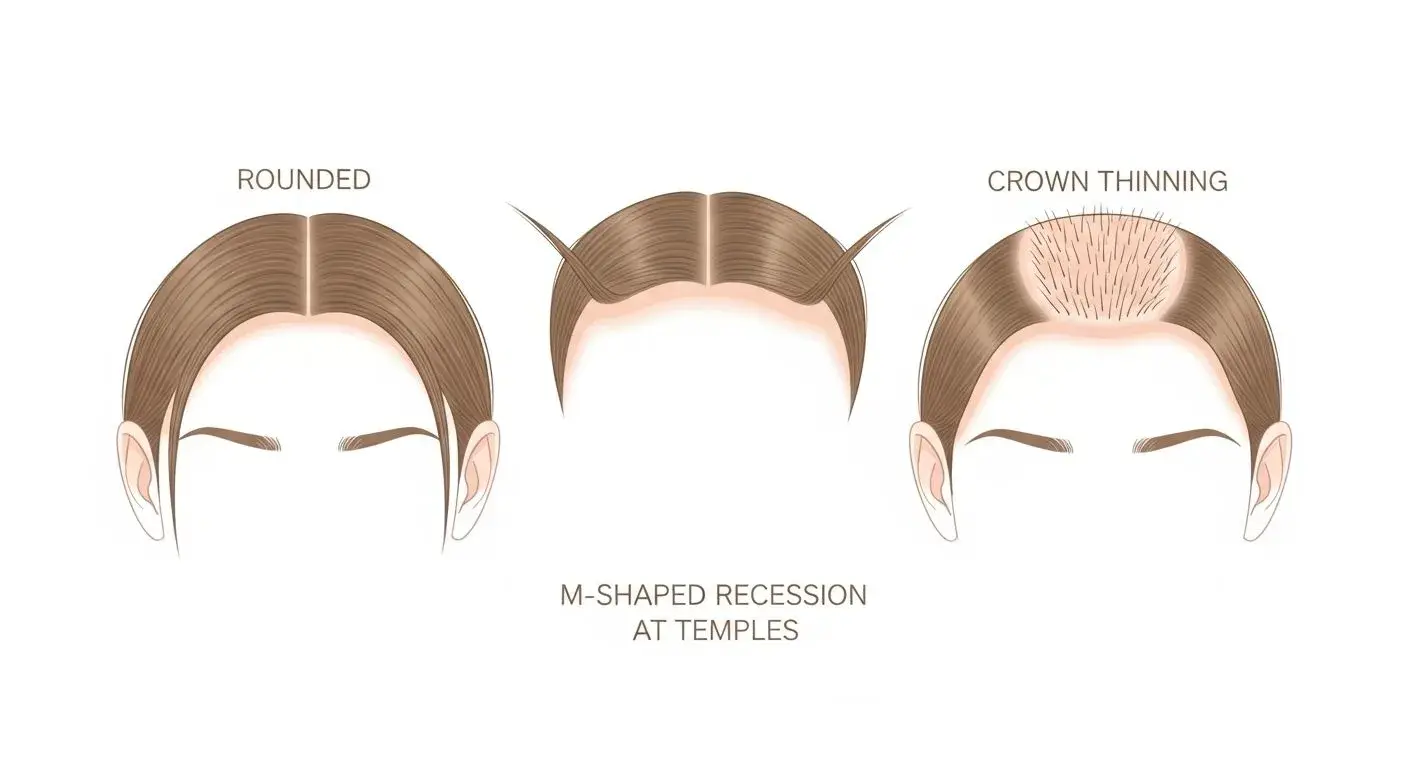
A healthy female hairline is rarely perfectly straight or symmetrical. Most women have a naturally rounded or slightly irregular hairline with a few fine, wispy hairs at the temples. What many women mistake for a 'bad hairline' is often completely normal variation. The real concern is change over time, not the shape itself.
The back of the head matters too: thinning at the back of the head in women often points to diffuse hair loss rather than classic recession. Unlike male-pattern baldness that starts at the temples, female hair loss frequently begins at the crown or mid-scalp and can go unnoticed longer because the front hairline stays intact. If you part your hair and notice more scalp than before, or your ponytail feels noticeably thinner, those are early signals worth tracking.
Common misconception: many women believe a receding hairline always means baldness. In reality, most female hairline recession is caused by hormonal shifts, styling habits, or nutritional gaps, all of which are treatable when caught early. A receding hairline in women rarely follows the same path as in men. If you are also experiencing skin sensitivity, it may be worth reading about menopause-related itching and skin changes, which can overlap with scalp symptoms.
Why Women Develop Hairline Recession: The Real Causes
Female hairline recession has multiple causes, and getting the right one identified is the single most important factor in reversing it. Treatment that works for hormonal hair loss will not work for traction alopecia, and vice versa.
- Hormonal fluctuations: dropping estrogen during perimenopause and menopause shortens the hair growth cycle and increases sensitivity to androgens. This is the most common driver of female receding hairline in women over 40.
- Traction alopecia: tight ponytails, buns, and braids pull the hairline back over time. This is one of the few causes that genuinely creates a 'bad hairline' pattern at the temples and edges.
- Frontal fibrosing alopecia (FFA): a progressive scarring condition that causes a band-like recession at the front and sides. Unlike diffuse thinning, FFA is permanent in scarred areas and requires early medical intervention.
- Nutritional deficiencies: low ferritin (stored iron), vitamin D, and zinc are frequently underdiagnosed in women reporting hairline thinning. A blood panel is more useful than guessing.
Where standard advice fails: scalp massages and topical growth serums are widely recommended but will not slow FFA or traction alopecia if the underlying tension or inflammation is not removed first. Using these tools without addressing the root cause delays proper treatment by months.
Protecting Your Hairline: What Actually Works
Early action produces significantly better outcomes than waiting for noticeable loss. Women who address hormonal or nutritional causes within the first year of recession see better regrowth than those who wait two or more years. Here is what works based on cause:
- Hormonal cause: speak with a dermatologist or gynaecologist about low-dose minoxidil, anti-androgens, or HRT depending on your full hormone picture. Do not start minoxidil without a diagnosis.
- Traction alopecia: switch to loose styles immediately. Early traction alopecia is reversible, but the window closes once follicle scarring occurs, usually after several years of repeated tension.
- Nutritional cause: test before supplementing. Excess zinc or iron can worsen hair loss. Target the specific deficiency confirmed by bloodwork.
- FFA: requires a dermatologist. Treatments include topical or oral anti-inflammatory medications. Sunscreen on the exposed hairline may help slow progression according to some research, though evidence is still emerging.
If you are noticing scalp sensitivity or itching alongside hairline changes, these can be connected. Hormonal shifts that affect the hairline often affect scalp condition too. More on that in this guide to menopause-related skin fragility and bruising, which shares the same hormonal drivers. Always consult a qualified healthcare provider before beginning any treatment for hair loss.