
What is Frozen Shoulder and Why Does it Happen?
Frozen shoulder — medically called adhesive capsulitis — is a condition where the connective tissue capsule surrounding the shoulder joint thickens, tightens, and develops adhesions, progressively restricting movement in all directions. It is not a muscle or rotator cuff problem. It is a disease of the joint capsule itself, and understanding this distinction is critical to treating it correctly.
Frozen shoulder develops in three phases: a painful 'freezing' stage (2–9 months) where inflammation peaks and movement begins to restrict; a 'frozen' stage (4–12 months) where pain may ease but stiffness is severe; and a 'thawing' stage (5–24 months) where motion gradually returns. Total duration ranges from 1 to 3 years without treatment. With targeted physiotherapy and interventional treatments, this timeline can be significantly shortened.
Risk factors include being female, being between 40 and 60 years old, diabetes, thyroid disease, and — critically — reduced estrogen. Women in perimenopause and menopause are disproportionately affected, linking frozen shoulder to the broader spectrum of hormonal musculoskeletal changes. Related bruising and skin fragility often accompany these changes — see our guide on menopause bruising causes and prevention.
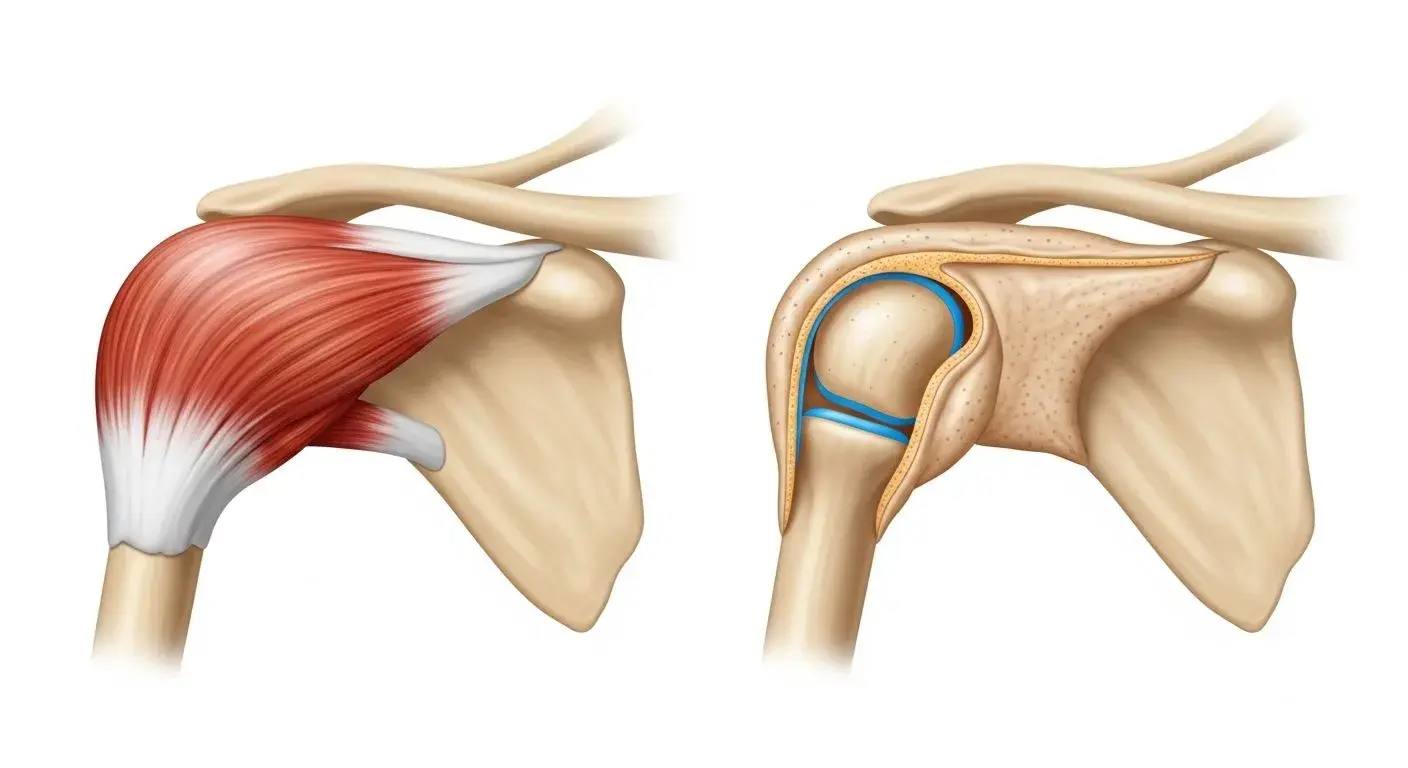
Frozen Shoulder Myths vs. What the Evidence Actually Shows
The most widespread misconception is that frozen shoulder always resolves on its own and that waiting is the only option. While the natural history does trend toward recovery, studies show that up to 40% of patients still have functional limitation at 6 years without active treatment. Passive waiting is not a strategy — it is a gamble.
A second myth is that aggressive stretching accelerates recovery. Forceful stretching during the freezing stage — when the capsule is actively inflamed — worsens pain and can slow healing. The correct approach in the freezing stage is gentle pendulum exercises and pain management, not aggressive range-of-motion work. Intensive stretching is appropriate only in the thawing stage, when inflammation has subsided.
The trade-off with corticosteroid injections is real: a single early injection significantly reduces pain and speeds the freezing stage transition, but repeated injections weaken the joint capsule and offer diminishing returns. Most guidelines recommend a maximum of two injections in the same joint.
Frequently Asked Questions
How long does frozen shoulder last?
Frozen shoulder typically lasts between 1 and 3 years without treatment. With physiotherapy, corticosteroid injections, and where necessary, hydrodilatation or manipulation under anaesthesia, recovery time can be shortened to 6–18 months. Starting treatment early — in the freezing phase — produces the fastest outcomes.
What are the first signs that frozen shoulder is starting to thaw?
Early thawing signs include a gradual return of pain-free range of motion, particularly being able to lift the arm higher without a hard stop. Morning stiffness begins to ease faster. Sleep becomes less disrupted. These changes typically begin in month 9–18 and signal that intensive physiotherapy stretching can now be introduced safely.
Can frozen shoulder come back?
Yes, frozen shoulder can recur in the same or opposite shoulder, particularly in women with hormonal risk factors. Approximately 20–30% of people develop it in the second shoulder within 5 years. Maintaining shoulder mobility with regular overhead movement and addressing underlying hormonal or metabolic risks reduces recurrence likelihood.
How to relieve frozen shoulder pain at night?
Sleep on your back with the affected arm resting on a pillow at your side, slightly away from your body — this reduces capsule compression. An NSAID taken 1 hour before bed can significantly reduce night pain during the freezing stage. Avoid sleeping on the affected shoulder, which dramatically increases pain.
Sources
- Adhesive Capsulitis: A Review. pubmed.ncbi.nlm.nih.gov — PubMed / NIH
- Frozen Shoulder — Diagnosis and Treatment. mayoclinic.org — Mayo Clinic
- Frozen Shoulder: Treatment and Recovery. nhs.uk — NHS