
Why Thyroid Disease Raises Your Frozen Shoulder Risk
Frozen shoulder — medically known as adhesive capsulitis — is not just a random musculoskeletal problem. Research consistently links it to systemic hormonal and metabolic conditions, and thyroid disease sits near the top of that list. Studies estimate that people with hypothyroidism are significantly more likely to develop adhesive capsulitis than the general population, yet most GPs do not screen for thyroid dysfunction when a patient first presents with shoulder stiffness.
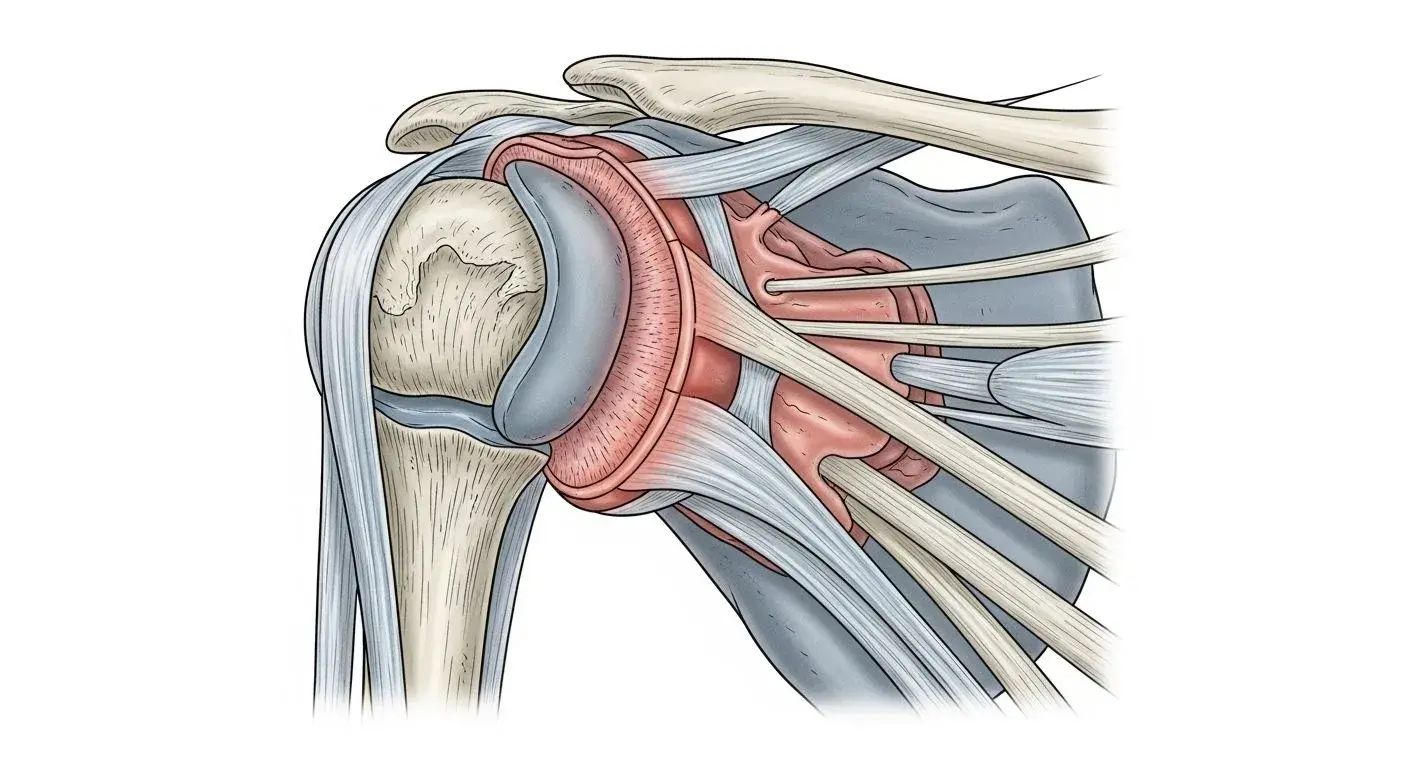
The mechanism is well-established. The thyroid hormone T3 plays a direct role in collagen remodelling and synovial fluid production. When T3 is low — as in hypothyroidism or autoimmune Hashimoto's thyroiditis — the shoulder joint capsule can thicken abnormally, reducing range of motion in all directions. This is distinct from rotator cuff injuries, which tend to cause pain only in specific movements. Frozen shoulder restricts motion globally, making even reaching for a seatbelt agonising.
The connection also runs through inflammation. Thyroid dysfunction dysregulates inflammatory cytokines, creating a chronic low-grade inflammatory environment in joint tissue. For women approaching menopause, this risk compounds: estrogen loss independently promotes joint inflammation, meaning a woman who is simultaneously perimenopausal and hypothyroid faces a double hormonal burden on her shoulder joint. If you have not yet read about how estrogen affects joint health broadly, perimenopause body aches and joint pain explores the full picture.
Common Myths vs. What the Evidence Actually Shows
The most damaging myth is that frozen shoulder always resolves on its own within two to three years. While many cases do improve, research shows that up to 40% of people retain some degree of restricted movement long-term, and those with untreated thyroid disease are disproportionately represented in that group. Treating the underlying thyroid condition — not just the shoulder — is essential for full recovery.
A second misconception is that frozen shoulder is caused by inactivity or poor posture. While immobility can perpetuate the condition, it rarely causes it. The true origin is capsular fibrosis — a biological process driven by hormonal and inflammatory signalling, not lifestyle choices. Blaming the patient for 'not moving enough' misses the point entirely.
There is also a contradiction in standard treatment guidelines worth flagging: corticosteroid injections are routinely offered for pain relief, yet in people with uncontrolled hypothyroidism, steroid injections can temporarily worsen thyroid function and blunt the healing response. If your GP recommends a steroid injection, make sure your thyroid levels have been checked first. Low estrogen further complicates this picture — it is covered in depth in our article on symptoms of low estrogen and hormone imbalance.
- Myth: Only sedentary women get frozen shoulder. Reality: Active women with thyroid disease are equally at risk.
- Myth: It is a normal part of ageing. Reality: It is a pathological process linked to specific hormonal deficiencies.
- Myth: Physiotherapy alone is sufficient. Reality: Without addressing thyroid and hormonal root causes, physical therapy results are slower and less durable.
Practical Strategies: Treating Frozen Shoulder When Thyroid Disease Is Involved
The first practical step is getting a full thyroid panel — not just TSH, but free T3 and free T4, plus thyroid antibodies (TPO and TgAb) to rule out Hashimoto's. Many women are told their TSH is 'normal' while free T3 remains suboptimal. An integrative or functional GP is more likely to investigate fully than a standard referral pathway.
Once thyroid status is confirmed and managed, targeted physical therapy becomes significantly more effective. The key is beginning with pain-free range of motion work — pendulum exercises, gentle passive stretches, and heat application before sessions. Forcing movement through sharp pain does not accelerate recovery; it causes protective muscle guarding that worsens capsular tightness. Most women in early frozen shoulder stages see meaningful progress within 8 to 12 weeks of consistent gentle work alongside optimised thyroid treatment.
Anti-inflammatory nutrition also plays a role. Omega-3 fatty acids (found in oily fish and flaxseed), turmeric, and magnesium all support the anti-inflammatory environment the shoulder joint needs to heal. Women with Hashimoto's should also be aware that gluten sensitivity is more prevalent in autoimmune thyroid disease, and a trial elimination of gluten has helped some reduce systemic inflammation — though evidence remains individual. Always discuss dietary changes with a qualified practitioner.
When Standard Advice Fails: The Edge Cases
Standard advice fails most obviously in women whose thyroid disease has not been diagnosed. If you have had persistent shoulder stiffness for more than 6 weeks with no clear injury history, ask specifically for thyroid screening — it is rarely offered proactively in this context. A second failure scenario involves women on levothyroxine who are technically 'treated' but remain on a dose that keeps TSH at the high end of normal while free T3 stays low. Optimising the T3/T4 balance, sometimes by adding liothyronine, can shift stalled recovery. This is a specialist conversation — do not self-adjust thyroid medication.
Frequently Asked Questions
Does thyroid disease cause frozen shoulder?
Yes, thyroid disease — particularly hypothyroidism — is a recognised risk factor for frozen shoulder. Low thyroid hormone disrupts collagen remodelling and promotes capsular fibrosis in the shoulder joint. Treating the thyroid condition alongside physical therapy produces better outcomes than physiotherapy alone.
Can treating hypothyroidism cure frozen shoulder?
Treating hypothyroidism improves the biological environment for healing but does not instantly reverse frozen shoulder. Most women see faster progress with physical therapy once thyroid levels are optimised. Full recovery typically takes 6 to 18 months even with ideal treatment.
What is the frozen shoulder test a doctor would do?
A doctor typically assesses frozen shoulder by testing passive range of motion in multiple directions — particularly external rotation and overhead reach. Significant restriction in all planes, without evidence of rotator cuff tear on ultrasound or MRI, is the diagnostic hallmark. Blood tests for thyroid function and blood glucose should be requested alongside.
Is frozen shoulder more common in perimenopause?
Yes. Frozen shoulder peaks between ages 40 and 60, overlapping directly with perimenopause. Estrogen loss promotes joint inflammation and reduces synovial fluid quality, compounding the risk from any thyroid dysfunction already present. Women in this age group with shoulder stiffness should have both hormonal and thyroid status reviewed.
Can HRT help with frozen shoulder linked to menopause?
Possibly. HRT restores estrogen levels, which supports joint lubrication and reduces systemic inflammation. Some women report shoulder improvement after starting HRT, though no large randomised trial has specifically tested HRT for adhesive capsulitis. Discuss the full risk-benefit picture with your GP or menopause specialist.
Sources
- Adhesive Capsulitis and Thyroid Disease — Association and Outcomes. pubmed.ncbi.nlm.nih.gov — PubMed / NIH
- Frozen Shoulder (Adhesive Capsulitis) — Diagnosis and Treatment. mayoclinic.org — Mayo Clinic
- Frozen Shoulder — NHS Overview. nhs.uk — NHS
- Thyroid Hormone and Connective Tissue Remodelling. pubmed.ncbi.nlm.nih.gov — PubMed / NIH