
Why Tracking Hot Flashes Is More Useful Than It Sounds
Most women experiencing hot flashes feel like they come randomly and without warning. Tracking reveals a different story. Hot flashes cluster around identifiable triggers — specific foods, alcohol, stress spikes, disrupted sleep, and particular times of the menstrual cycle — that only become visible when data is collected consistently over 2-4 weeks. What tracking actually changes: Women who track hot flashes report being able to avoid roughly 30-50% of their usual frequency by modifying identified triggers. Tracking also provides objective evidence for medical consultations — many women underreport or overreport symptom severity from memory, and a log creates an accurate baseline for evaluating whether a treatment (HRT, supplements, lifestyle changes) is actually working.
Hot flash frequency is also clinically meaningful. Moderate-to-severe hot flashes (7 or more per day) are associated with poorer sleep quality, cardiovascular risk markers, and lower quality of life. Tracking gives you data to assess where you fall and whether treatment escalation is warranted. For symptoms that occur alongside hot flashes such as unusual itching or sensory changes, our article on menopause itchy ears and sensory symptoms provides useful related context.
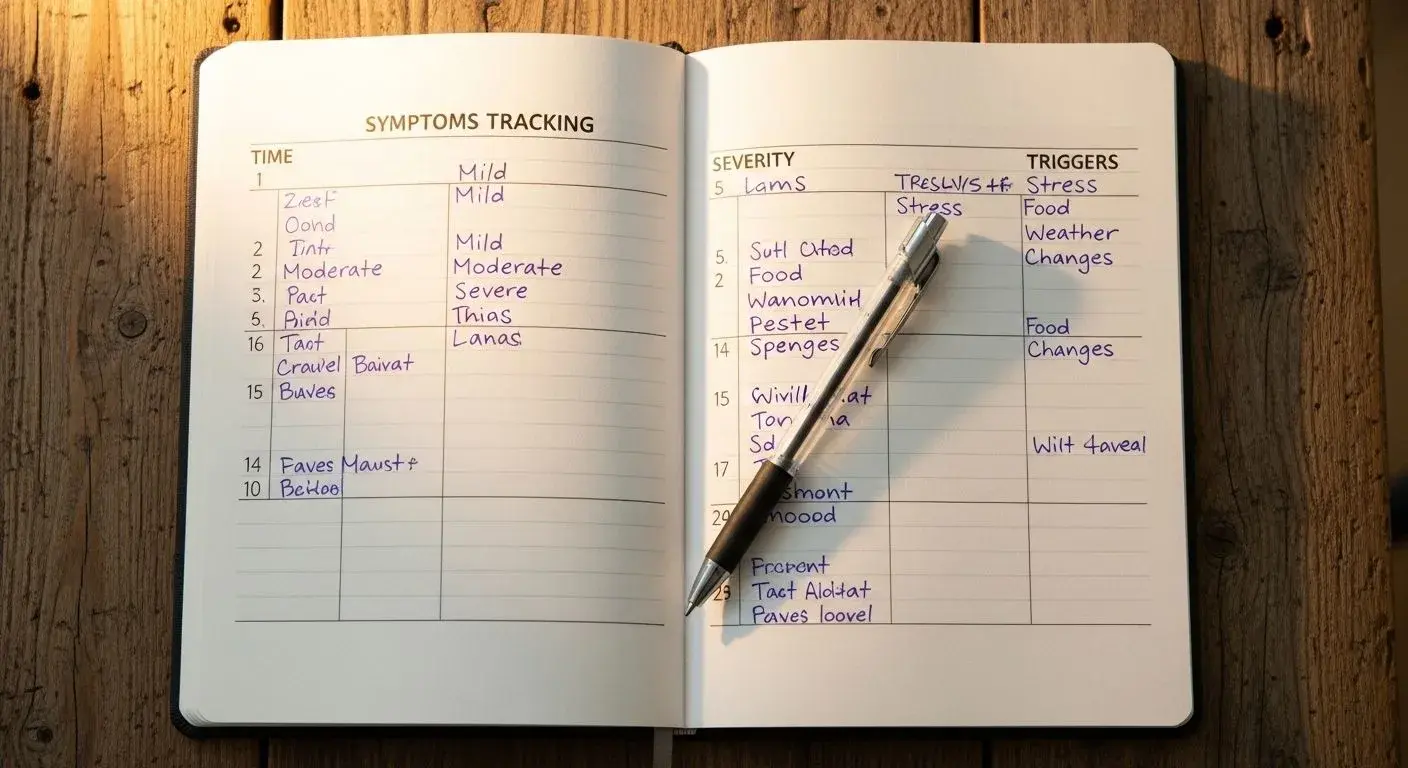
What to Record and Common Tracking Mistakes
Misconception 1: Just counting how many hot flashes you have is enough. Frequency alone misses the variables that make tracking actionable. Without recording what happened before each episode — what you ate or drank, your stress level, whether you had poor sleep the night before, and where you were in your cycle — the data has limited value for identifying triggers.
Misconception 2: App trackers are more accurate than paper logs. Digital symptom apps are convenient, but many prompt only basic data entry (time and severity) and miss the richer contextual data that reveals triggers. Some women find that paper journals capture nuance better because they are open-ended.
The trade-off: Detailed tracking requires consistent effort, and tracking fatigue is real. The most useful approach is 2-4 weeks of detailed logging to identify patterns, followed by simpler monitoring thereafter. Tracking every hot flash for years is rarely necessary and often abandoned. For managing related bruising that some women notice during this period, see our guide on menopause bruising causes and prevention.
What to Include in Your Hot Flash Tracker
- Time and duration: Note when the flash started and approximately how long it lasted. Night-time vs. daytime patterns often differ and may indicate different triggers.
- Severity (1-10 scale): Use a consistent scale so you can objectively compare weeks or compare before and after starting a treatment.
- Preceding food or drink: Caffeine, alcohol, spicy food, and high-sugar snacks are common triggers. Record what you consumed in the 2 hours before each episode.
- Stress and sleep notes: Rate your stress level and record the previous night's sleep hours. These often predict next-day flash frequency more reliably than dietary factors.