
What 'Male Menopause' Actually Means
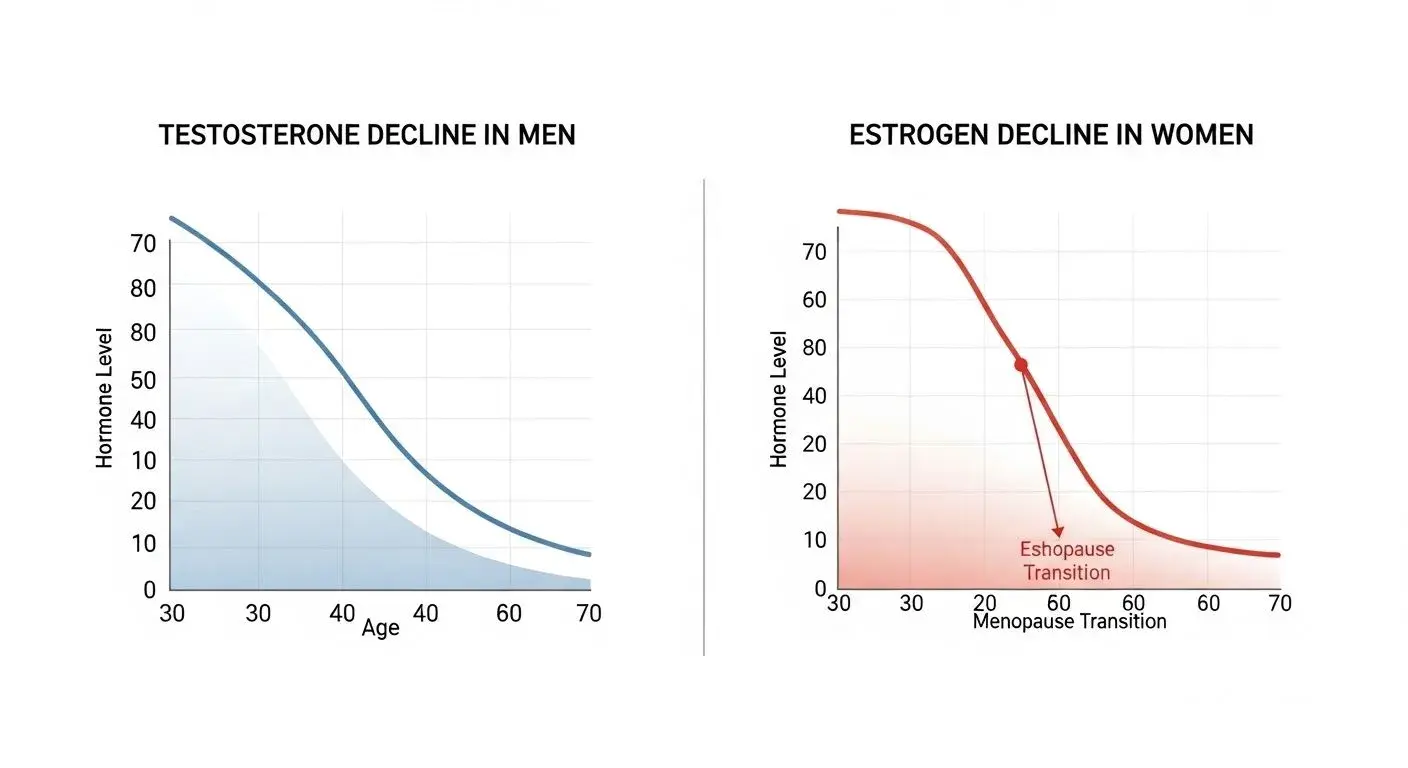
The term 'male menopause' is widely used but medically imprecise. The more accurate term is andropause or late-onset hypogonadism: a gradual decline in testosterone that typically begins around age 30-35 and continues across the lifespan at roughly 1-2% per year. Unlike female menopause, which involves a relatively defined transition with a clear endpoint (12 consecutive period-free months), testosterone decline in men is a slow, continuous process with no equivalent milestone. This means male menopause does not 'last' for a defined period in the way female menopause does — it is an ongoing physiological shift that simply becomes more noticeable as accumulated testosterone loss crosses individual symptom thresholds, typically between ages 45 and 65.
Symptoms of andropause include reduced libido, fatigue and low energy, difficulty maintaining muscle mass, increased body fat (particularly around the abdomen), mood changes including low mood and irritability, poor sleep quality, and in more pronounced cases, hot flushes and night sweats that are strikingly similar to those experienced by women. These vasomotor symptoms — the male equivalent of hot flashes — occur in a meaningful minority of men with significantly low testosterone and are the symptom most likely to bring a man to seek medical review. If you are researching menopause-related symptoms for comparison, our piece on less-discussed menopause symptoms illustrates how wide the hormonal symptom spectrum can be.
How Long Symptoms Last and When to Seek Help
Because andropause is gradual rather than episodic, there is no defined 'duration' the way female menopause is often described as lasting 4-8 years. Symptoms of andropause, once they appear, typically persist and may slowly intensify unless treated, because the underlying testosterone levels continue to fall. The exception is secondary hypogonadism — where low testosterone is caused by a treatable factor such as obesity, sleep apnoea, chronic stress, or certain medications — in which case addressing the root cause can restore testosterone and resolve symptoms, sometimes substantially.
The most significant misconception about male menopause is that it is inevitable and untreatable. Testosterone replacement therapy (TRT) is a well-established medical intervention with a strong evidence base for improving quality of life in men with clinically confirmed low testosterone. It is not appropriate for everyone and carries its own risk profile (effects on red blood cell count, fertility, and prostate health must be monitored), but for men with genuine hypogonadism it can be transformative. Any man experiencing a significant symptom cluster — particularly fatigue, reduced libido, mood changes, and altered body composition — should request a morning total testosterone blood test from their GP as a starting point. Symptoms alone are not diagnostic; blood work is required.
Lifestyle factors also significantly moderate the pace and severity of andropause. Resistance training, adequate sleep, managing visceral fat, and limiting alcohol all support testosterone maintenance. Visceral fat in particular is worth highlighting: fat tissue converts testosterone to estrogen via aromatase, so increasing abdominal fat accelerates testosterone decline in a self-reinforcing cycle. For context on bruising and skin changes that can accompany hormonal decline in both sexes, see our article on easy bruising and hormonal changes.