
Perimenopause vs. Menopause: The Actual Difference
Perimenopause and menopause are frequently used interchangeably, but they describe distinct phases. Perimenopause is the transition period during which ovarian function declines and estrogen begins to fluctuate erratically — it begins years before your last period and ends at menopause. Menopause itself is not a phase but a single retrospective milestone: the point confirmed only once you have had 12 consecutive months without a period. Post-menopause is everything after that point.
This distinction matters clinically because the hormonal mechanism of each stage is different. In perimenopause, estrogen levels are volatile — sometimes spiking above pre-menopausal levels before crashing — which is why symptoms can feel chaotic and inconsistent. In post-menopause, estrogen settles at a consistently low baseline, and while symptoms like hot flashes continue, they often become more predictable in frequency and intensity. Women who are confused about which stage they are in may find it helpful to know that if you are still having periods (even irregular ones), you are in perimenopause, not menopause. Unusual sensory symptoms like itching are common across both stages, as detailed in our guide on menopause and itchy sensations.
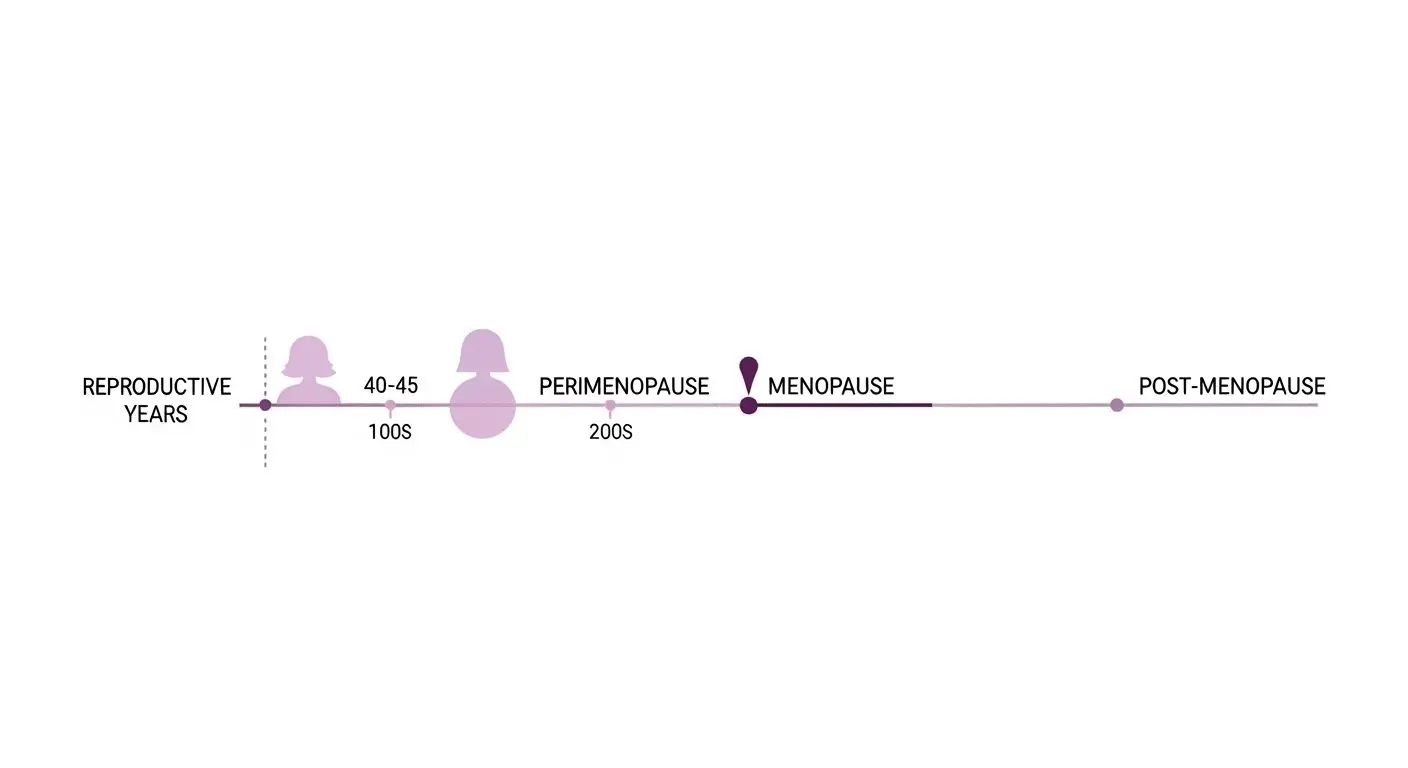
How Long Perimenopause and Its Symptoms Actually Last
Perimenopause most commonly lasts between four and eight years, with the average being around five to seven years. However, this range is wide: some women experience a transition of less than two years, while others have a perimenopause lasting a decade. The length correlates weakly with age of onset (earlier start does not necessarily mean longer duration) and is partially genetic — your mother's experience is a rough but imperfect guide. Symptoms are typically most intense in the two to three years immediately before the final period, which is why this phase is sometimes called the 'late perimenopause' or the menopausal transition proper.
A common misconception is that once your periods stop, all symptoms stop too. In reality, hot flashes often peak in the first one to two years of post-menopause before gradually decreasing. Sleep disruption, joint stiffness, and urogenital symptoms (dryness, urgency) can persist for many years without treatment. The total duration of vasomotor symptoms (hot flashes and night sweats) averages seven to nine years from their onset, not from the final period — meaning many women's hot flash experience spans both perimenopause and a significant portion of post-menopause. For symptoms that can accompany this transition including unexplained bruising, see our article on bruising during menopause.
What Determines How Long and How Hard Your Transition Will Be
Several factors modulate both duration and severity. Surgical menopause (following oophorectomy) produces an abrupt onset and often more intense symptoms than natural menopause because the hormonal decline is immediate rather than gradual. Smoking is associated with earlier menopause onset and potentially more severe vasomotor symptoms. Higher body weight paradoxically offers some protection against hot flash severity in some women (adipose tissue produces small amounts of estrogen), but it also increases risks of sleep-disordered breathing, metabolic changes, and joint pain that complicate the overall experience.
The biggest trade-off in managing this stage is the choice between treating symptoms aggressively with HRT versus a watchful, lifestyle-first approach. HRT significantly shortens the symptomatic experience and improves quality of life, but requires individual risk assessment. Lifestyle management (exercise, diet, stress reduction, sleep hygiene) reliably reduces symptom severity but rarely eliminates it for women with a moderate to severe symptom burden. Neither approach is universally right — the right decision is informed and personalised, ideally made with a menopause-specialist GP or gynaecologist.