
Understanding Why Your Makeup Creases
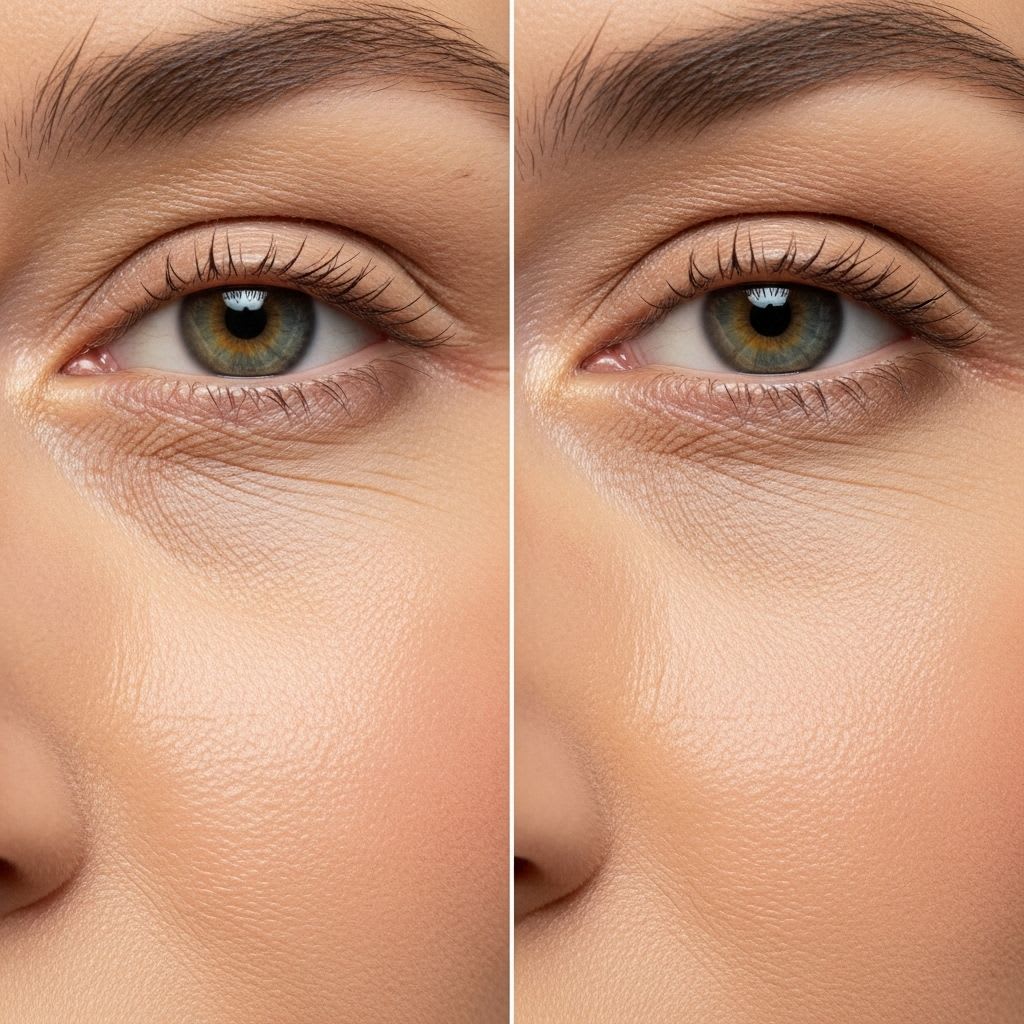
The question why does my makeup crease has a more complex answer than most beauty advice acknowledges. Creasing occurs when makeup products migrate into expression lines and texture during facial movement, but the underlying cause varies dramatically based on skin type, product formulation, and application technique. For dry skin, creasing happens because dehydrated skin creates micro-fissures that crack makeup apart. For oily skin, excess sebum breaks down foundation's binding agents, causing product to slide into lines. The same symptom, completely different root causes requiring opposite solutions.
What dermatological science reveals about makeup creasing: your skin moves through approximately 15,000 facial expressions daily, creating repeated folding in specific zones (under eyes, smile lines, forehead). Each fold compresses makeup in the valley while stretching it on surrounding peaks. Over hours, this mechanical stress causes product separation—the makeup version of how paper creases when folded repeatedly. Products with film-forming polymers maintain flexibility during this movement, while traditional formulas crack like paint on a bending surface.
The critical insight that transforms your approach to how to prevent makeup from creasing is understanding that prevention happens in three stages: skin preparation, product selection, and application technique. Most tutorials focus exclusively on stage three while ignoring that 70% of creasing prevention occurs before you even touch makeup. Inadequate skin hydration or using the wrong primer for your skin type guarantees creasing regardless of your foundation application skill. For comprehensive strategies during hormonal changes that exacerbate creasing, see our guide on preventing makeup creasing during menopause.
Common Creasing Myths That Make Things Worse
Myth 1: Setting Powder Prevents All Creasing
The contradiction between standard advice and reality: powder causes creasing on dry or mature skin rather than preventing it. When you bake or heavily powder the under-eye area, you're depositing hundreds of tiny particles that absorb moisture from both your skin and your concealer. As skin naturally dehydrates throughout the day, the powder-concealer mixture dries out and cracks into lines. What experienced makeup artists know: minimal powder applied only to genuinely oily zones (T-zone) prevents creasing better than all-over application. The trade-off? You sacrifice 1-2 hours of mattifying effect but gain all-day crease resistance.
Myth 2: Thicker Concealer Provides Better Coverage Without Creasing
Here's what beginners misunderstand: thick, full-coverage concealers contain more waxes and pigments that literally cannot flex with skin movement. They create a rigid layer that cracks like dried mud when you smile or squint. Lightweight, buildable concealers with hydrating bases move with your skin's natural expression, maintaining coverage without settling into lines. The evidence from professional makeup artists shows that two thin layers of medium-coverage concealer outlast and out-perform one thick layer of full-coverage formula by 4-6 hours in crease-resistance testing.
Myth 3: Eye Primer Alone Prevents Eyeshadow Creasing
The misconception about eyeshadow creasing is that primer is a universal solution. In reality, oily eyelids break down even the strongest primers within 3-4 hours, while dry eyelids make primer grip too intensely, causing eyeshadow to pull and crack. The solution requires matching primer type to skin type—mattifying primers for oily lids, hydrating primers for dry lids. Better yet, skip primer entirely and use a thin layer of concealer set with translucent powder, which provides a neutral base that works across all skin types without the potential incompatibility issues of dedicated eye primers.
Proven Techniques to Prevent Makeup Creasing
The foundation of crease-free makeup starts 30 minutes before application with proper skin preparation. Apply a hydrating serum containing hyaluronic acid or glycerin to damp skin, which allows these humectants to pull maximum moisture into your epidermis. Wait 5 minutes for absorption, then apply a lightweight moisturizer. This two-step hydration creates a plump, flexible base that resists creasing. Even oily skin needs this hydration—skipping it triggers compensatory oil production that breaks down makeup faster.
Product selection and application technique work together:
- Choose flexible, thin-consistency formulas: Look for foundations and concealers labeled as hydrating, luminous, or serum-based. These contain film-forming polymers that maintain flexibility during facial movement. Avoid anything labeled long-wear or transfer-proof for crease-prone areas—these formulas prioritize adhesion over flexibility.
- Apply in thin, pressed layers: Use a damp beauty sponge with gentle pressing motions rather than wiping. Each thin layer bonds with skin before the next is added, creating integrated coverage that moves as one unit with your skin instead of a surface layer that separates.
- Use setting spray, not powder: Hydrating setting sprays contain polymers that create a flexible film over makeup, binding layers together while maintaining moisture. Spray from 8-10 inches away in an X and T pattern, allowing 60 seconds of drying time before touching your face.
For the under-eye area specifically, use the triangular concealer method but apply product only to the innermost triangle (directly under the eye). Avoid extending concealer into smile lines, which guarantees creasing when you smile. Set with the smallest possible amount of powder applied with a damp sponge—the moisture prevents powder from absorbing too much, while the sponge ensures minimal product deposit. For additional makeup strategies during skin changes, explore our complete makeup guide for hormonal transitions.
When Standard Anti-Creasing Techniques Fail
Here's the edge case that derails typical advice: some people have naturally expressive faces with deep dynamic lines that appear only during animation (smiling, talking, squinting). Standard creasing prevention assumes relatively shallow expression lines that makeup can bridge. But with deep dynamic creases, any product applied over the fold will migrate into it within minutes of facial movement, regardless of formula or technique. The solution requires a counterintuitive approach: apply makeup while making the expression that creates your deepest lines. Smile while applying foundation to smile lines, raise eyebrows while applying forehead makeup. This ensures product sits in the compressed state rather than the relaxed state, so when you make that expression naturally, makeup is already positioned correctly. The limitation? This requires holding uncomfortable expressions for 30-60 seconds during application, and you need to identify your specific habitual expressions. Some find this adaptive technique transformative, while others struggle with the precision required and prefer accepting minimal creasing in exchange for easier application. The honest trade-off: perfect crease prevention demands either significant product knowledge and application time, or accepting that some creasing is simply the visible evidence of a face that moves and expresses naturally.