
What Causes Each Type of Belly Change
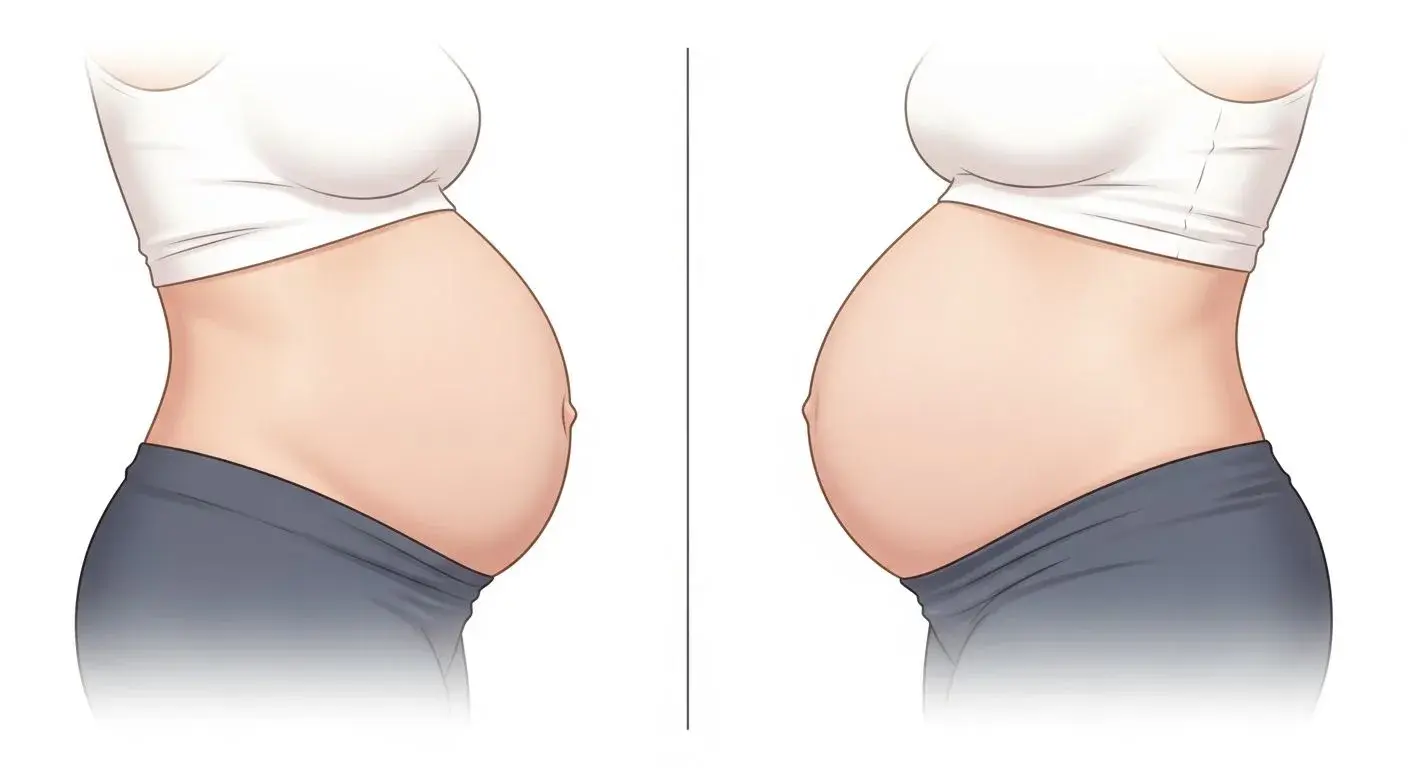
A menopause belly and a pregnant belly look superficially similar — rounded, forward-projecting — but arise from entirely different physiology. Understanding both helps identify what you are experiencing and what, if anything, requires action.
Menopause belly is primarily driven by two separate mechanisms: visceral fat redistribution and hormonal bloating. As estrogen declines, the body's fat storage shifts from the hips and thighs toward the abdomen — specifically deep visceral fat, which sits around organs rather than just under the skin. This shift is hormonally programmed and occurs even without weight gain. Cortisol contributes significantly: perimenopausal women in high-stress states accumulate visceral fat faster than those with lower cortisol. Additionally, progesterone fluctuation during perimenopause causes water retention and slowed gut motility — producing a bloated belly that can appear and disappear within hours.
Pregnancy belly expands gradually and consistently as the uterus grows. It does not reduce overnight, does not fluctuate with meal timing or stress, and is firm to touch — uterine muscle and amniotic fluid rather than fat or gas. In perimenopause, pregnancy remains possible until confirmed menopause (12 consecutive period-free months). This is frequently underestimated. For more on skin changes accompanying body changes in this phase, see hormonal sensory symptoms in menopause.
Key Differences to Help You Distinguish Them
The most reliable distinguishing features:
- Fluctuation: A menopause belly changes size noticeably day to day, or even morning to evening. A pregnancy belly only grows, never shrinks.
- Firmness: Pregnancy produces a progressively firm uterine mass. Hormonal fat and bloating feel soft, moveable, and inconsistent.
- Accompanying symptoms: Nausea, breast tenderness, and absent periods (followed by a positive pregnancy test) point clearly to pregnancy. Hot flashes, night sweats, and mood changes alongside belly changes point to perimenopause.
- Bruising ease: Perimenopause can bring increased bruising alongside skin changes. For more on this, see menopause bruising causes and prevention — another sign of systemic estrogen effects on connective tissue.
A common misconception is that once periods become irregular, pregnancy is very unlikely. In reality, irregular ovulation still results in ovulation — unpredictably. Women in perimenopause should continue using contraception until confirmed postmenopause (typically two years post-last period under 50, or one year over 50, per UK guidance). If there is any uncertainty, a pregnancy test clarifies immediately and costs nothing.
Managing Menopause Belly: What Works and What Does Not
The most important thing to understand: menopause belly involves two different problems requiring different solutions. Visceral fat accumulation responds to lifestyle changes — specifically resistance training (which preserves muscle mass and improves insulin sensitivity, both of which influence where fat is stored) and reduced refined carbohydrate intake. It does not respond well to cardiovascular exercise alone.
Hormonal bloating is a separate issue. It responds to: eating slowly and consistently (avoiding large meals), identifying food triggers (common ones are cruciferous vegetables in large quantities, fizzy drinks, and high-FODMAP foods), and ensuring adequate hydration. Bloating that is severe, persistent, or accompanied by pain warrants medical review to exclude ovarian pathology — which is why dismissing all perimenopausal abdominal changes as 'just hormones' carries a small but real risk.
HRT can reduce bloating in some women (by stabilising progesterone-driven fluid shifts) but in others, particularly those on oral progestogens, it initially worsens bloating. Transdermal progesterone bypasses gut metabolism and tends to produce fewer gastrointestinal side effects for women sensitive to this.