
The Hormonal Reasons Behind Menopause Bloating
Bloating during menopause is one of the most physically uncomfortable and emotionally frustrating symptoms of the transition. Unlike the cyclical bloating many women experienced before menopause, perimenopause bloating can feel constant and seemingly unrelated to what you eat. Estrogen and water retention: When estrogen levels are erratic, the body retains more sodium and water, particularly in the abdominal area. This is not fat gain — it is fluid, and it can shift dramatically day to day based on hormonal fluctuations.
Progesterone decline plays an equally significant role. Progesterone is naturally diuretic and helps the gut move food through efficiently. As progesterone drops in perimenopause, gut motility slows and gas accumulates. Cortisol, which rises when sleep is disrupted (another perimenopause hallmark), directly increases intestinal permeability — often called 'leaky gut' — which worsens bloating. These overlapping mechanisms explain why bloating can persist even when you have not had a period in months. The anxiety that often accompanies this transition can further amplify gut symptoms; see more on the connection between perimenopause and anxiety.
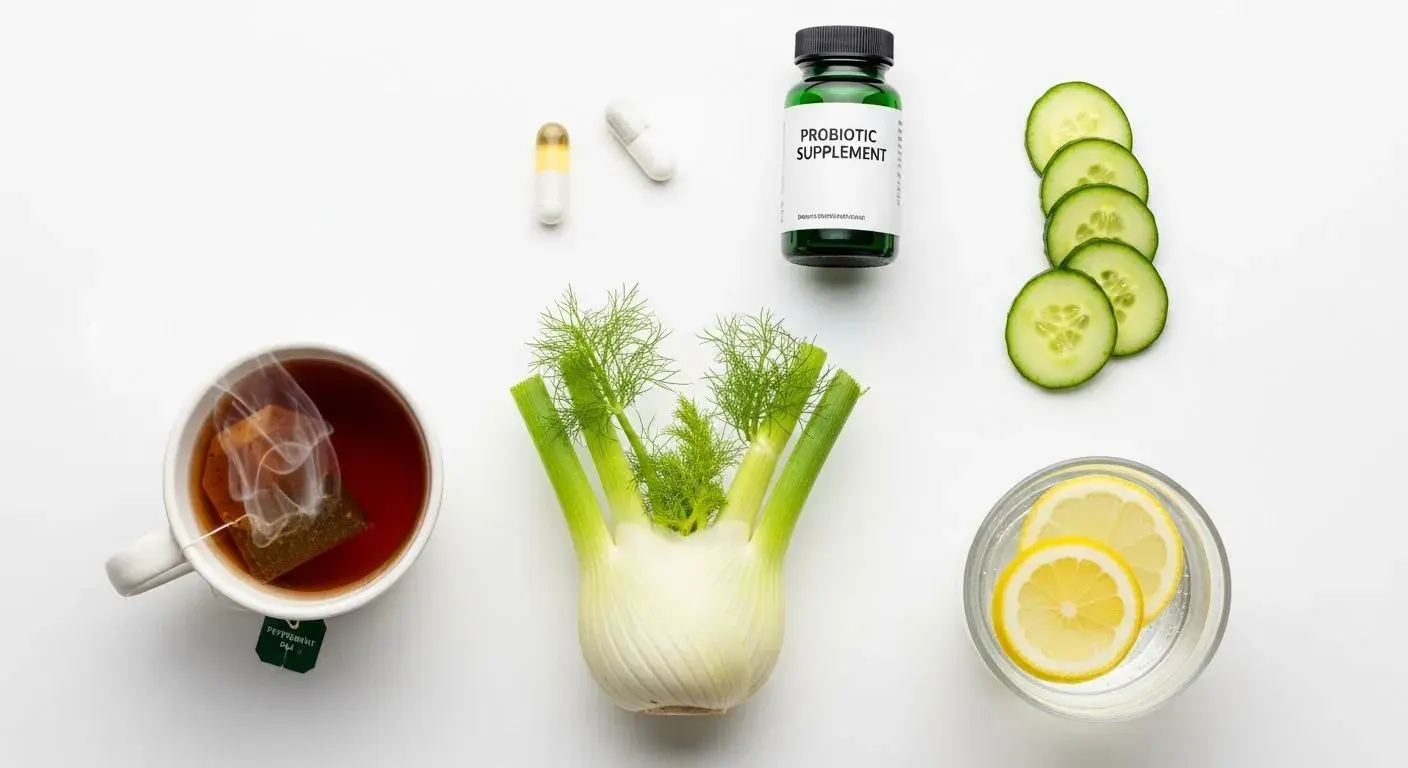
What Does Not Work — and Why
Misconception 1: Cutting carbohydrates will fix menopause bloating. While reducing refined carbs can help with water retention, many women go too low-carb and inadvertently reduce fibre, which worsens the slow transit time already caused by declining progesterone. The result is more constipation and more bloating.
Misconception 2: Bloating during perimenopause is just IBS. Some women are diagnosed with irritable bowel syndrome during this period when hormonal gut disruption is the actual driver. IBS-targeted treatments may offer partial relief, but addressing estrogen and progesterone levels is necessary for full resolution.
Where standard advice falls short: Digestive enzymes and peppermint capsules help with acute gas but do nothing for hormonal fluid retention. True menopause bloating requires a two-pronged approach: gut support AND hormonal management. Women on HRT frequently report significant improvement in bloating, though this can paradoxically worsen if the estrogen dose is too high and fluid retention increases. It is worth checking out other hormonal body changes in menopause for a broader picture.
Effective Strategies for Reducing Menopause Bloating
- Reduce high-FODMAP foods temporarily: Onions, garlic, lentils, and apples ferment rapidly in a sluggish gut. A short-term low-FODMAP approach while supporting gut motility is more targeted than general calorie restriction.
- Walk after meals: Even a 10-minute post-meal walk measurably increases gastric emptying and reduces abdominal bloating. This is one of the most underrated tools available.
- Dandelion root tea: A natural diuretic that helps reduce hormonal water retention in the abdomen without the potassium loss associated with pharmaceutical diuretics.
- Consider a spore-based probiotic: Spore-forming strains like Bacillus coagulans are more resilient in the gut and have shown benefit for bloating and irregular bowel function.