
Can Low Estrogen Really Cause Dizziness and Vertigo?
Yes — dizziness, lightheadedness, and vertigo are recognised symptoms of the menopause transition, though they are rarely listed in standard symptom checklists. Women often present to GPs or ENT specialists with these symptoms, go through investigations for BPPV (benign paroxysmal positional vertigo) or Meniere's disease, and only later connect the symptom pattern to their hormonal transition.
The mechanisms are multiple. Estrogen receptors are present in the inner ear, which plays the central role in balance and spatial orientation. Estrogen fluctuation affects the fluid regulation in the inner ear (endolymph) and modulates the sensitivity of the vestibular system. When estrogen drops or swings erratically, vestibular sensitivity changes — producing sensations of spinning, swaying, or a floating disconnection from the environment.
A second mechanism is autonomic instability. As estrogen declines, the autonomic nervous system's control of blood pressure becomes less precise. Orthostatic hypotension — a brief drop in blood pressure when standing — becomes more common in perimenopause, producing the familiar lightheadedness or 'head rush' on standing. This is distinct from true vestibular vertigo but often described the same way by women experiencing it.
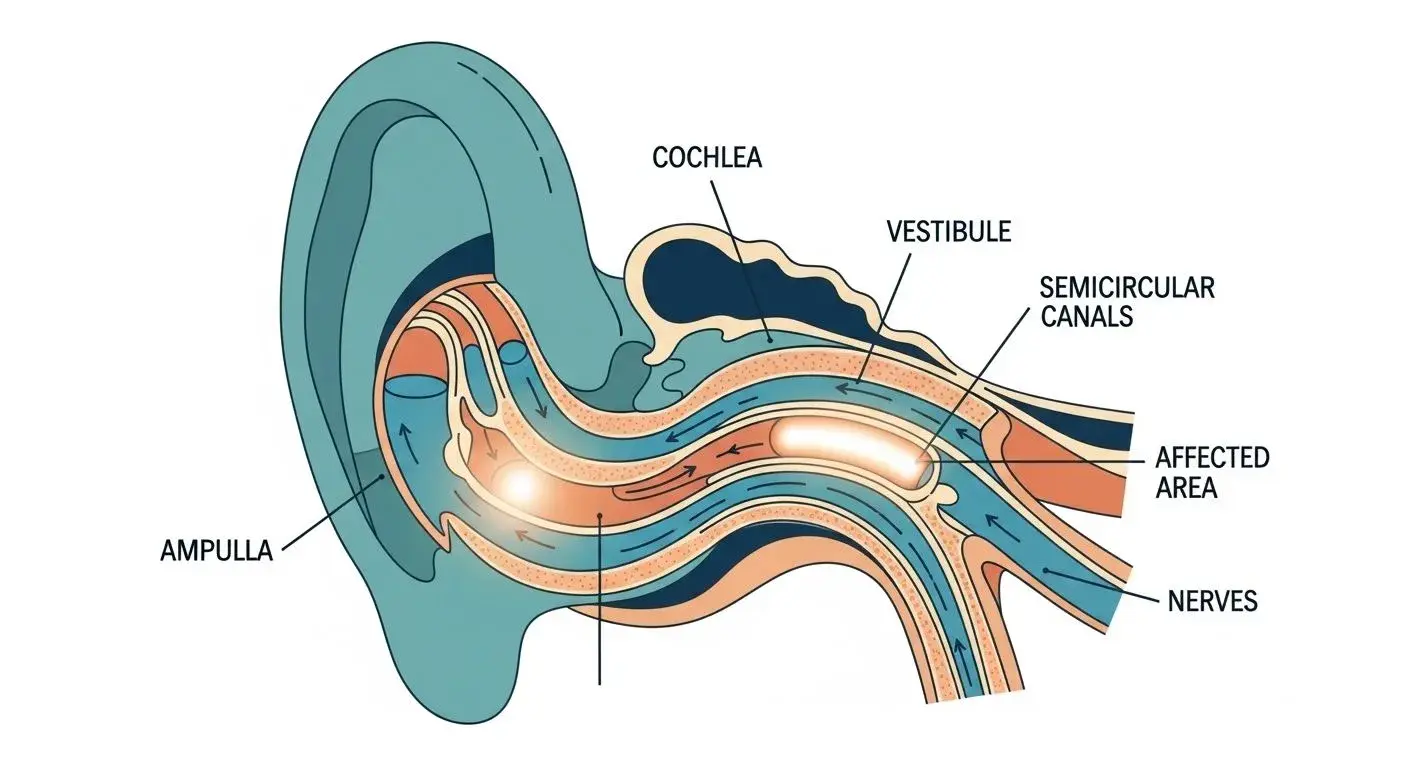
What Menopause Dizziness Feels Like — and How to Distinguish It From Other Causes
Menopause-related dizziness is typically described as one of three presentations: a floating or swaying sensation without true spinning, brief lightheadedness on standing or during a hot flash, or episodic vertigo (the room spinning) that comes and goes. Blurred vision accompanying dizziness can occur during severe hot flashes when there is rapid cardiovascular change, though persistent visual disturbance warrants neurological assessment.
Tingling in the face — a symptom that confuses and frightens many women — is usually caused by hyperventilation during anxiety episodes or hot flashes. Altered breathing pattern during a hot flash or panic response reduces CO2, causing the characteristic tingling around the mouth and fingertips. This is not neurological in most cases, but sudden unilateral facial tingling, facial drooping, or weakness requires emergency assessment to rule out stroke.
A critical misconception is that dizziness during perimenopause is always hormonal. It requires proper assessment first because multiple treatable non-hormonal causes share the same symptom: BPPV (most common vestibular disorder, responds well to the Epley manoeuvre), anaemia, hypothyroidism, blood pressure disorders, and medication side effects. Our guide on perimenopause anxiety experiences covers how anxiety and dizziness become intertwined during the transition — each amplifying the other.
How Long Does Menopause Dizziness Last — and What Helps
Hormonally-driven dizziness and dizzy spells in menopause typically follow the same pattern as other vasomotor symptoms — most pronounced during the perimenopausal transition and early post-menopause, then gradually reducing as the hormonal environment stabilises at consistently lower levels. For most women, significant improvement is seen within 2 to 3 years post-menopause, though this is highly individual.
HRT is the most effective intervention for hormonally-driven vestibular symptoms. Multiple case series and small studies report significant reduction in dizziness and vertigo episodes in women started on estrogen therapy. The mechanism is presumed to be stabilisation of inner ear fluid regulation and autonomic nervous system function. For women who cannot take HRT, addressing triggers — dehydration, caffeine, alcohol, and rapid position changes — can reduce episode frequency.
Stress and poor sleep significantly worsen dizziness by destabilising autonomic function further. Women who manage stress and prioritise sleep quality often report dizziness as one of the first symptoms to improve. For the stress-hormone connection and its effect on physical symptoms, our article on stress and menopause covers the cortisol-autonomic interaction that underlies this pattern.