
Why Menopause Causes Leg Pain and Cramps
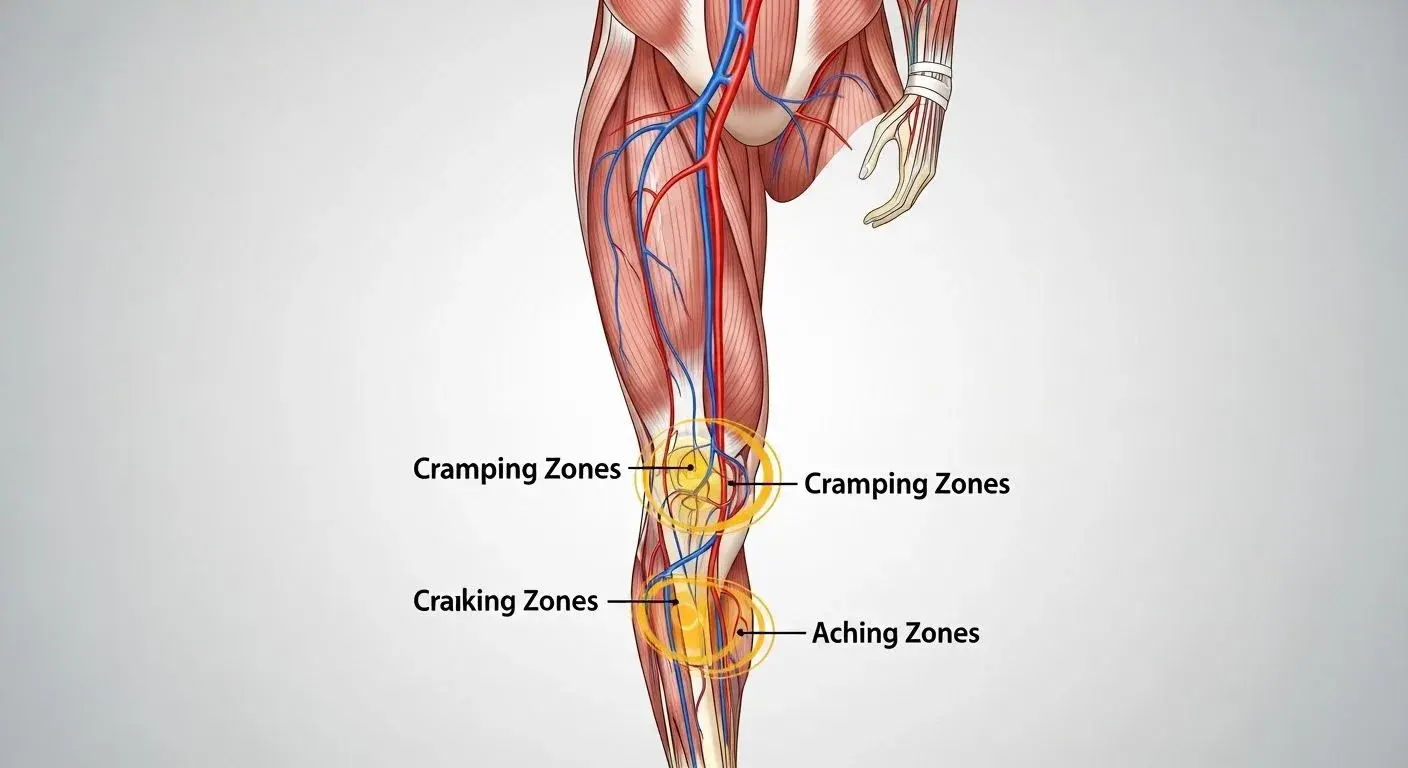
Aching legs and nocturnal leg cramps are among the most disruptive and least-discussed symptoms of menopause. They arise through multiple overlapping mechanisms, all tied to estrogen decline. Estrogen regulates magnesium absorption — a mineral critical for muscle relaxation and nerve function. When estrogen falls, magnesium status typically declines even without dietary changes, and muscles become hyperexcitable — prone to sudden cramping, especially during sleep.
A second mechanism is vascular changes. Estrogen maintains the flexibility and tone of blood vessel walls. Without it, circulation to the leg muscles becomes less efficient, producing a diffuse, heavy aching sensation — distinct from the sharp pain of a cramp — that is worst after prolonged standing or sitting. This is frequently described as 'legs that feel like lead' and is different from restless legs syndrome, though both can coexist in menopause.
Perimenopause thigh pain specifically often reflects changes in the iliotibial band and hip flexor tendons rather than vascular or nerve causes. For the broader context of how perimenopause affects the whole musculoskeletal system, see our article on perimenopause body aches and joint pain.
What Actually Relieves Menopause Leg Pain and Cramps
The most important misconception is that leg cramps during menopause are caused purely by dehydration and that drinking more water solves them. While dehydration is a contributing factor, the primary driver in menopausal women is electrolyte imbalance — specifically magnesium deficiency — and hydration alone does not restore magnesium status. Targeted magnesium supplementation is significantly more effective than increased water intake for reducing nocturnal leg cramp frequency.
- Magnesium glycinate supplementation: 300–400mg taken before bed is the most evidence-supported intervention for nocturnal leg cramps. Glycinate form is better absorbed and gentler on digestion than magnesium oxide.
- Calf stretching before bed: Standing calf stretches held for 30 seconds, performed 3 times each leg immediately before sleep, consistently reduce nocturnal cramp frequency in clinical trials.
- Compression stockings for aching legs: Medical-grade compression (15–20mmHg) improves venous return and reduces the heavy, aching leg sensation driven by vascular changes in menopause.
- Regular walking: 30 minutes of brisk walking daily improves leg circulation and reduces both cramping and aching by maintaining calf muscle pump function.
- HRT: Restoring estrogen directly addresses the root causes of menopausal leg symptoms, including magnesium regulation and vascular tone. Many women report significant reduction in leg cramps and aching within 4–8 weeks of starting HRT.
If leg pain is accompanied by tingling or burning sensations in the feet, the nerve component of menopause musculoskeletal symptoms is worth investigating — our article on menopause tingling and burning feet covers this in detail.
Frequently Asked Questions
Can menopause cause leg cramps?
Yes, menopause directly causes leg cramps. Estrogen decline reduces magnesium absorption and disrupts electrolyte balance, making muscles hyperexcitable. Nocturnal cramps are most common because muscle temperature drops and circulation slows during sleep. Magnesium supplementation and calf stretching before bed are the most effective interventions.
What does menopause leg pain feel like?
Menopause leg pain typically feels like a deep, diffuse aching heaviness — often described as legs that 'feel like lead' — combined with sudden cramping in the calves or thighs that peaks at night. Some women also report restless legs, burning sensations, or sharp tendon pain in the outer thigh. Each sensation has a different cause and responds to a different treatment.
Does low estrogen cause leg cramps?
Yes. Low estrogen reduces magnesium absorption, impairs vascular tone in leg blood vessels, and increases nerve sensitivity — all of which contribute to leg cramps. This is why leg cramps often begin in perimenopause, before periods have fully stopped, when estrogen fluctuations are most extreme.
Can menopause cause a stiff neck alongside leg pain?
Yes. Both stiff neck and leg pain in menopause share the same root cause: estrogen-driven systemic inflammation and reduced collagen quality in muscles, tendons, and joints throughout the body. Women experiencing both symptoms simultaneously are often in the acute phase of musculoskeletal syndrome of menopause, where multiple regions are affected at once.
Sources
- Nocturnal Leg Cramps: Causes and Treatment. pubmed.ncbi.nlm.nih.gov — PubMed / NIH
- Magnesium and Muscle Cramp Prevention. pubmed.ncbi.nlm.nih.gov — PubMed / NIH
- Leg Pain and Menopause: Hormonal Vascular Effects. menopausesociety.org — The Menopause Society
- Leg Cramps: Overview and Treatment. nhs.uk — NHS