
Why Menopause Causes a Metallic Taste
A metallic, bitter, or sour taste in the mouth — medically termed dysgeusia — is one of the more surprising symptoms of perimenopause. It is widely underreported because many women do not connect it to hormones and instead attribute it to dental problems, medications, or food. The estrogen-saliva connection: Estrogen plays a role in regulating saliva production and composition. As estrogen declines, saliva can decrease in volume and change in pH and enzyme content. This altered oral environment directly affects taste perception and creates the metallic or bitter sensation many women describe.
Zinc deficiency compounds this significantly. Zinc is essential for taste receptor function, and absorption declines with age and stress — both factors relevant in perimenopause. The nervous system changes of menopause can also cause altered signalling in taste and smell pathways, which is why some women notice both a metallic taste and heightened or distorted smell simultaneously. These peripheral nerve changes are part of the same pattern as other unusual sensory symptoms — see our guide on stress and its role in menopause symptom amplification for broader context.
What Most Women Get Wrong About This Symptom
Misconception 1: A metallic taste means a dental problem. While dental issues such as gum disease, fillings, or infections can cause metallic taste, the absence of dental symptoms does not confirm the cause is hormonal either. A dental check-up is reasonable, but if dental health is confirmed to be good, hormonal dysgeusia should be the next consideration rather than further unnecessary dental investigation.
Misconception 2: Mouthwash will resolve it. Alcohol-based mouthwashes can worsen oral dryness and alter mouth pH in ways that intensify the metallic taste. Alcohol-free, pH-neutral rinses are far better tolerated for hormone-related taste changes.
Important medical note: A persistent metallic taste should always be evaluated medically to rule out kidney disease, liver dysfunction, and certain medications as causes. This is especially important if it began at the same time as starting a new supplement or medication. For related oral symptoms, our article on menopause sensory changes including ears and mouth is worth reading.
Practical Strategies to Reduce Metallic Taste in Menopause
- Increase hydration: Dry mouth concentrates the altered compounds in saliva that cause metallic taste. Sipping water frequently throughout the day dilutes these and reduces intensity.
- Rinse with baking soda water: A dilute sodium bicarbonate rinse (1/4 tsp in a glass of water) neutralises mouth acidity and can quickly reduce metallic taste intensity.
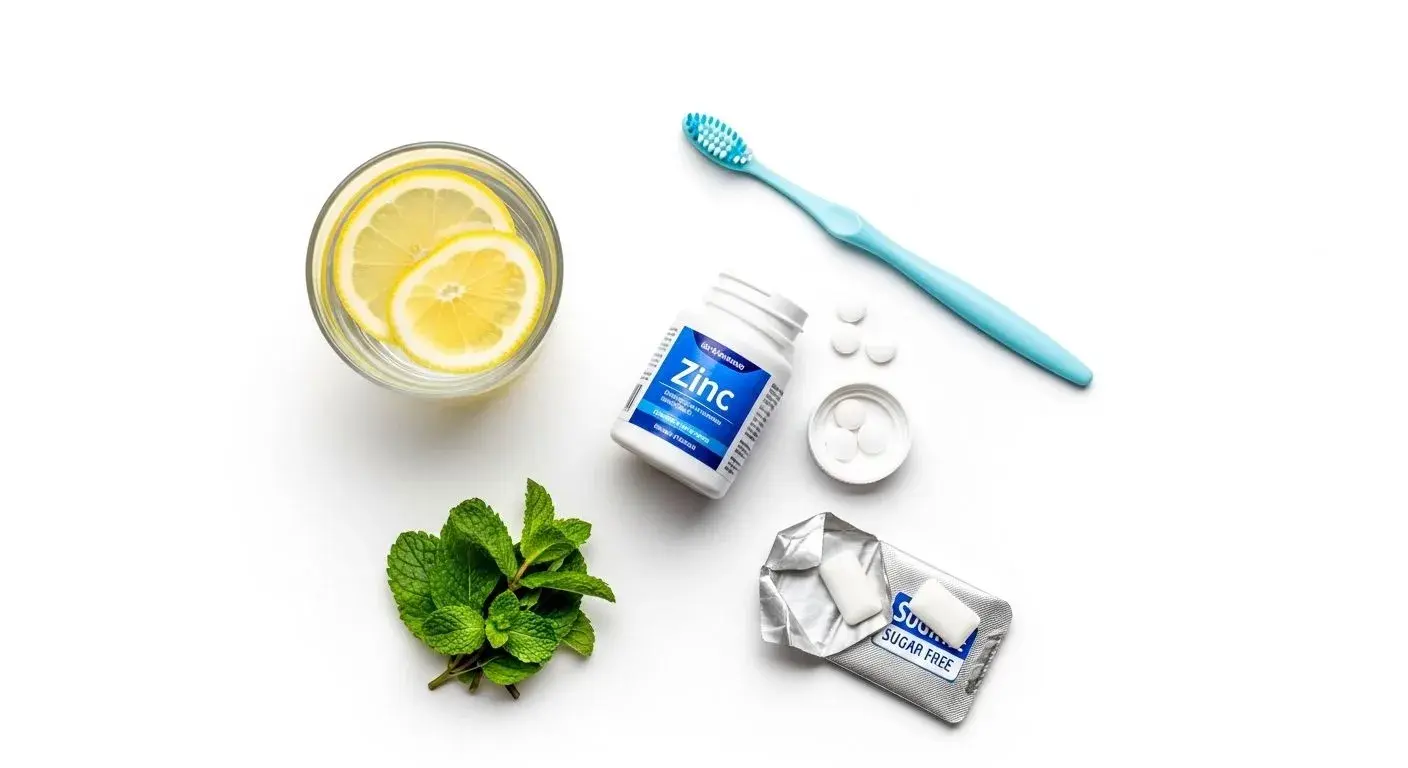
- Zinc supplementation: 15-30mg of zinc picolinate or zinc citrate daily (taken with food) can improve taste receptor function within 4-6 weeks. Test zinc levels first if possible.
- Eat acidic foods to reset taste: Citrus, vinegar-based foods, and pickles stimulate salivary flow and temporarily override the metallic signal. Many women find eating something tart relieves the taste for hours.