
Why Perimenopause Suddenly Triggers Rosacea
The sudden onset of facial redness during perimenopause isn't coincidental—it reflects estrogen's critical role in vascular regulation and skin inflammation control. When estrogen levels fluctuate and decline, blood vessels in facial skin become hyperreactive, dilating more easily and staying dilated longer. This creates the persistent flushing, visible capillaries, and burning sensation characteristic of rosacea. Approximately 40% of women who develop rosacea first notice symptoms during perimenopause, with many having no prior history of sensitive skin or facial redness.
The mechanism extends beyond simple vasodilation. Declining estrogen weakens the skin barrier, increases inflammatory mediators, and alters the facial microbiome—all factors that contribute to rosacea development. Hot flashes amplify this cascade: each episode triggers rapid temperature changes that stress already-reactive blood vessels, creating a cycle where hormonal fluctuations directly worsen facial redness. Women often notice their rosacea flares correlate precisely with their menstrual cycle irregularities or hot flash patterns, confirming the hormonal connection that conventional dermatology sometimes overlooks.
What makes hormonal rosacea distinct is its unpredictability. Unlike classic rosacea with consistent triggers, hormonal rosacea responds erratically—products that worked last month suddenly cause flares, and the severity changes week to week based on estrogen fluctuations. This pattern frustrates both patients and dermatologists who expect stable disease behavior. Understanding this hormonal foundation is essential before attempting treatment, as approaches that ignore the endocrine component typically fail. The same hormonal shifts affect other aspects of appearance, which is why many women benefit from adapting their entire beauty routine during this transition.
What Dermatologists Often Miss About Hormonal Rosacea
Misconception #1: Standard rosacea treatments work the same during menopause. Many dermatologists prescribe metronidazole or azelaic acid without adjusting for hormonal factors. The reality: menopausal skin is dramatically thinner and drier, making it far more reactive to these treatments. Women report severe irritation from products they previously tolerated, yet doctors often interpret this as "treatment resistance" rather than recognizing the changed hormonal baseline requires gentler formulations and slower titration. Misconception #2: Avoiding triggers is enough. While trigger avoidance helps, it cannot counteract the underlying vascular instability caused by estrogen deficiency. Women who meticulously avoid wine, spicy foods, and sun exposure still experience persistent facial redness because the root cause—hormonal—remains unaddressed. This creates unnecessary guilt and frustration when standard lifestyle modifications produce minimal improvement.
Treatment Strategies That Address Hormonal Triggers
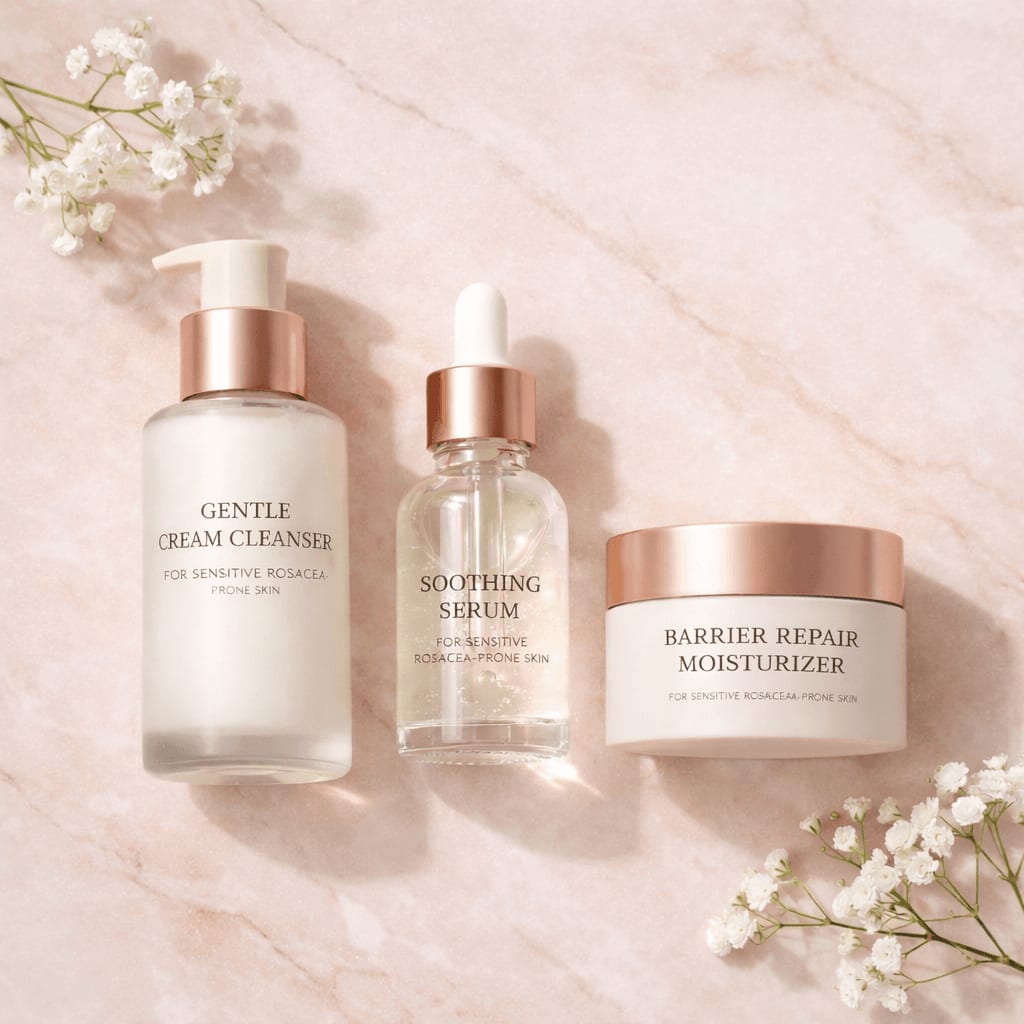
Effective hormonal rosacea treatment requires a dual approach: calming the immediate inflammation while addressing the underlying estrogen deficiency. Start with barrier-focused topicals: Use gentle, ceramide-rich moisturizers twice daily to rebuild the compromised skin barrier that estrogen loss has weakened. Layer this with a mineral-based SPF 50 containing iron oxides—these block not just UV but also visible light that triggers flushing in rosacea-prone skin. For active redness, low-dose ivermectin cream (1%) proves more tolerable than traditional options for menopausal skin, reducing inflammation without the harsh drying effects.
The HRT question deserves nuanced consideration. Approximately 60% of women notice significant rosacea improvement within 3-4 months of starting hormone replacement therapy, particularly with transdermal estrogen that provides stable levels without the peaks and valleys of oral formulations. However, 15% experience initial worsening as hormones stabilize—a temporary effect that resolves by month two but causes many women to quit prematurely. HRT isn't solely a rosacea treatment, so discuss your complete health profile with your doctor to determine if the benefits justify the intervention. Some women achieve good control with topical treatments alone and reserve HRT consideration for managing multiple severe menopausal symptoms.
- Vascular-calming ingredients: Niacinamide (5%) applied twice daily strengthens vascular walls and reduces flushing episodes by 40% in studies. Azelaic acid (10-15%) can work but requires careful introduction—start every third night and increase gradually over 6-8 weeks to avoid irritation on hormonally-thinned skin
- Professional interventions: Intense pulsed light (IPL) or laser treatments target the dilated capillaries directly, providing relief when topicals plateau. These work best after 6-12 months of menopause when hormone levels stabilize, preventing new vessel formation from undermining treatment results
- Antioxidant support: Vitamin C serums help rebuild collagen and calm inflammation, but choose pH-balanced, stable formulations. Pure L-ascorbic acid often proves too irritating for menopausal rosacea skin—consider gentler derivatives or learn about
proper vitamin C application techniques to maximize benefits while minimizing irritation.
Critical reality check: Most women need 6-12 weeks to see meaningful improvement, and complete clearance remains rare even with optimal treatment. Hormonal rosacea management aims for control and reduced flare frequency, not elimination. Set realistic expectations to avoid the disappointment that leads to aggressive over-treatment, which invariably worsens the condition by further compromising the barrier.
When Standard Rosacea Protocols Fail
A subset of menopausal women develop what appears to be treatment-resistant rosacea that worsens despite following all recommended protocols. Investigation often reveals mast cell activation syndrome (MCAS)—a condition where declining estrogen destabilizes mast cells, causing them to release excessive histamine and inflammatory mediators. This creates rosacea-like symptoms that don't respond to standard treatments because the underlying driver is systemic immune dysregulation, not isolated skin inflammation. Women with MCAS-driven facial redness typically also experience unexplained itching, flushing triggered by stress or temperature changes throughout the body, and gastrointestinal symptoms.
This variant requires antihistamine therapy (H1 and H2 blockers taken together), mast cell stabilizers like quercetin or cromolyn sodium, and strict avoidance of histamine-liberating foods and medications. Topical rosacea treatments provide minimal benefit because the problem originates systemically. The challenge: MCAS remains under-recognized, so women spend years trying progressively more aggressive topical treatments that cannot address the root cause. If your rosacea correlates with widespread flushing, unexplained hives, or digestive issues, consider evaluation by an immunologist familiar with MCAS rather than escalating dermatologic interventions.
The trade-off with systemic approaches: While HRT and antihistamine protocols address root hormonal causes, they require ongoing medication rather than simple topical solutions. Some women prefer this systemic approach for comprehensive symptom relief across multiple body systems, while others prioritize minimizing medication exposure and accept more limited rosacea control with topicals alone. Neither choice is wrong—the decision depends on symptom severity, other menopausal complaints, personal health history, and individual preferences about pharmaceutical intervention. What matters most is matching treatment intensity to disease burden rather than accepting persistent facial redness as an inevitable part of aging when effective options exist.