
Why Your Shoulder Becomes Stiff and Inflamed
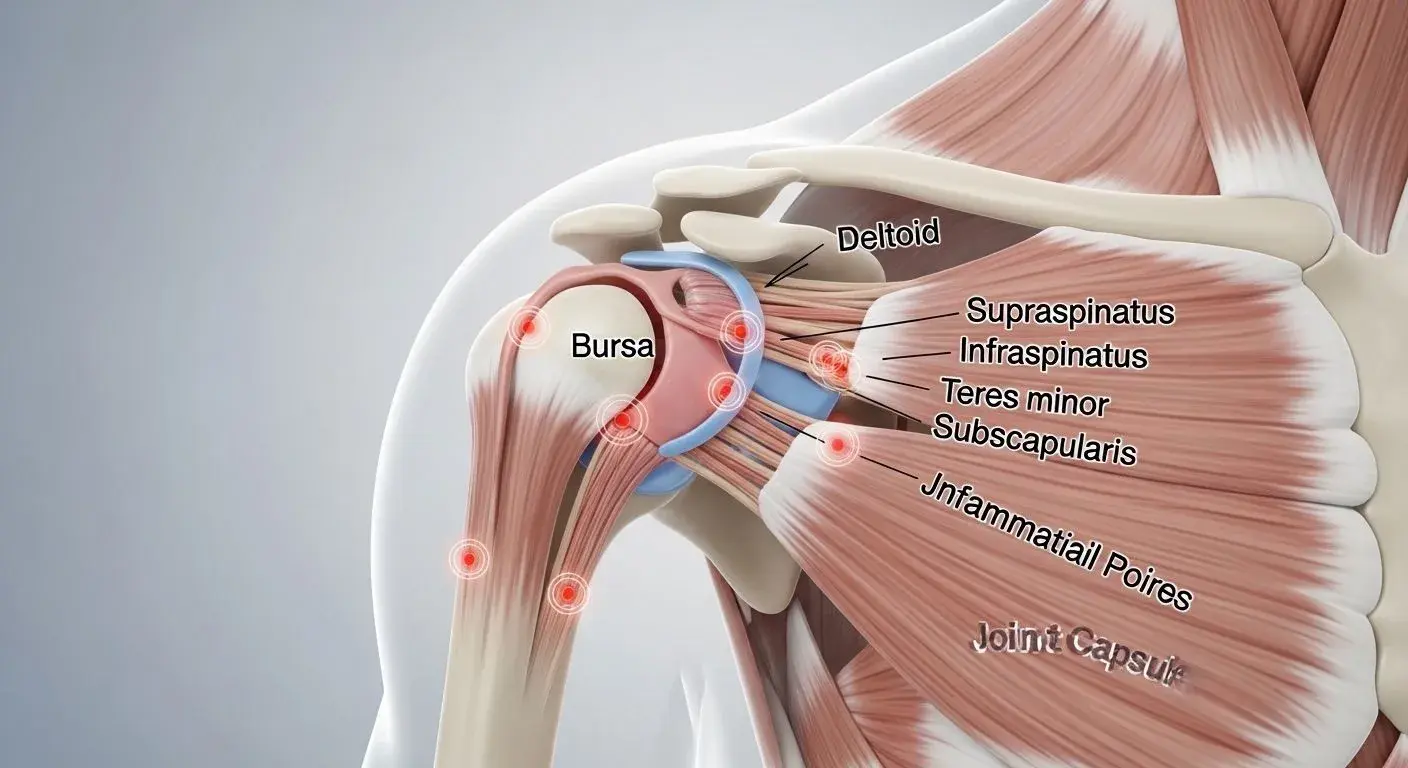
A stiff, painful shoulder is not a single diagnosis — it is a symptom that can arise from several distinct structural problems, each requiring a different treatment. The most common causes are subacromial bursitis (inflammation of the fluid-filled sac beneath the shoulder), rotator cuff tendinopathy (degeneration of the tendons), and early adhesive capsulitis (thickening of the joint capsule). Confusing these three leads to treating the wrong structure and prolonging recovery.
Morning stiffness that eases with movement typically indicates bursitis or tendinopathy — structures that respond to increased blood flow from activity. Stiffness that does not improve with warmth or movement, and that restricts movement in all directions equally, is more consistent with capsular tightening — the hallmark of early frozen shoulder. This distinction is the single most important factor in selecting the right treatment.
Collagen changes are another major contributor, particularly in women over 40. Declining estrogen reduces collagen quality in tendons, making them simultaneously stiffer and more prone to micro-tearing. This is explored in depth alongside related skin fragility in our article on menopause bruising and skin fragility.
What Actually Works for a Stiff, Painful Shoulder
The standard advice of 'rest and ice' is one of the most frequently misapplied recommendations in shoulder care. Bursitis and tendinopathy respond poorly to complete rest — gentle, progressive movement maintains blood flow and prevents further capsular stiffening. Ice reduces acute pain but does not treat the underlying inflammation; it is a short-term comfort measure, not a treatment.
- Pendulum exercises: Gentle circular arm swings while leaning forward — maintain joint mobility without loading inflamed tissue. Most effective in the freezing stage of capsular involvement.
- Postural correction: Rounded upper back (thoracic kyphosis) is a major driver of shoulder impingement. Improving thoracic mobility often resolves shoulder symptoms without directly treating the shoulder itself.
- NSAIDs: Ibuprofen or naproxen reduce bursitis inflammation effectively when taken consistently for 10–14 days rather than sporadically. Spot-dosing for pain relief without anti-inflammatory effect is a common misuse.
- Corticosteroid injection: For moderate-to-severe bursitis unresponsive to 6 weeks of physiotherapy, a targeted injection provides significant relief and allows physiotherapy to become more effective.
For those also dealing with persistent skin itching as part of a broader inflammatory picture, the connection to systemic inflammation is worth reading about in our article on menopause itching overview.
Frequently Asked Questions
Why is my shoulder stiff and painful in the morning?
Morning shoulder stiffness is caused by overnight accumulation of inflammatory fluid in the bursa or joint capsule, combined with reduced circulation during sleep. Bursitis and early frozen shoulder are the most common causes. Gentle warmth (a heat pack) and slow pendulum movements within the first 15 minutes of waking typically ease morning stiffness significantly.
How long does shoulder joint inflammation take to heal?
Shoulder bursitis typically resolves in 6–12 weeks with physiotherapy and anti-inflammatories. Rotator cuff tendinopathy takes 3–6 months with consistent loading exercises. Early frozen shoulder can take 12–24 months. The key variable is whether the correct structure is being treated — treating bursitis as if it were a capsular problem significantly prolongs recovery.
Can shoulder stiffness cause a stiff neck?
Yes. A stiff shoulder causes compensatory muscle overuse in the neck and upper trapezius, frequently triggering tension and stiffness that radiates upward. Treating only the neck without addressing the shoulder dysfunction perpetuates the cycle. Both regions need to be assessed together for lasting relief.
Sources
- Subacromial Bursitis: Diagnosis and Management. pubmed.ncbi.nlm.nih.gov — PubMed / NIH
- Shoulder Impingement Syndrome: Evidence and Treatment. mayoclinic.org — Mayo Clinic
- Shoulder Pain: NHS Guidance. nhs.uk — NHS