
Why Menopausal Fatigue Is Different From Ordinary Tiredness
Menopause-related fatigue is not resolved by sleeping more. Women consistently describe waking after 7-8 hours and feeling as depleted as when they went to bed. This is because oestrogen directly regulates slow-wave (deep, restorative) sleep, and as oestrogen declines, time spent in this sleep stage decreases — regardless of total sleep duration. Additional time in bed does not compensate for reduced sleep quality.
Oestrogen also supports mitochondrial efficiency — the cellular machinery that produces energy. Low oestrogen means cells produce less ATP (the primary energy molecule) per unit of glucose consumed. This creates a pervasive low-energy state that feels metabolic rather than sleepy: difficulty starting tasks, mental blankness, physical heaviness without cause.
A third driver is cortisol dysregulation. The same HPA-axis disruption that causes menopause-related anxiety and sleep disturbance produces a blunted cortisol awakening response — the normal hormone surge that produces morning alertness. Many women with menopausal fatigue feel worst in the first 2 hours of the day and only begin to feel functional by mid-morning. This is a cortisol pattern, not just a sleep debt.
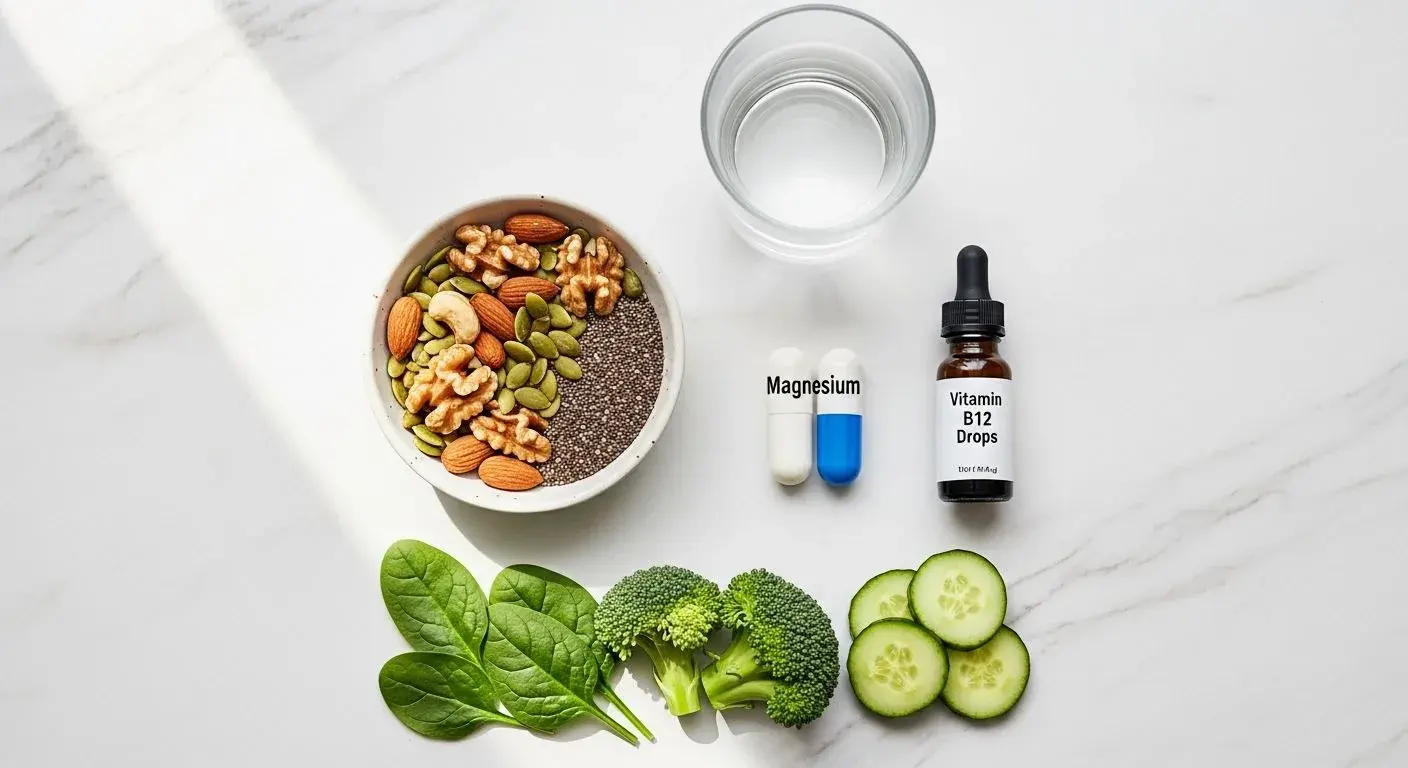
What to Take for Energy During Menopause: The Evidence-Based Options
Several supplements have meaningful supporting evidence for menopausal fatigue specifically — distinct from general fatigue supplements. The distinction matters because the underlying mechanisms are different.
- Vitamin B12 (methylcobalamin form, 500-1000mcg): Essential for neurological energy production and red blood cell synthesis. Absorption declines with age; deficiency is widespread in women over 45 and directly causes fatigue, brain fog, and pins and needles.
- Iron (only if tested deficient): Heavy or irregular perimenopausal periods deplete iron stores. Do not supplement without testing — excess iron causes oxidative stress.
- Coenzyme Q10 (ubiquinol form, 100-200mg): Directly supports mitochondrial ATP production. Natural levels decline with age and decline further under oestrogen deficiency.
- Magnesium malate (300-400mg morning): Malate form specifically supports cellular energy production (the malate-aspartate shuttle). Use glycinate form at night for sleep; malate in the morning for energy.
- Vitamin D3 (2000-4000 IU with K2): Deficiency — near-universal in the UK — impairs mitochondrial function, muscle strength, and immune regulation, all of which compound menopausal fatigue.
- Ashwagandha (KSM-66 extract, 300-600mg): An adaptogen with clinical evidence for reducing cortisol and improving subjective energy and sleep quality in perimenopausal women.
For less obvious symptoms accompanying your fatigue — such as ear discomfort or itching — see our guide to menopause itchy ears treatment, which often shares the same nutritional and hormonal root causes as energy depletion.
When Supplements Are Not Enough: The Role of HRT and Lifestyle
Supplements address nutrient gaps and support cellular function, but they do not replace oestrogen's direct role in sleep architecture and mitochondrial efficiency. For many women, meaningful energy improvement requires addressing the root hormonal cause.
Common misconception: Many women believe that exercising when fatigued will worsen the problem. For ordinary fatigue, rest is appropriate. For menopausal fatigue, moderate-intensity exercise — particularly resistance training — actually restores mitochondrial function, improves cortisol rhythms, and increases growth hormone release, all of which improve energy. The first two weeks feel hard; the trajectory after that is consistently positive for women who persist.
Edge case: Women with undiagnosed sleep apnoea frequently present with severe menopausal fatigue. Oestrogen protects upper airway muscle tone; as it declines, sleep apnoea incidence rises sharply in women. If fatigue is extreme and accompanied by morning headaches or partner-reported breathing pauses during sleep, a sleep study should precede supplement trials. No supplement addresses apnoea-driven oxygen deprivation. See also our article on menopause bruising — chronic oxygen deprivation from sleep apnoea is also a less-known contributor to easy bruising.