
Why Clean Foundation at Drugstore Prices Seemed Impossible Until Recently
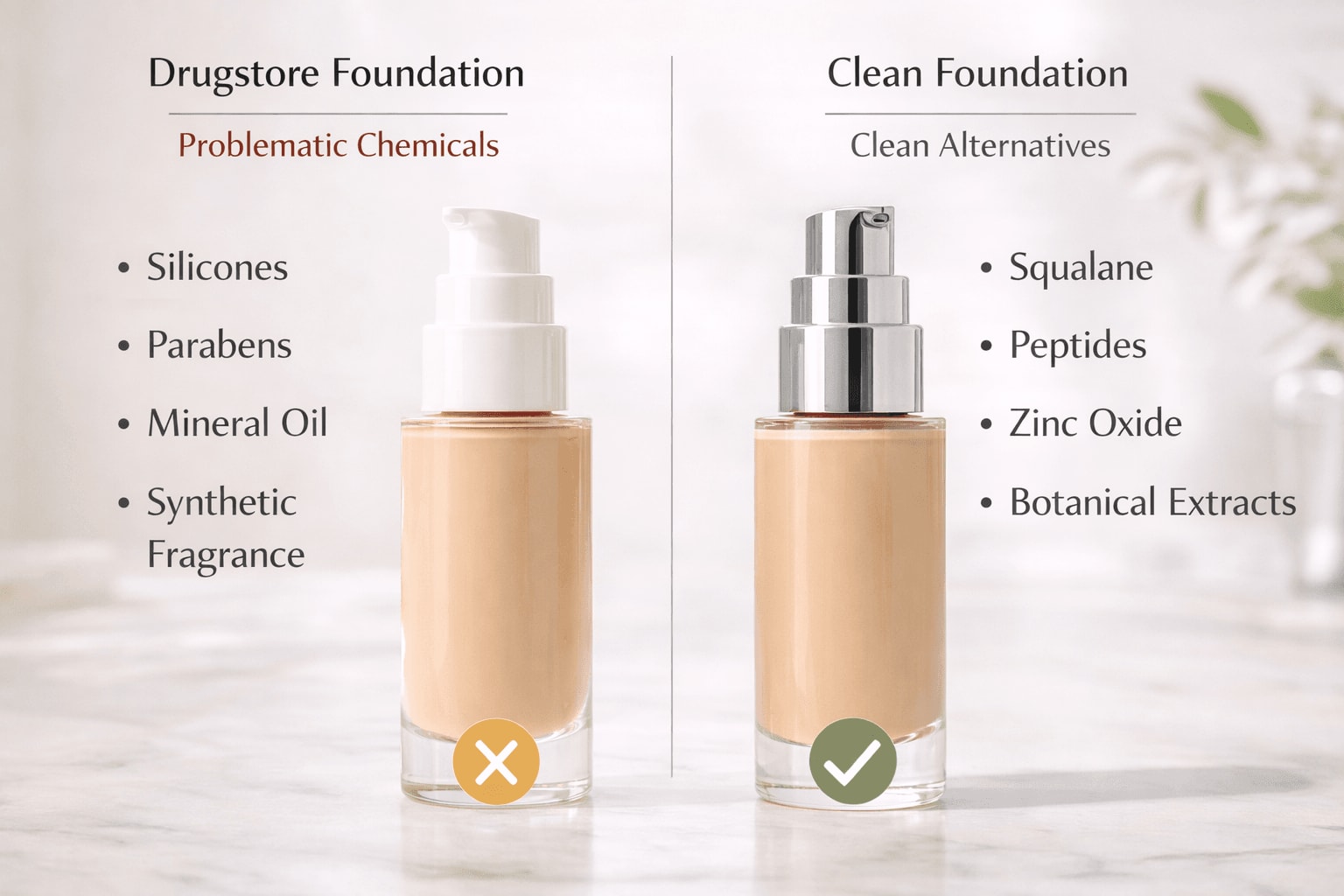
The best clean drugstore foundation represents a category that barely existed five years ago because clean beauty formulation costs historically required premium pricing to remain profitable. Removing problematic ingredients like parabens, phthalates, synthetic fragrances, and certain UV filters meant reformulating from scratch with more expensive alternatives that mass-market brands avoided to maintain drugstore price points. Additionally, clean formulas often have shorter shelf lives due to gentler preservative systems, creating distribution challenges for drugstore channels with longer inventory cycles. The breakthrough came when major mass-market brands recognized consumer demand for cleaner options justified investment in reformulation despite increased costs.
Here's what cosmetic chemists understand about non toxic drugstore foundation that marketing obscures: the term non-toxic has no regulated definition and gets applied inconsistently across brands. One company's non-toxic foundation might eliminate parabens but contain synthetic fragrances. Another avoids fragrance but uses questionable preservatives. The cleanest drugstore options come from brands with explicit excluded ingredient lists—typically 1,000+ banned substances—and third-party certifications like EWG Verified or Made Safe that provide objective standards rather than relying on brand claims alone. Reading these exclusion lists matters more than trusting clean or non-toxic labeling without verification.
The critical factor most advice overlooks: clean drugstore foundation performance still lags behind conventional formulas in certain aspects because ingredient restrictions limit formulation options. Clean foundations typically offer fewer shade options because natural pigments provide less color range than synthetic dyes. They may have shorter wear time because gentler film-formers don't grip skin as tenaciously as silicones. They might oxidize differently because mineral pigments behave distinctly from synthetic ones. These aren't failures—they're inherent trade-offs of cleaner formulation. Understanding these limitations prevents disappointment and helps set realistic expectations for what affordable clean foundation can deliver.
The Ingredient Priorities That Actually Matter
When evaluating cleanest drugstore foundation options, prioritize avoiding endocrine disruptors over cosmetic preferences. Ingredients that interfere with hormone function—phthalates, certain parabens, synthetic musks, oxybenzone—pose greater health concerns than cosmetic ingredients you might personally prefer to avoid but that lack evidence of harm. A foundation containing phenoxyethanol (a preservative some clean brands avoid) but free of hormone disruptors represents a safer choice than one avoiding phenoxyethanol but containing fragrance phthalates. The hierarchy of concern should guide decisions when perfect clean formulas don't exist at your price point.
Fragrance deserves particular attention because it's the most common allergen in cosmetics yet appears in many drugstore foundations marketed as clean. The term fragrance or parfum can hide dozens of individual chemicals including potential allergens and endocrine disruptors that brands aren't required to disclose. Truly clean foundation should be fragrance-free—not unscented, which can contain masking fragrances—with no parfum or fragrance anywhere in the ingredient list. Essential oils, while natural, can be equally or more irritating than synthetic fragrances and don't automatically qualify as cleaner options despite marketing suggestions otherwise.
Which Drugstore Foundation Formulas Deliver Both Clean and Performance
The best drugstore serum foundation category represents the sweet spot where clean formulation meets modern performance expectations. Serum foundations use water-based formulas with encapsulated pigments and hydrating ingredients like hyaluronic acid or glycerin, avoiding heavy silicones while providing buildable coverage. These lightweight formulas work particularly well for mature skin or anyone prioritizing ingredient safety because they deliver coverage without occlusive ingredients that can trap irritants or clog pores. The serum format also allows easy mixing with facial oils or additional serums to customize coverage and finish based on daily needs.
For best drugstore waterproof foundation in clean formulations, options remain limited because truly waterproof performance typically requires silicone or synthetic polymer technology that clean brands often avoid. However, water-resistant formulas using natural waxes and mineral pigments can provide adequate longevity for most needs without requiring harsh chemical film-formers. The trade-off involves accepting that genuinely clean foundation won't survive swimming or torrential rain as effectively as conventional waterproof formulas, but it will withstand normal humidity, light perspiration, and daily activities while avoiding questionable ingredients.
- Mineral-based drugstore foundations: Use iron oxides and titanium dioxide for coverage; avoid synthetic dyes and heavy silicones
- Serum foundations with clean bases: Water-based formulas with encapsulated pigments; lightweight and suitable for sensitive skin
- Tinted moisturizers meeting clean standards: Provide sheer coverage with skincare benefits; ideal for minimal makeup days
- Cushion foundations from clean brands: Korean beauty innovations now available at drugstores with clean formulations
- Avoid: Foundations with fragrance or parfum listed: Hidden chemicals and allergens that undermine clean beauty claims
Shade matching becomes more challenging with clean drugstore foundations because natural mineral pigments offer less flexibility than synthetic dyes. Many clean lines provide only 10-15 shades compared to 40+ in conventional ranges, leaving some skin tones without perfect matches. The workaround involves custom mixing—purchasing two shades and blending to create your perfect match, or mixing foundation with a drop of face oil to adjust undertone. While less convenient than grab-and-go matching, this approach allows access to clean formulations when your exact shade doesn't exist in the limited range.
Application technique matters more with clean drugstore foundations because their performance window differs from conventional formulas. Apply immediately after skincare without excessive waiting, as clean foundations often set faster than silicone-based alternatives. Use damp beauty sponges or brushes rather than fingers to achieve even coverage, as natural formulas can show application streaks more readily. Build coverage gradually through multiple thin layers rather than one thick application, which prevents the cakey appearance that some clean foundations develop when applied heavily. These small technique adjustments transform adequate clean foundation into excellent results.
For comprehensive guidance on clean, non-toxic foundation specifically formulated for hormonal skin changes during menopause, including ingredient considerations for increased sensitivity, explore our guide to non-toxic foundations for menopausal skin that addresses both clean ingredients and mature skin formulation needs.
When Clean Drugstore Foundation Advice Completely Backfires
The universal recommendation to prioritize clean ingredients over performance fails for women with severe acne, rosacea, or melasma requiring genuine full coverage that most clean drugstore foundations cannot provide. These skin conditions need opacity levels achievable only with high pigment concentrations typically found in conventional formulas. Attempting to use sheer clean foundation on significant discoloration requires so much layering that you defeat the purpose of lightweight natural formulas. Sometimes the healthiest choice involves using conventional foundation with proven coverage where needed while keeping the rest of your routine clean, rather than using ineffective clean foundation that causes stress and self-consciousness.
Another scenario where conventional wisdom fails: assuming all drugstore foundations from major brands contain harmful ingredients. Several mass-market companies have quietly reformulated entire lines to meet clean standards without premium pricing or extensive marketing about the changes. Reading ingredient lists reveals that some conventional drugstore favorites now qualify as clean by most standards, offering familiar performance at accessible prices with improved safety profiles. The assumption that clean equals expensive boutique brands causes women to overlook legitimately clean options hiding in plain sight at their regular drugstore.
The critical contradiction between clean beauty marketing and dermatological safety: some ingredients avoided by clean brands actually have excellent safety profiles while some natural alternatives can be more problematic. Phenoxyethanol, commonly excluded from clean lines, has decades of safe use and minimal allergic potential. Conversely, essential oils and botanical extracts favored by natural brands frequently cause contact dermatitis despite being plant-derived. The safest foundation isn't necessarily the one marketed as cleanest but the one formulated with genuine safety data prioritizing proven gentle ingredients regardless of their natural or synthetic origin.
What actually fails that nobody discusses: the environmental impact of clean drugstore foundations' shorter shelf lives and less efficient preservation systems. These formulas expire faster, leading to more frequent replacement and increased waste compared to conventional foundations lasting 24+ months. The packaging required for pump dispensers that minimize contamination uses more plastic than simple tube packaging. Sometimes the total environmental footprint of clean beauty exceeds conventional products when considering the full lifecycle. This doesn't invalidate clean beauty but suggests that perfect solutions don't exist—every choice involves trade-offs between personal health, environmental impact, and practical performance.
The hidden challenge with clean drugstore foundation during hormonal transitions: increased skin sensitivity during perimenopause and menopause can trigger reactions to natural ingredients like essential oils that weren't problematic before. Women switch to clean foundations expecting gentler formulas only to develop irritation from botanical extracts their newly reactive skin cannot tolerate. The safest approach during hormonal sensitivity involves choosing minimalist formulations with short ingredient lists focused on proven gentle components—mineral pigments, basic emollients, simple preservation—regardless of whether they're marketed as natural or just formulated sensibly. Simple beats trendy natural ingredients when your barrier is compromised.
For understanding how foundation selection fits into comprehensive makeup strategies during hormonal changes, including coordination with other clean beauty products, see our complete makeup guide for menopausal skin changes that addresses ingredient safety alongside application techniques for changing skin.