Why Acne-Prone Skin After 40 Needs Different Foundation Than Younger Skin
The cruel paradox of mature acne is that you're managing breakouts and wrinkles simultaneously—concerns that typically require opposing foundation approaches. Standard acne foundation advice recommends oil-free, matte formulas that control shine and resist clogging pores. However, these same formulas emphasize every fine line, settle into enlarged pores, and make mature skin look older because they lack the hydration and flexibility aging skin desperately needs. Meanwhile, the moisturizing, luminous foundations that flatter mature skin often contain emollients and oils that trigger breakouts in acne-prone types. This isn't a case of choosing the lesser evil—it requires finding the rare formulas specifically designed for this combination.
Additionally, hormonal acne during perimenopause and menopause differs fundamentally from teenage or twenties acne in both cause and appearance. Hormonal breakouts in mature women tend to appear as deep, cystic lesions along the jawline and chin rather than surface whiteheads across the entire face. These painful, inflamed bumps create texture that foundation can emphasize rather than conceal if the formula is too heavy or matte. The skin surrounding these breakouts is often dehydrated and sensitized from declining estrogen, meaning it reacts poorly to the harsh, drying ingredients in traditional acne makeup. You need foundations that won't aggravate inflammation while still providing coverage for active breakouts and the post-inflammatory hyperpigmentation that lingers for months after hormonal acne heals.
The critical insight is that non-comedogenic alone isn't sufficient for acne-prone mature skin. While avoiding pore-clogging ingredients prevents new breakouts, you also need formulas with active beneficial ingredients like salicylic acid, niacinamide, or zinc that actively treat acne while you wear them. Many drugstore foundations now function as both makeup and skincare, addressing breakouts rather than just covering them. This dual-action approach makes affordable options particularly valuable because prestige brands charge premium prices for the same ingredient combinations available at the drugstore. Learn comprehensive strategies in our complete makeup guide for menopause.
Common Mistakes That Worsen Acne and Aging Simultaneously
Myth 1: Heavy Matte Foundation Prevents Breakouts
The assumption that ultra-matte, oil-absorbing foundations protect acne-prone skin actually worsens both breakouts and visible aging. These formulas achieve their dry-touch finish through high concentrations of talc, silica, and clay—ingredients that absorb not just excess sebum but also the skin's necessary moisture. On mature skin already compromised by hormonal changes, this aggressive drying triggers the skin to produce even more oil in compensation, creating a cycle where your foundation causes the very oiliness it's supposed to control. Meanwhile, the powder-heavy texture settles into every pore and fine line, making enlarged pores more visible and wrinkles more pronounced throughout the day.
For acne-prone mature skin, the goal is balanced hydration with oil control rather than maximum mattification. Formulas described as "natural finish" or "semi-matte" contain both hydrating ingredients and selective oil-absorbers, preventing the dehydration-induced rebound oil production while still controlling shine in problem areas. The slight luminosity also diffuses the appearance of both active breakouts and the texture around them, making imperfections less noticeable than flat matte coverage.
Myth 2: Oil-Free Means Acne-Safe
Many women reflexively choose oil-free foundations when dealing with acne, but this oversimplifies pore-clogging mechanisms. Not all oils cause breakouts—in fact, some lightweight oils like squalane or jojoba oil are non-comedogenic and actually help balance sebum production while providing the flexibility mature skin needs. Conversely, many oil-free foundations contain synthetic ingredients like certain silicones or heavy waxes that clog pores more effectively than botanical oils. The determining factor isn't oil content but the specific comedogenicity rating of individual ingredients. This means an oil-free foundation can cause worse breakouts than one containing carefully selected non-comedogenic oils.
The Coverage Paradox Nobody Explains
When dealing with visible breakouts, the instinct is to apply more foundation for better coverage—but on acne-prone mature skin, this creates a texture amplification effect. Active pimples have raised surfaces and surrounding inflammation that heavy foundation emphasizes rather than conceals. The thick layer required to match the skin tone of an inflamed red bump creates obvious texture that looks worse than partial coverage. Professional makeup artists working with acne use thin, buildable foundation across the entire face for color correction, then spot-conceal only the darkest discoloration at the center of blemishes with a separate concealer. This layering technique provides the illusion of full coverage while using less product and avoiding the texture emphasis that comes from heavy, uniform application. The foundation evens overall tone while strategic concealer handles specific spots—neither alone would work, but together they solve the mature acne coverage challenge.
How to Select and Apply Drugstore Foundation for Acne-Prone Mature Skin
Ingredient Priorities for Dual Concerns
Look for drugstore foundations that explicitly state non-comedogenic plus active treatment ingredients. Salicylic acid at 0.5-2% concentration helps prevent clogged pores while you wear the foundation, functioning as continuous low-grade treatment throughout the day. Niacinamide reduces inflammation and helps fade post-acne marks while regulating oil production without over-drying. Zinc oxide provides both mineral sun protection and anti-inflammatory benefits particularly helpful for inflamed hormonal acne. Many affordable foundations now combine these actives with hydrating ingredients like hyaluronic acid and glycerin, creating the balanced formula mature acne-prone skin needs. Avoid foundations containing coconut oil, palm oil, algae extract, or isopropyl myristate in the first five ingredients—these are common pore-cloggers that drugstore brands sometimes use as affordable fillers.
Application Strategy for Inflamed Breakouts
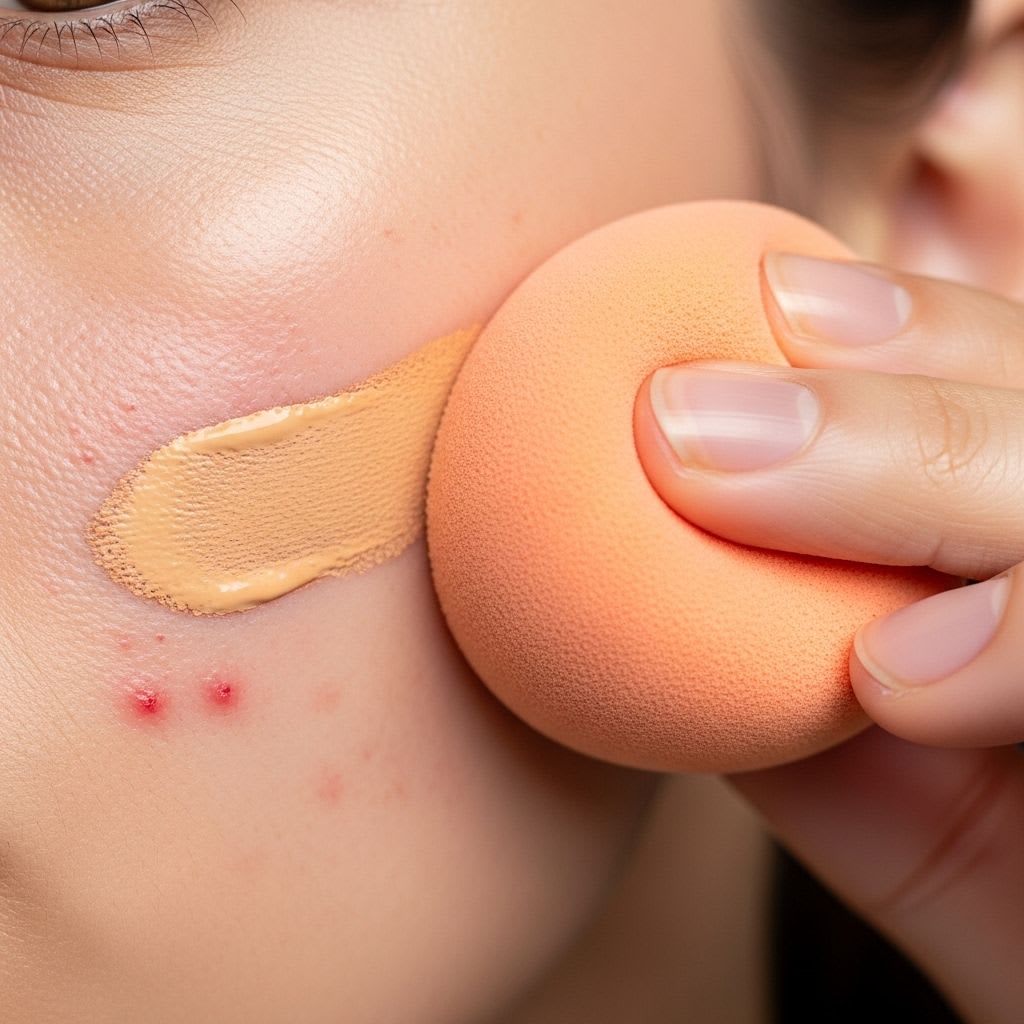
When applying foundation over active hormonal acne, use pressing motions rather than rubbing or buffing. Inflamed breakouts are tender and easily irritated—aggressive application with brushes or rubbing with sponges can further inflame the lesion, triggering more redness and potentially spreading bacteria. Instead, warm a small amount of foundation between your fingers and gently press it onto skin using your ring finger or a damp beauty sponge with stippling motions. This deposits coverage without mechanical irritation. For raised, textured breakouts, apply foundation around the blemish first to create even base color, then lightly press product onto the actual bump—never try to fully flatten the appearance of a raised lesion with foundation as this requires so much product it becomes obvious.
- For cystic jawline acne:Use minimal foundation on the actual cyst, focusing coverage on the red halo around it—the bump itself won't hide but evening the surrounding color makes it far less noticeable
- For post-inflammatory hyperpigmentation:Build coverage gradually with thin layers—the dark marks are flat and respond well to layering, unlike active raised breakouts that become more obvious with heavy coverage
- For combination acne and dryness:Mix a drop of facial oil into foundation before application to add hydration without switching formulas—this customizes texture while maintaining acne-fighting benefits of the original formula
When Foundation Worsens Acne: The Removal Reality
The scenario where even non-comedogenic foundation causes breakouts is often inadequate removal rather than the formula itself. Foundation that sits perfectly on skin during the day becomes problematic when it's not fully removed at night—residual makeup mixes with sebum and dead skin cells, creating the perfect environment for clogged pores. However, aggressive cleansing to ensure complete removal strips the skin barrier, triggering inflammation and compensatory oil production that worsens acne. This creates a frustrating cycle where you're damned if you do and damned if you don't. The solution is double cleansing with gentle products—first an oil-based cleanser or micellar water to dissolve makeup, then a gentle water-based cleanser to remove residue without stripping. This two-step process completely removes foundation while maintaining skin barrier integrity. Many women skip this step, assuming their single cleanser suffices, then blame the foundation when their skin breaks out from incomplete removal. For mature acne-prone skin, the foundation formula matters, but the removal method matters equally. Additionally, ensure you're replacing makeup tools regularly—dirty brushes and sponges harbor bacteria that cause breakouts regardless of foundation quality. Explore clean formula options in our guide to non-toxic foundation for menopausal skin.