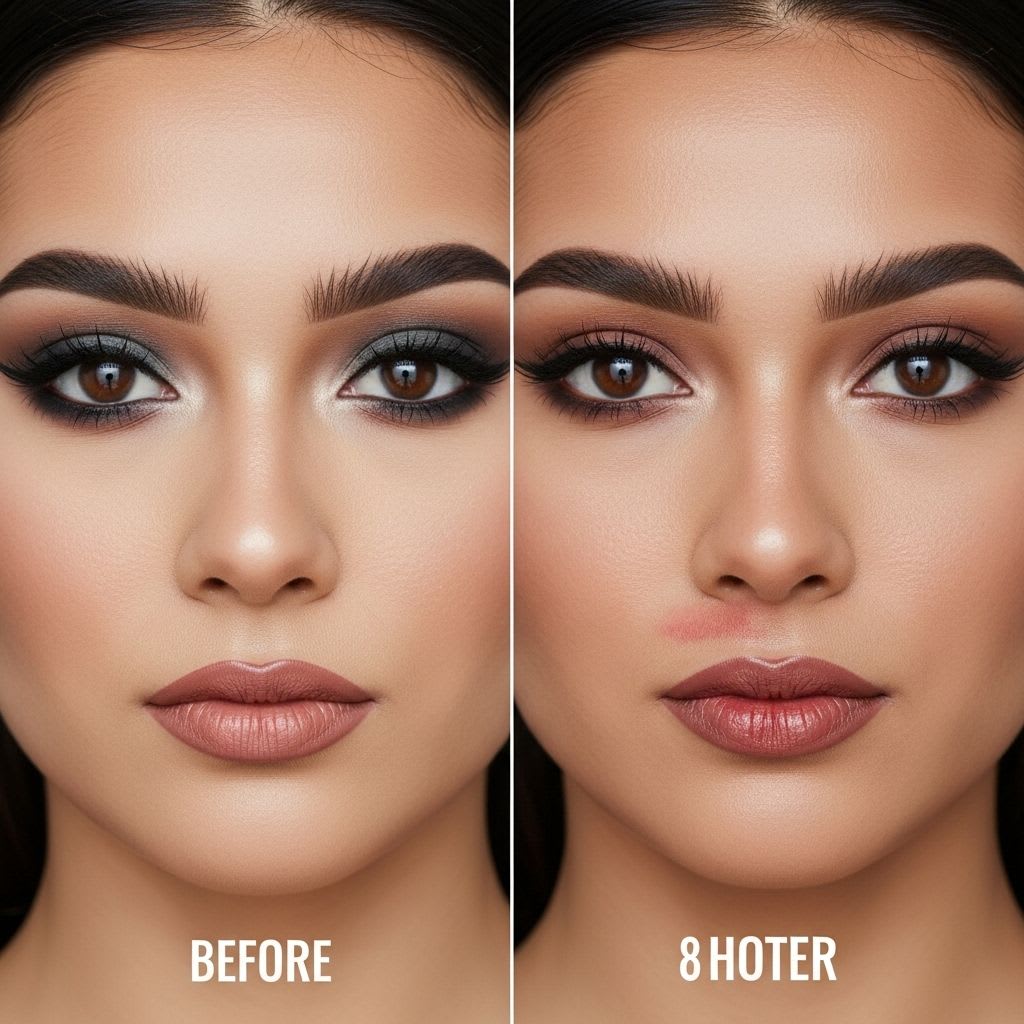
Why Expensive Setting Spray Isn't Always Better
The best drugstore setting spray often contains identical active ingredients to luxury versions costing four times more. Film-forming polymers like polyvinyl alcohol and acrylates copolymer—the compounds that actually lock makeup in place—are commodity chemicals available to all manufacturers regardless of price point. What you're paying for in premium setting sprays is primarily packaging, marketing, and prestige positioning rather than fundamentally superior performance. Professional makeup artists working on photoshoots and film sets frequently use cheap setting spray formulas because they deliver identical results at a fraction of the cost when you're going through multiple bottles per month.
What differentiates effective from ineffective setting sprays has nothing to do with price—it's about the delivery mechanism and formula concentration. The best cheap setting spray produces a fine, even mist that distributes product uniformly across your face rather than creating wet spots that disturb your makeup. Drugstore brands have dramatically improved their spray nozzle technology over the past five years, with many now delivering professional-grade atomization that was previously only available in luxury products. The particle size and spray pattern matter more than the ingredient list for actual performance.
The most persistent misconception: believing that drugstore setting spray won't perform for long wear or special events. Independent laboratory testing comparing wear time across price points consistently shows minimal difference between budget and luxury formulas when tested on the same skin type under identical conditions. The real variable is skin preparation and application technique—a $7 drugstore spray applied correctly over properly prepped skin outperforms a $40 luxury spray applied incorrectly every single time. This is why makeup artists focus on mastering application rather than exclusively recommending expensive products.
The Finish Confusion That Wastes Money
Women searching for best drugstore matte setting spray versus best drugstore dewy setting spray often don't understand that these products work through entirely different mechanisms. Matte sprays contain oil-absorbing ingredients like silica, kaolin clay, or rice powder suspended in the formula—they actively manage shine by absorbing sebum as it emerges. Dewy sprays contain humectants like glycerin and hyaluronic acid that attract moisture to maintain a luminous finish. You cannot achieve a matte finish with a dewy formula or vice versa, yet beauty counters frequently sell women the wrong type based on trend rather than actual skin needs.
For menopausal women experiencing unpredictable oil production, the best drugstore setting spray for oily skin needs to balance oil control with hydration—standard mattifying sprays designed for younger, consistently oily skin often overcompensate and create a dried-out appearance that emphasizes texture. Look for formulas specifically mentioning 'shine control' rather than 'mattifying' or 'oil-free,' as these tend to use gentler absorption technology that manages excess sebum without stripping all luminosity. The goal for mature skin with hormonal oil fluctuations is controlled radiance, not the completely flat matte finish appropriate for teenage skin.

What Actually Makes Drugstore Setting Spray Perform
The ingredient list reveals performance potential better than price or brand recognition. Effective drugstore fixing spray contains film-forming polymers in the first five ingredients—look for VP/VA copolymer, polyvinyl alcohol, or acrylates copolymer. These create the invisible mesh that locks makeup in place. Water or alcohol typically appears first as the carrier solvent, but the active film-formers should appear immediately after. If you see them listed near the end, the concentration is too low to provide genuine setting power beyond what you'd get from simply misting your face with water.
The trade-off between best finishing spray drugstore formulas and skin comfort: alcohol-heavy sprays dry faster and create stronger hold, but they can be dehydrating for mature or sensitive skin experiencing hormonal dryness. Water-based formulas feel more comfortable but take longer to dry and may provide slightly less extreme longevity. For everyday wear, water-based performs excellently while being gentler on aging skin. Reserve alcohol-heavy formulas for truly long-wear situations like weddings or all-day events where you cannot touch up.
- VP/VA Copolymer: Primary film-former that creates flexible hold without stiffness or visible residue
- Glycerin: Prevents dewy sprays from drying out skin while maintaining makeup flexibility throughout the day
- Silica or Kaolin Clay: In matte formulas, absorbs oil as it emerges without disturbing foundation or creating patchiness
- Avoid: Fragrance in top ingredients: Indicates formula prioritizes scent over performance and may irritate sensitive aging skin
Application distance determines whether your affordable makeup setting spray works or wastes product. Hold the bottle 8-10 inches from your face—closer creates wet spots that disturb makeup, farther produces such fine mist that most product disperses into the air rather than reaching your skin. Use a continuous X and T pattern: spray from forehead to chin in an X, then across the T-zone. This ensures even coverage without over-saturating any single area. Let it dry completely before touching your face or applying additional products—the film needs 60-90 seconds to fully form and create lasting hold.
For mature skin requiring additional pore-minimizing preparation before makeup application, combine your setting spray with effective primers for large pores during menopause to create a complete system that manages texture and maintains wear throughout hormonal fluctuations.
When Drugstore Setting Spray Advice Completely Fails
The standard recommendation to use best drugstore mattifying setting spray for oily skin fails for the approximately 35% of menopausal women experiencing combination skin with simultaneous oiliness and dehydration. Traditional mattifying sprays designed for uniformly oily teenage skin will over-dry the already-dehydrated areas around your eyes and mouth while adequately controlling the T-zone. You need a hybrid approach: apply mattifying spray only to areas producing excess oil, then follow with a light hydrating mist over drier zones. This targeted application prevents the all-over flatness that makes mature skin look lifeless.
Another scenario where conventional wisdom backfires: assuming drugstore waterproof setting spray provides genuine waterproof protection. These sprays make makeup more water-resistant, meaning they withstand light perspiration or humidity, but they will not survive swimming, heavy rain, or tears the way truly waterproof individual products do. If you need makeup to survive water exposure, you must use waterproof versions of each product—mascara, eyeliner, foundation—because setting spray cannot retroactively make non-waterproof formulas impervious to water. The spray enhances the water resistance of products already formulated to resist moisture, but it cannot transform regular makeup into waterproof makeup.
The contradiction between marketing and experience: products claiming to be the best finishing spray for oily skin often contain such high alcohol concentrations that they trigger rebound oil production within hours. Your skin interprets the aggressive dehydration as a threat and compensates by producing even more sebum than before application. This creates the frustrating cycle where your makeup looks perfect for three hours, then suddenly becomes noticeably greasy. The solution is counterintuitive: use a gentler, more balanced formula that controls oil through absorption rather than aggressive drying, allowing your skin to maintain equilibrium throughout the day.
What professional makeup artists working with mature clients know: setting spray works optimally as the final step in a complete makeup system rather than as a magic bullet that compensates for poor product choices or application. The spray locks in whatever you've created—if your foundation oxidizes, your setting spray will lock in that oxidation. If your powder looks cakey, your setting spray will preserve that cakiness. For comprehensive strategies on creating makeup looks that work harmoniously with hormonal skin changes from start to finish, explore our complete menopause makeup guide covering product selection and application across all categories.