Why Stick Foundation Changes Everything for Mature Skin
A good drugstore stick foundation solves the precise control problem that makes liquid foundations frustrating after 50. When your skin develops areas of hyperpigmentation next to regions of redness, spots that need extra coverage adjacent to zones where foundation settles into texture, you need targeted application that liquid formulas simply cannot provide. Stick foundations allow you to deposit product exactly where you need it—building coverage on age spots or broken capillaries while keeping application sheer across areas with fine lines. This surgical precision prevents the common issue of over-applying foundation to your entire face just to cover specific problem areas.
The texture mechanics of drugstore stick foundation formulas have evolved dramatically in the past five years. Early stick foundations were essentially cream foundations in solid form—waxy, difficult to blend, and prone to emphasizing every texture irregularity. Modern drugstore versions now incorporate the same silicone technology and emollient blends found in luxury products, creating formulas that glide smoothly without tugging delicate skin, blend seamlessly with fingertips or sponges, and set to a natural finish rather than the flat, cakey appearance that plagued previous generations of stick formulas.
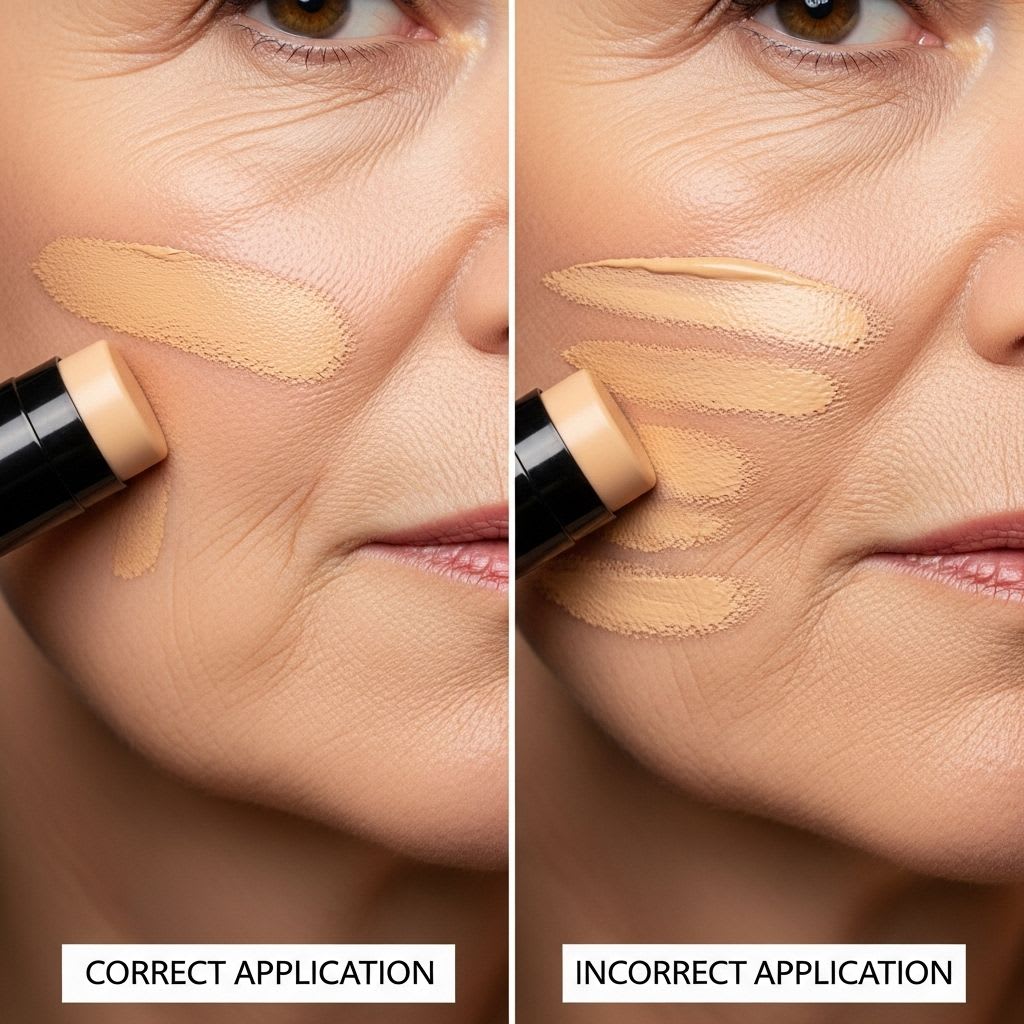
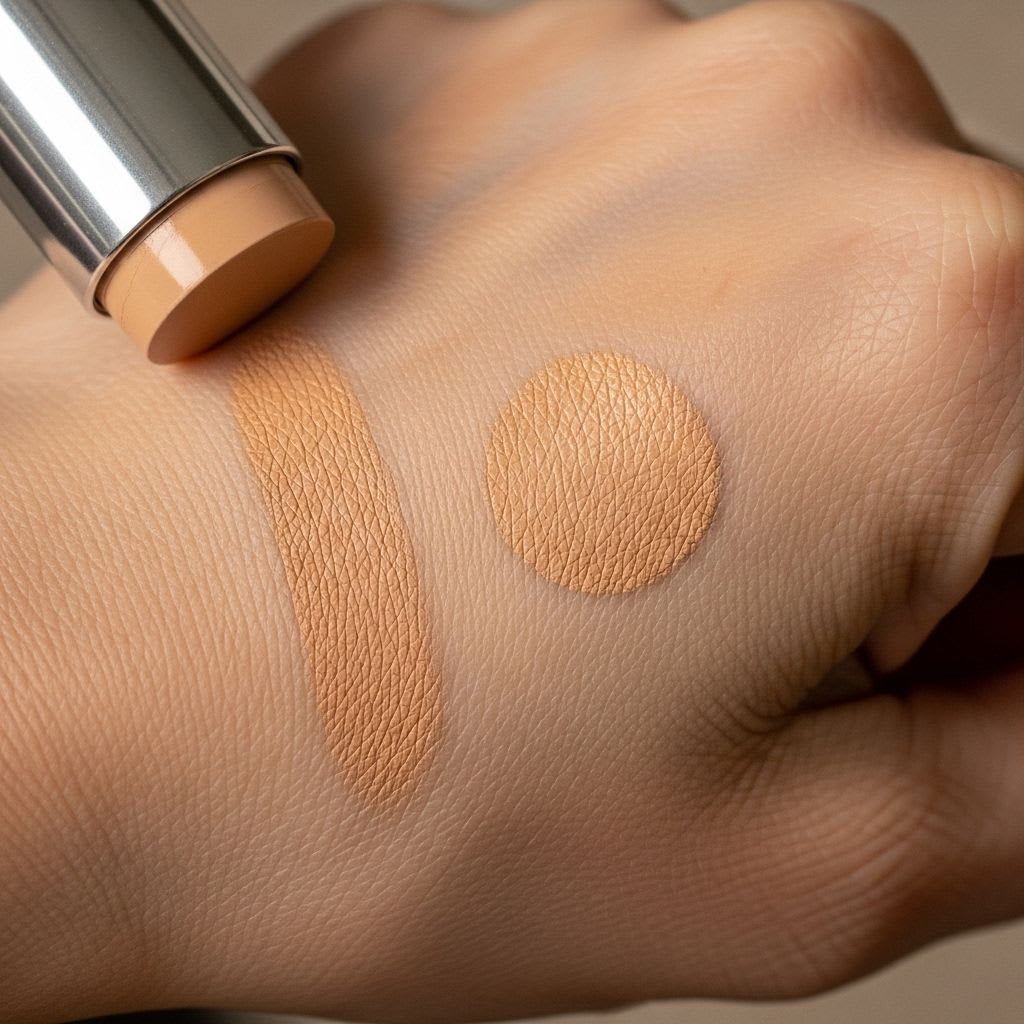
Here's what makeup artists working with mature clients understand about stick application that most tutorials overlook: the stick itself should never touch your face. Dragging a stick foundation directly across aging skin stretches and pulls at tissue that has already lost elasticity, potentially exacerbating sagging and creating uneven application. Instead, swipe the product onto the back of your hand first, warm it slightly with your finger to soften the emollients, then press it into your skin using a stippling motion. This indirect application method gives you the precision of stick formula with the gentle technique mature skin requires.
The Coverage Density Advantage Nobody Mentions
Stick foundations contain significantly higher pigment concentration than liquid formulas—typically 30-40% more pigment per application. For mature skin dealing with increased discoloration from decades of sun exposure and hormonal changes, this density means you can achieve the same coverage with far less product. Less product equals less settling into fine lines, fewer opportunities for oxidation and color change throughout the day, and a more natural finish that doesn't look like you're wearing foundation at all. A single light layer of properly chosen stick foundation provides equivalent coverage to two or three layers of liquid foundation, while feeling lighter and moving more naturally with facial expressions.
The misconception that stick foundations are too heavy for mature skin stems from using them incorrectly. Applied as full-face base coverage directly from the stick, they absolutely are too heavy and will emphasize every texture concern. Used strategically as a foundation-concealer hybrid—where you apply sparingly only to areas needing coverage, then blend outward to create gradient effect—they deliver professional results at drugstore prices. This targeted approach also makes a single stick last 6-8 months even with daily use, making the per-application cost lower than most liquid foundations despite similar upfront pricing.
What Separates Good Drugstore Formulas from Disasters
The first ingredient after pigments reveals everything about whether a drugstore stick foundation will work for aging skin. Formulas listing dimethicone or cyclopentasiloxane as primary base ingredients glide smoothly, blend effortlessly, and create the slip needed to avoid pulling mature skin during application. Those listing waxes like beeswax or candelilla wax first will be stiff, require significant warmth to become workable, and tend to sit on top of skin rather than melding with it. During menopause and beyond, when skin loses natural moisture and becomes more sensitive to friction, silicone-based stick foundations dramatically outperform wax-based alternatives.
The hydration component separates adequate stick foundations from exceptional ones for mature skin. Look for glycerin, sodium hyaluronate, or squalane within the first seven ingredients. These humectants pull moisture into your skin throughout the day, counteracting the dehydrating effect that any makeup naturally has. Stick foundations without these ingredients may apply beautifully when your skin is freshly moisturized but will emphasize dry patches and fine lines as hours pass. The best drugstore options now include skin-identical ingredients like ceramides or peptides, transforming your foundation from simple coverage into active skincare that improves skin texture over time.
- Silicone-first formulas: Provide smooth application and natural finish without tugging delicate mature skin
- Built-in hydrators: Glycerin and hyaluronic acid prevent the dry, cakey appearance that develops throughout the day
- Optical diffusers: Mica or soft-focus silica scatter light to minimize the appearance of pores and fine lines
- Avoid: Heavy fragrances: Aging skin becomes more reactive to synthetic fragrance; unscented formulas prevent irritation
The finish designation matters more for stick foundations than any other format. A stick labeled as matte will be aggressively drying on mature skin, settling into every line within two hours. Those marketed as dewy may slide off combination zones or emphasize enlarged pores. The sweet spot for aging skin is natural or satin finish formulas that provide subtle luminosity without obvious shine, creating the appearance of healthy, well-moisturized skin rather than obviously made-up coverage. These finishes forgive texture irregularities while still controlling excess oil in areas where mature skin unexpectedly develops shine.
If you're prioritizing both affordability and ingredient safety, pair your stick foundation selection with insights from our guide on non-toxic foundations for hormonal skin to identify clean drugstore options that avoid endocrine disruptors while meeting mature skin needs.
When Stick Foundation Completely Backfires on Mature Skin
The standard advice to warm stick foundation between your fingers before applying fails catastrophically if you have severely dry or dehydrated mature skin. The warmth that softens the formula also activates its setting properties more quickly, giving you a 15-20 second working window before it becomes difficult to blend. On very dry skin that absorbs product instantly, this creates patchy, streaky application where you can see every stroke. For skin in this condition, you need a completely different approach: apply a facial oil or rich serum immediately before your stick foundation, creating a slippery surface that extends your blending time and prevents the formula from grabbing onto dry patches.
Another scenario where stick foundations fail: attempting to use them as all-over base coverage on mature skin with significant texture concerns like deep wrinkles or pronounced nasolabial folds. The concentrated pigment and creamy density that make stick foundations excel for spot corrections become liabilities when applied across large surface areas with dramatic topography. The formula pools in every crevice, creating harsh lines of demarcation that draw attention to exactly what you're trying to minimize. For extensive coverage needs on textured mature skin, a lightweight liquid or serum foundation provides superior results, with stick foundation reserved exclusively for concealing specific spots of hyperpigmentation or redness.
The portability and convenience that make stick foundations attractive for travel and quick touch-ups become problematic in extreme temperatures. Stick formulas stored in hot cars or carried in summer purses can become too soft, melting slightly and losing their structural integrity. In winter cold, they become so hard that application requires aggressive pressure that stretches and damages delicate mature skin. If you rely on stick foundation for on-the-go application, you need temperature-stable formulas specifically engineered to maintain consistent texture across broader temperature ranges—a feature that higher-end drugstore brands have improved but budget options often lack.
The critical contradiction in stick foundation marketing: products advertised as providing buildable coverage for mature skin often contain color-correcting pigments designed to neutralize discoloration. While this sounds beneficial, these pigments can create an ashy, grayish undertone on skin over 50 that has yellowed slightly with age. The corrective pigments that brighten younger skin make mature complexions look dull and lifeless. Test any good drugstore stick foundation in natural daylight on your actual face—not your hand—before purchasing. The shade that looks perfect on your hand may read completely wrong against your facial skin tone, particularly if the formula contains color-correcting technology optimized for different age demographics.
For comprehensive guidance on adjusting your entire makeup routine to work harmoniously with hormonal skin changes, including techniques for blending stick foundation with other product formats and addressing age-related concerns across all cosmetic categories, explore our complete makeup guide for menopausal skin that provides the full strategic framework for age-appropriate beauty.