
Why Oily Skin During Menopause Creates a Hydration Paradox
The assumption that oily skin doesn't need hydration becomes dangerously wrong during menopause. Hormonal fluctuations cause reactive sebum production—skin produces excess oil specifically because it's dehydrated underneath. Androgens become proportionally dominant as estrogen declines, triggering oil glands while simultaneously reducing the skin's ability to retain water. You end up with a greasy surface layer masking severe dehydration in deeper skin layers, creating the worst of both worlds.
This explains why traditional mattifying face mists marketed for oily skin catastrophically fail during menopause. Products containing high alcohol content or strong astringents strip surface oil temporarily, but this triggers even more oil production within 2-3 hours as skin compensates for the stripping. The cycle intensifies: you mist to control oil, skin overproduces oil in response, you mist again, and dehydration worsens underneath while surface oiliness increases. Breaking this cycle requires understanding that oily menopausal skin needs hydration without occlusion.
The confusion stems from conflating oil with hydration—they're completely different. Skin can simultaneously be oil-slicked and water-depleted. Face mists for oily menopausal skin must deliver water-binding humectants without heavy oils or butter that clog pores already challenged by hormonal breakouts. Understanding your broader skincare needs helps; explore our complete menopausal skincare guide and anti-aging products for oily skin.
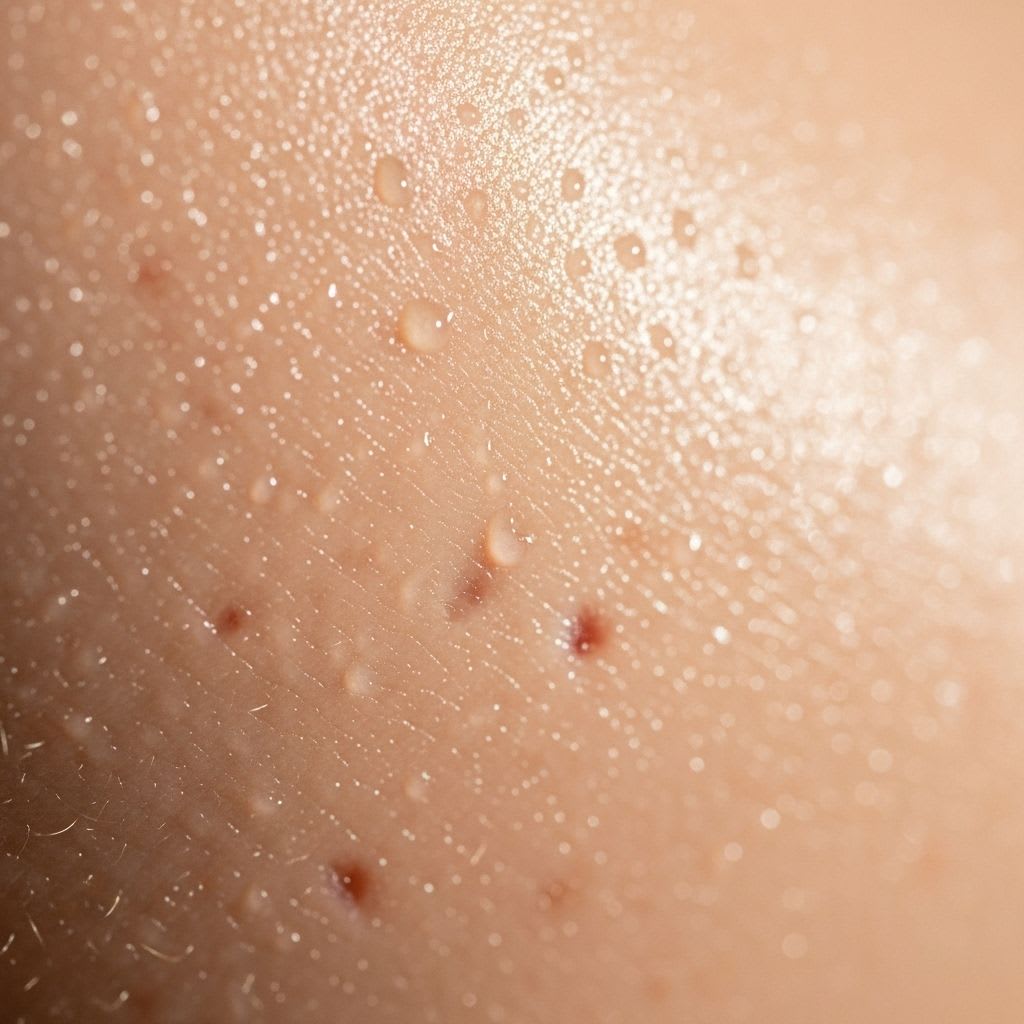
Common Misconceptions About Face Mists for Oily Skin
Myth: Mattifying Mists Solve Menopausal Oil Production
Mattifying face mists containing alcohol, witch hazel, or clay derivatives create an immediate matte finish that feels like problem solved. Within three hours, skin produces 40% more oil than before misting because these ingredients strip the acid mantle and trigger defensive sebum production. For menopausal skin specifically, this stripping also damages the already-compromised barrier, leading to increased sensitivity, breakouts, and paradoxically, even oilier skin over time.
What actually works: lightweight hydrating mists with niacinamide, which regulates sebum production at the source rather than stripping surface oil. Niacinamide reduces oil production by up to 35% within four weeks of consistent use while simultaneously strengthening the barrier. Combined with hyaluronic acid for hydration and zinc PCA for mild oil control, these formulas address root causes instead of symptoms.
Myth: Oil-Free Automatically Means Non-Comedogenic
The label 'oil-free' seems perfect for oily skin, but many oil-free mists contain silicones and synthetic polymers that clog pores just as effectively as heavy oils. These ingredients create a temporarily smooth, shine-free surface by forming a film over skin. However, this occlusive film traps dead skin cells and bacteria underneath, causing the hormonal acne that's already problematic during menopause to worsen significantly. Women report improved texture immediately but increased breakouts within a week.
The evidence-based alternative: look for mists labeled both 'non-comedogenic' AND listing lightweight humectants like glycerin or sodium hyaluronate in the first five ingredients. Some beneficial oils actually help oily menopausal skin—squalane mimics skin's natural sebum and regulates rather than increases oil, while tea tree oil provides antimicrobial benefits for breakout-prone areas. The key is concentration: these should appear toward the end of ingredient lists, present for function rather than as primary components.
Practical Strategies for Oily Menopausal Skin Hydration
Essential Ingredients That Balance Rather Than Strip
Effective mists for oily menopausal skin require a specific ingredient combination: niacinamide (5-10% concentration) to regulate sebum, hyaluronic acid for water retention without weight, and salicylic acid (0.5-1%) to prevent pore congestion. This trio addresses all three challenges: excess oil, dehydration, and hormonal breakouts. Additionally, green tea extract or centella asiatica provide antioxidant protection and reduce inflammation that often accompanies menopausal hormonal skin changes.
Avoid mists with glycolic or lactic acid as primary actives—while these work beautifully in serums, in mist form they're too dilute to exfoliate effectively but concentrated enough to irritate when sprayed repeatedly throughout the day. Similarly, skip mists with fragrance high in the ingredient list, as menopausal oily skin often develops unexpected sensitivity to fragrances that previously caused no issues. The hormonal shifts affecting oil production also affect skin's tolerance threshold.
Strategic Timing: When and How Often to Mist Oily Skin
Oily menopausal skin benefits from targeted misting rather than frequent application. The optimal schedule: once after morning cleansing (before serum application), and once mid-afternoon when oil production typically peaks. This mid-afternoon mist serves dual purposes—it rehydrates skin depleted from environmental exposure while providing active ingredients that calm the afternoon sebum surge most oily-skinned menopausal women experience.
Application technique matters significantly: hold the bottle 8-10 inches from face and mist in an 'X' pattern rather than directly spritzing each area. This creates even distribution without over-saturating the T-zone where oil concentrates. After misting, resist the urge to blot immediately—let the mist absorb for 30-60 seconds. If using over makeup, one light mist suffices; multiple sprays will disturb foundation and create the streaky, patchy appearance that makes you look older rather than refreshed.
The Edge Case: When Increased Oiliness Signals Barrier Damage
Standard advice fails when sudden oil increase during menopause stems from barrier damage rather than hormones. If skin becomes simultaneously oily AND flaky, or if oil production spikes after starting new active ingredients, the barrier is compromised. In this case, even gentle hydrating mists with niacinamide can irritate, and the oil production is actually protective compensation for a damaged surface.
During these periods, temporarily switch to the simplest possible mist—just glycerin and water—and focus all efforts on barrier repair with ceramides and minimal routine. Resume active-ingredient mists only when the flaking resolves and skin no longer stings upon product application. This represents an honest limitation: no face mist can fix what's fundamentally broken. The trade-off is accepting 2-3 weeks of basic hydration for long-term oil regulation success, rather than continuing to challenge damaged skin with actives it cannot tolerate.