
Why Combination Skin Becomes More Extreme During Menopause
Combination skin during menopause isn't the same as combination skin at 30. Hormonal fluctuations create unpredictable oil distribution patterns where your T-zone might be oily one week and completely dry the next, while cheeks remain perpetually dehydrated. Estrogen decline reduces overall sebum production, but remaining oil glands in the forehead and nose often overcompensate, creating starker contrasts between zones than you've ever experienced.
This creates a foundation nightmare: matte formulas that control T-zone shine emphasize dry patches on cheeks and around eyes, while hydrating foundations that improve dry areas turn the T-zone into an oil slick within hours. Traditional combination skin advice suggests using different products on different zones, but this becomes impractical when zone boundaries shift week to week. The solution requires foundations that adapt to varying moisture levels rather than targeting specific skin types. Learn more about managing menopausal skin changes in our complete beauty guide.
Additionally, menopausal combination skin often includes texture variation—smooth in oily areas, rougher where dry—that makes foundation sit differently across your face. What looks flawless on your forehead appears cakey on cheeks using the same product and technique. Understanding this physiological reality prevents the frustration of thinking you're applying foundation incorrectly when the actual issue is formula incompatibility with heterogeneous skin conditions.
Common Mistakes That Make Combination Skin Look Worse
Mistake #1: Choosing Matte Foundations to Control Oil
The instinct to use matte or oil-free foundations for combination skin backfires dramatically on menopausal skin. These formulas contain oil-absorbing agents like silica or kaolin that control shine but also absorb the limited moisture dry zones desperately need. Within 2-3 hours, dry areas look flaky and tight while the T-zone breaks through anyway because oil production hasn't actually stopped—it's just been temporarily absorbed.
What works instead: lightweight, satin-finish foundations that don't actively absorb oil but don't add excess moisture either. These formulas allow skin to express its natural finish—slight sheen in oily areas, natural glow in dry areas—without forcing uniformity that looks artificial. The key is accepting some variation in finish across your face rather than trying to mattify everything. Selective powder application only where needed provides final control without devastating dry zones.
Mistake #2: Using Heavy Primers to Even Texture
Pore-filling primers marketed for combination skin create more problems than they solve on menopausal skin. These silicone-heavy formulas sit on the surface creating a barrier that foundation slides on rather than adhering to, causing separation and patchiness within hours. Additionally, barrier primers prevent the skin's natural moisture from reaching the surface, worsening dryness in already-dry areas while trapping oil in pores of the T-zone.
The better approach: targeted primers only where genuinely needed. If your T-zone has visible pores, use mattifying primer exclusively there. If cheeks are dry and rough, use hydrating primer only on cheeks. Skip primer entirely on areas without specific issues—foundation often performs better on well-moisturized bare skin than on primer. This zoned approach requires an extra minute but prevents the uniformly bad results that occur when one primer type is forced onto incompatible skin conditions. Explore foundation compatibility in our guide to foundation selection.
Mistake #3: Full-Face Powder Application
Setting powder destroys combination skin balance by dehydrating dry areas catastrophically while providing only temporary oil control in the T-zone. The habit of powdering entire faces worked fine pre-menopause when skin produced adequate oil everywhere, but menopausal combination skin can't recover from whole-face powder application. Dry zones become visibly flaky and cakey within an hour.
The strategic alternative: powder only the T-zone using a small fluffy brush, leaving cheeks, under-eyes, and any dry areas completely unpowdered. If shine develops on cheeks later, use blotting papers instead of adding powder. This represents a complete mindset shift from comprehensive powder application, but the difference in how long foundation looks fresh and how natural skin appears is dramatic. Many women report this single change—strategic powder placement—solved their combination skin foundation problems more than any product switch.
Foundation Formulas That Actually Balance Combination Skin
Lightweight Liquid Foundations with Hybrid Finishes
The best foundations for menopausal combination skin are lightweight liquids with satin or natural finishes that adapt to skin's moisture levels rather than imposing a finish. These formulas typically contain water and silicones in balanced ratios, allowing them to provide coverage without heavy oils (that exacerbate oily zones) or aggressive mattifiers (that destroy dry zones). Look for descriptions like 'natural finish,' 'skin-like,' or 'satin'—these indicate formulas that don't force uniformity.
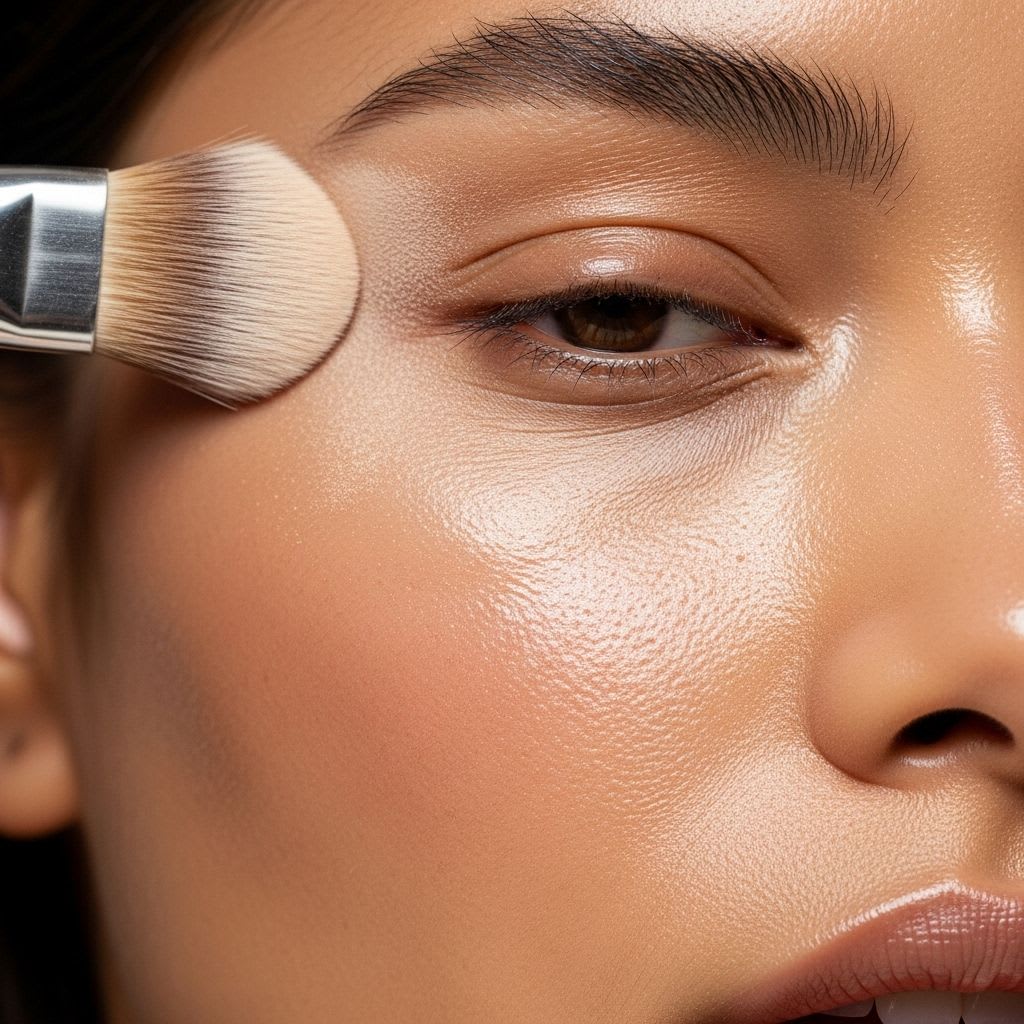
Application technique matters critically: use a damp beauty sponge which sheers out coverage and helps foundation mesh with skin rather than sitting on top. Apply in thin layers, building only where needed rather than coating everything heavily. The damp sponge also prevents the dragging motion that disturbs dry patches. These foundations work because they create a breathable layer that doesn't trap or absorb—they simply tint the skin and allow its natural behavior to show through in a controlled way.
Cream-to-Powder Formulas for Medium Coverage Needs
Cream-to-powder foundations offer unique advantages for combination skin by starting as a hydrating cream that sets to a soft powder finish. During application, the cream phase allows easy blending and doesn't emphasize dry patches. Once set, the powder phase provides some oil control without requiring additional powder products. This dual-phase behavior addresses both combination skin concerns in one product.
The trade-off: cream-to-powder formulas typically provide medium to full coverage, which may be more than needed for everyday wear. They also require quick blending during the cream phase before setting, making them less forgiving for beginners. However, for women who need reliable coverage that handles zone variation without multiple products, these formulas often become permanent solutions. They work especially well during summer when combination skin contrasts peak due to heat and humidity affecting oil production.
When Standard Formulas Fail: The Two-Foundation Approach
For severe combination skin where no single foundation works, the honest solution is using two different formulas—one hydrating for dry areas, one lightweight-matte for oily zones. This sounds complicated but takes only an extra 30 seconds: apply hydrating foundation to cheeks, under-eyes, and any dry areas first. Then apply lightweight matte formula only to T-zone, blending slightly at the boundaries.
This approach acknowledges reality: your skin has genuinely different needs in different locations, and forcing uniformity with one product creates compromise everywhere. The limitation is cost—buying two foundations—and the mental load of deciding which goes where. However, many women report this method finally gives them all-day wear without shine breakthrough or dry patches, making it worth the complexity. As menopause progresses and oil production declines further, most eventually transition to using only the hydrating formula everywhere, with the matte version reserved for summer or humid conditions.