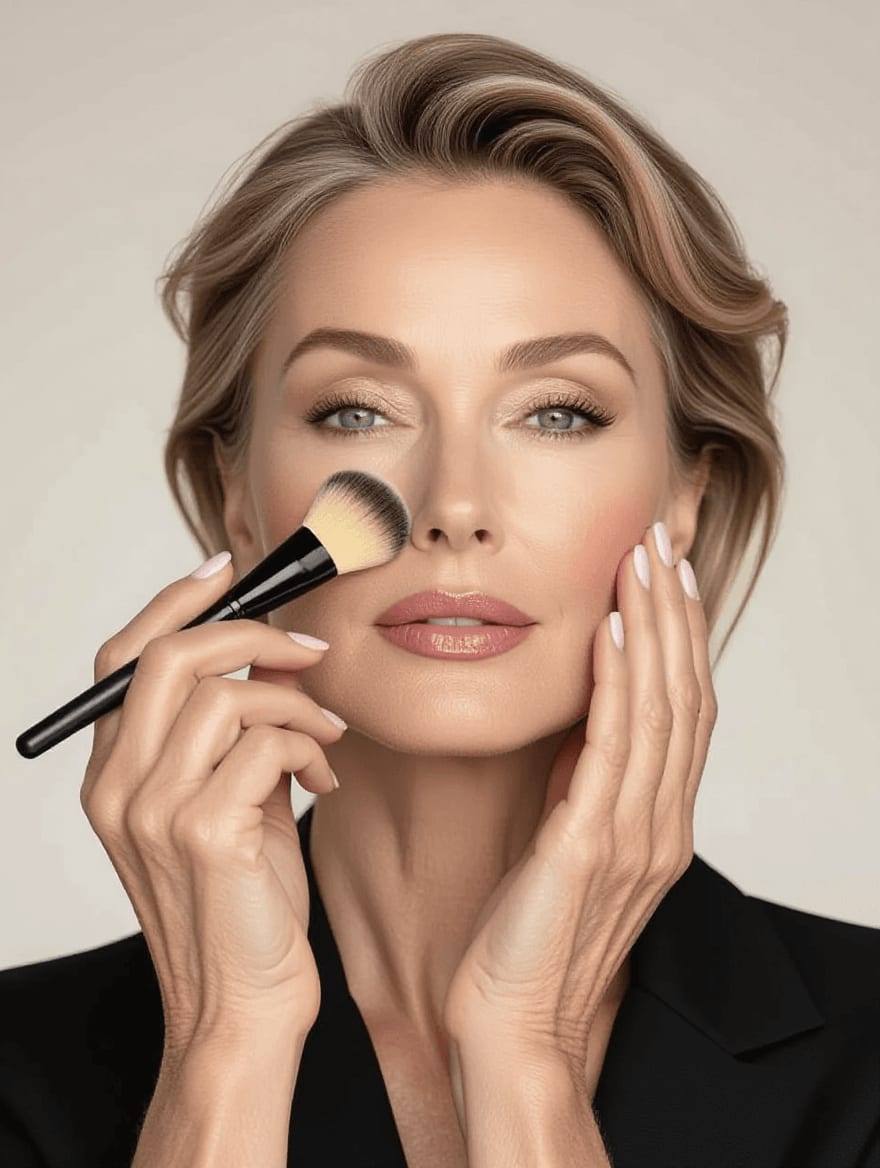
Why Your Old Foundation Suddenly Looks Terrible
The best foundation for mature skin isn't just about choosing a different shade—it requires understanding how your skin's architecture changes after 50. Collagen loss creates microscopic valleys where traditional matte foundations pool and oxidize, turning orange by midday. Your skin produces 60% less natural oil than it did in your thirties, meaning formulas that once felt lightweight now cling to dry patches you didn't know existed. The foundation that gave you flawless coverage at 35 now settles into nasolabial folds within an hour because it was engineered for skin with entirely different moisture retention and elasticity.
Here's what professional makeup artists know that cosmetic counters rarely mention: foundation for aging skin succeeds or fails based on its emollient structure, not its coverage level. The texture of mature skin—with enlarged pores from decades of sun exposure, fine crosshatch lines from repeated expressions, and areas of both dryness and unexpected oiliness—requires formulas with specific slip and flex properties. Makeup artists working with older celebrities exclusively use foundations containing glycerin, hyaluronic acid, or squalane in the first five ingredients, which create a hydrated base that moves with your skin rather than cracking across it.
The most damaging misconception is that best full coverage foundation for mature skin means thick, opaque formulas. Full coverage marketed to younger demographics typically contains high concentrations of pigment suspended in mattifying bases—exactly what emphasizes every texture irregularity on aging skin. True coverage for mature complexions comes from strategic layering of lightweight formulas with optical diffusers like mica or soft-focus silica that scatter light across uneven surfaces. A single thick layer creates a mask that separates from your skin with normal facial movement; three thin layers of the right formula become virtually undetectable while evening tone and minimizing imperfections.
The Pore Paradox Nobody Explains Correctly
Women searching for best foundation for large pores receive contradictory advice because the solution changes with age. In your twenties and thirties, enlarged pores result from excess sebum production—mattifying foundations genuinely help. After 50, visible pores stem from collagen degradation causing the pore walls to lose structural support and appear stretched. Mattifying foundations now make this worse by dehydrating the surrounding skin and creating a cratered appearance. The best foundation for large pores and wrinkles contains silicone derivatives like dimethicone that temporarily fill pore openings while delivering hydration—creating the smooth canvas you're after without the dried-out texture that makes everything more visible.
What dermatologists observe but cosmetic companies rarely emphasize: pore size on mature skin correlates directly with chronic dehydration. You cannot shrink pores with topical products, but you can make them dramatically less noticeable by addressing the collapsed tissue around them. This is why best foundation for dry mature skin formulas that prioritize moisture delivery consistently outperform pore-minimizing primers and foundations marketed specifically for large pores. The foundation that feels almost too emollient when you first apply it will look the most refined after thirty minutes as your skin absorbs just enough moisture to plump slightly, creating natural pore minimization from within.
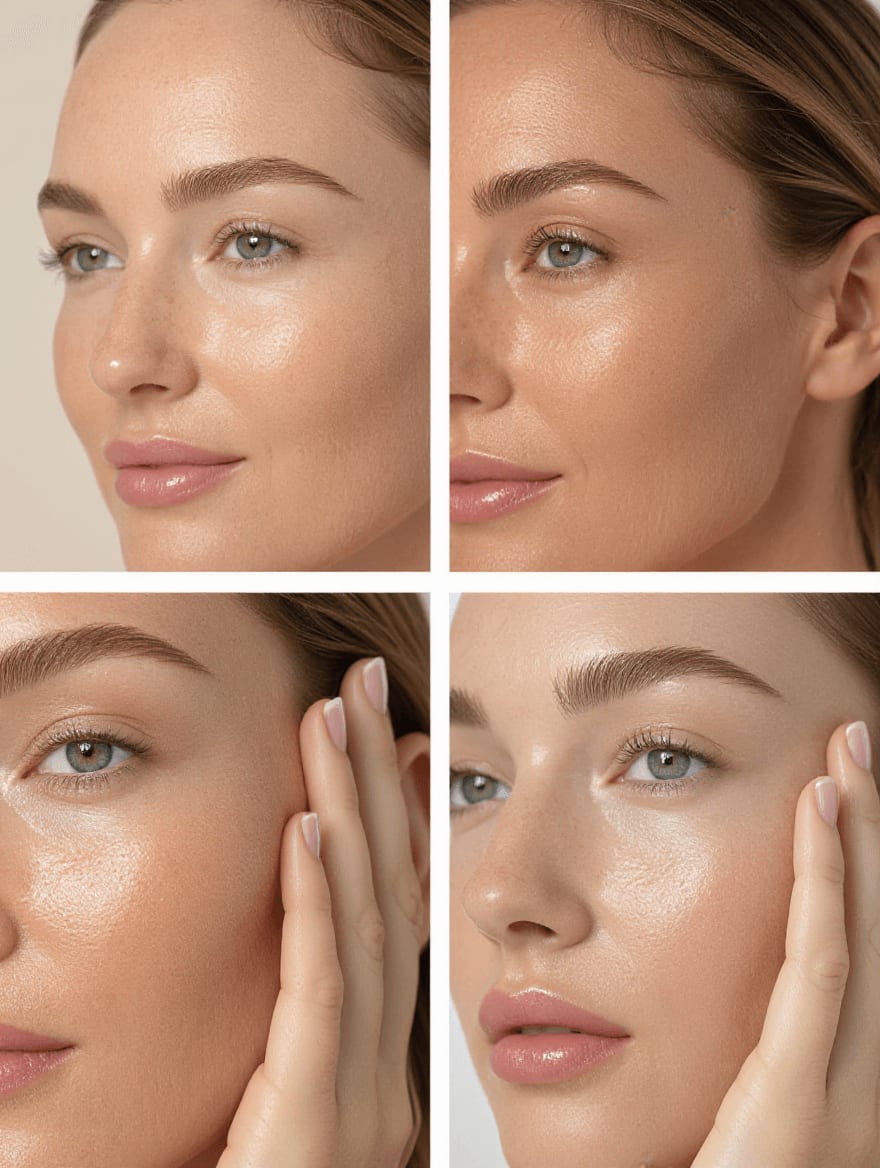
Texture Types That Actually Perform on Aging Skin
The question is cream foundation good for mature skin has a nuanced answer that depends on your specific skin behavior. Cream foundation for mature skin excels for women over 60 with significant dryness or those experiencing hormone-related moisture loss, but it requires proper application technique that most tutorials skip. Cream formulas must be warmed between your fingers before pressing—not rubbing—into skin, allowing the emollients to melt slightly and fuse with your natural oils. Applied cold or rubbed vigorously, cream foundations sit on top of skin and emphasize every line. Applied correctly with gentle pressing motions, they become virtually invisible while delivering continuous hydration throughout the day.
For best foundation for women over 50 with combination skin patterns, serum foundations represent the technological breakthrough most women haven't discovered yet. These water-based formulas contain encapsulated pigments that release gradually as you blend, providing buildable coverage without weight or texture. They don't settle into fine lines because they lack the waxes and heavy emollients that traditional foundations use for pigment suspension. The trade-off: they require setting with a finely-milled translucent powder to achieve longevity, whereas cream foundations can often stand alone.
- Serum foundations: Best for normal-to-dry skin with minimal texture concerns; won't settle but requires powder setting
- Cream foundations: Ideal for very dry mature skin and visible wrinkles; provides nourishment but can feel heavy in humid climates
- Cushion foundations: Offer light-to-medium coverage with built-in glow; excellent for mature skin over 40 that still has good elasticity
- Avoid: Traditional powder foundations: Cling to dry patches and settle into every line within hours on mature skin lacking adequate moisture
The best lightweight foundation for women over 50 category is where the beauty industry has made the most significant advances. Modern tinted moisturizers and BB creams formulated specifically for mature skin now contain legitimate skincare ingredients—peptides, antioxidants, ceramides—that actively improve skin texture over time while providing sheer-to-medium coverage. These hybrid products solve the problem of foundation feeling like a layer sitting on your face by actually absorbing into the upper dermis. They work exceptionally well for daily wear and situations where you want coverage that looks like naturally great skin rather than obviously applied makeup.
If you're concerned about ingredient safety alongside aging skin needs, explore our guide to non-toxic foundations for hormonal skin changes that addresses both clean ingredients and mature skin formulation requirements.
When Standard Mature Skin Foundation Advice Completely Fails
The universal recommendation to avoid matte foundations after 50 fails for the 30% of women who develop adult-onset oily skin due to hormonal fluctuations or rosacea-related sebaceous activity. If you're experiencing unexpected shine along with aging texture, traditional best makeup for mature skin advice will steer you toward dewy, emollient formulas that slide off your face within two hours. You need what the beauty industry rarely discusses: semi-matte foundations with humectants but without heavy oils. These formulas control shine through absorbent minerals like silica while preventing the dried-out appearance through glycerin and sodium hyaluronate.
Another scenario where conventional wisdom backfires: women asking what foundation will not settle in wrinkles are often directed toward ultra-light, sheer formulas. This works for fine lines but completely fails for deeper expression lines and nasolabial folds, where lack of coverage makes shadows more apparent. The actual solution involves strategic spot-concealing of deep lines with a thicker, creamy concealer before applying lightweight foundation everywhere else. The concealer fills and smooths the specific problem areas, while the sheer foundation maintains the natural texture of the rest of your face—a two-product approach that creates more youthful results than any single foundation can achieve.
The question what brand of makeup is best for seniors reveals a fundamental misunderstanding the cosmetic industry perpetuates. No single brand exclusively excels for mature skin because most companies manufacture multiple lines across different price points and target demographics. Professional makeup artists working with actresses over 60 mix luxury, drugstore, and professional brands in the same application based on specific product performance rather than brand loyalty. A $15 drugstore serum foundation might provide the best foundation for wrinkled skin base, layered with a $60 concealer for spot corrections, finished with a $8 setting powder—the combination of formulas matters more than the name on the package.
The critical contradiction between marketing and reality: products specifically marketed as foundation for older women often contain blurring particles or soft-focus pigments in concentrations that create an artificial, Instagram-filter appearance in person. These foundations photograph beautifully but can look ghostly or disconnected from your neck in natural light, particularly for women over 60 with significant skin texture. The foundations that actually look most natural on mature skin are often those marketed as 'natural finish' or 'second skin' to general audiences, without age-specific positioning. Test foundations in natural daylight near a window rather than relying on store lighting, and always check how the color looks against your neck and chest rather than your hand or jawline.
For comprehensive strategies on adapting your entire makeup approach to hormonal aging, including eye, lip, and color cosmetics that work harmoniously with your foundation choice, see our complete makeup guide for menopausal skin changes that addresses the full spectrum of age-related beauty adjustments.