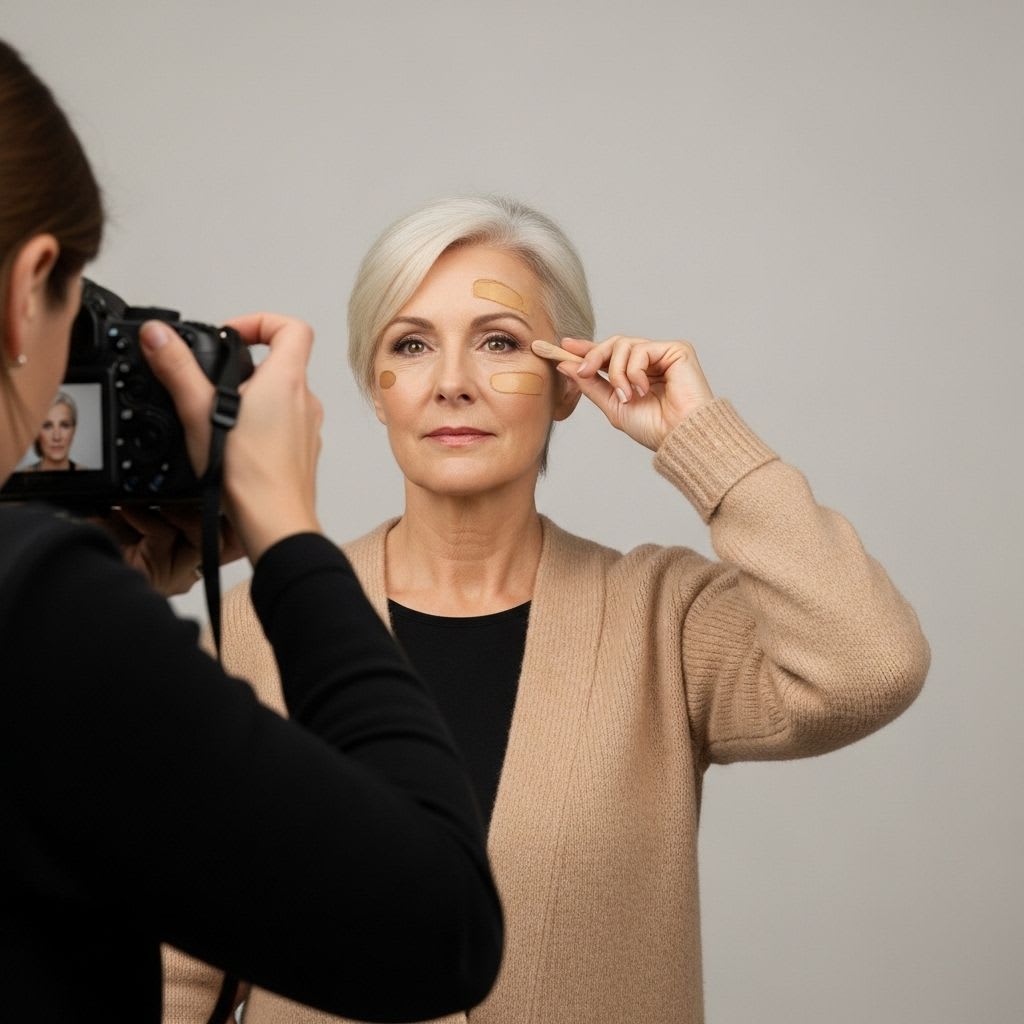
Why Foundation That Looks Perfect in Person Fails in Photos
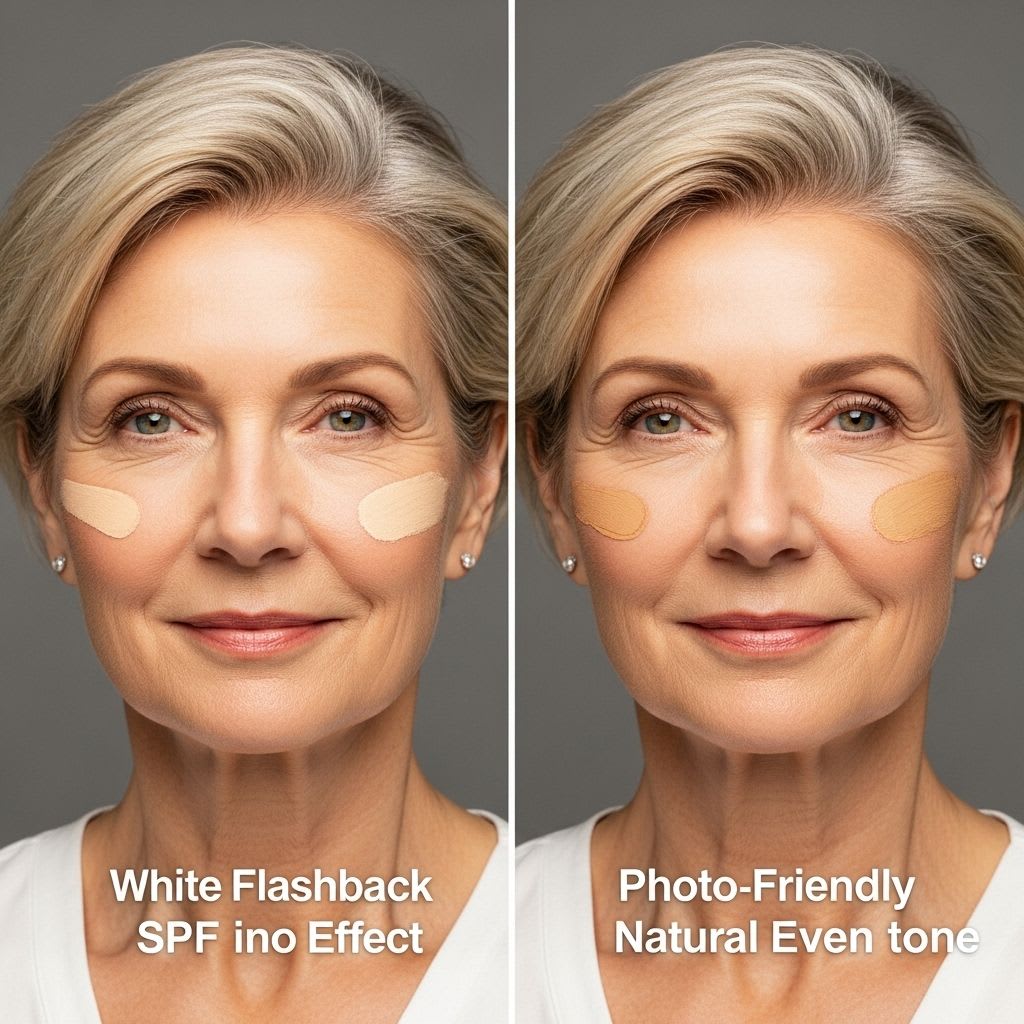
The search for the best foundation for photography reflects a frustrating disconnect: makeup that looks flawless in your mirror appears chalky, ghostly, or texture-emphasized in flash photographs. This isn't about your application skill—it's about how camera sensors and flash technology interact with certain foundation ingredients differently than human eyes perceive them. The most problematic culprit is SPF, specifically physical sunscreen ingredients like titanium dioxide and zinc oxide. These mineral particles reflect visible light smoothly, creating natural appearance to the naked eye. But they reflect UV and infrared light intensely, which camera flashes emit abundantly, causing the dreaded white cast or 'flashback' effect where your face appears several shades lighter than your neck in photos.
What photographic technology reveals about photo foundation makeup specifically for mature skin: the challenge intensifies after 40 because you're managing multiple competing concerns. You need SPF for sun protection critical to preventing further aging and hyperpigmentation. You require hydrating formulas to prevent emphasized texture. You want enough coverage for dark circles and discoloration. And you must avoid the flashback that makes you look ghostly in photos. Standard foundation advice treats these as separate issues with separate solutions, but mature women need formulas that address all simultaneously—a combination that dramatically narrows your viable options.
The critical insight about best foundation for pictures that transforms your approach: photography exposes every texture irregularity human eyes naturally smooth over. Your brain compensates for fine lines, pores, and uneven skin tone through perceptual averaging—you see the overall impression rather than every detail. Camera sensors capture everything with merciless accuracy, then flash lighting emphasizes it further by creating harsh shadows in every crevice. This means foundation selection for photography on mature skin requires prioritizing formulas that blur and diffuse light rather than provide maximum coverage, which paradoxically photographs worse because heavy product settles into lines. For comprehensive foundation guidance, see our guide to foundation for mature skin over 50.
The Photography Foundation Myths Ruining Your Photos
Myth 1: Full Coverage Photographs Best
The widespread belief about photo-ready makeup: that maximum coverage creates the most flawless photographic appearance. The reality contradicts this entirely—full coverage foundation applied heavily enough to hide all imperfections in person appears mask-like and artificial in photographs, particularly on mature skin with texture. Camera sensors capture the distinct edge where heavy foundation ends and bare skin begins, creating the obvious makeup line along jawline and hairline that screams 'caked on.' What professional photographers recommend instead for the good foundation for pictures is medium coverage applied sheerly, with strategic concealer only where needed. This creates skin that looks retouched in photos while remaining natural enough to avoid the telltale signs of heavy makeup.
Myth 2: Matte Finish Prevents Shine in Photos
Here's what beginners misunderstand about photography makeup: the assumption that matte foundation prevents unflattering shine in flash photos. But on mature skin, matte formulas emphasize every line, pore, and texture irregularity that cameras capture mercilessly. The resulting photos show aged, flat, lifeless skin despite technically avoiding shine. What experienced photographers know is that satin or natural finish foundations photograph more youthfully because they reflect light in ways that create dimension and vitality. The trade-off? You may need strategic powder application on true oil zones like T-zone, but keeping the rest of your face with natural sheen creates far more flattering photographic results than overall matte finish.
Myth 3: HD Foundations Are Just Marketing Hype
The skepticism about HD or high-definition makeup products: that these are simply rebranded traditional formulas at premium prices. But HD foundations were specifically developed to address modern camera technology that captures exponentially more detail than traditional photography or film. These formulas use finely-milled pigments (typically under 10 microns) that diffuse light more effectively than standard pigment sizes, and they avoid light-reflecting ingredients that cause flashback. For mature women who are photographed regularly—whether for professional headshots, family events, or social media—the HD category provides genuine photographic benefits beyond marketing claims, particularly the combination of adequate coverage without texture emphasis that camera sensors expose.
How to Choose and Apply Photo-Ready Foundation
The most effective approach to photo-ready foundation for mature skin requires understanding the specific ingredient characteristics that photograph well while still providing the coverage and hydration mature skin needs. You're optimizing for how camera sensors capture reflected light, not just how your mirror reflects visible light. This means some ingredients that work beautifully for everyday wear become problematic under flash photography, while others that seem less impressive in person photograph stunningly. The key is identifying formulas that balance photographic performance with mature skin compatibility.
Your essential photo-ready foundation criteria should include:
- SPF-free or chemical-only sunscreen formulas:Physical sunscreens (titanium dioxide, zinc oxide) cause flashback regardless of how finely milled they are. If you need SPF, choose foundations with only chemical filters like avobenzone or octinoxate, or better yet, apply separate chemical sunscreen before SPF-free foundation. This separation gives you sun protection without photographic flashback, though it requires an extra product step.
- Silica or dimethicone for light diffusion:These ingredients scatter light across skin texture, creating optical smoothness that photographs beautifully. Look for silica (silicon dioxide) or dimethicone in the first seven ingredients. These blur imperfections to camera sensors without the heavy coverage that settles into mature skin lines. Avoid formulas with mica or large shimmer particles which create unflattering shine in flash.
- Buildable medium coverage with flexibility:You want foundations that can be applied sheerly for natural photos but built up strategically in areas needing more coverage. This allows you to keep overall application light (which photographs best) while addressing specific concerns like dark circles or hyperpigmentation with additional layers only where needed.
- Satin or natural finish for dimension:Marketing terms like luminous, radiant, or natural finish indicate formulas that reflect light subtly, creating photographic dimension. Avoid anything claiming ultra-matte or oil-control as primary benefits—these photograph flat and lifeless on mature skin. The ideal finish has slight sheen without obvious sparkle or shine.
Application technique for photography differs from everyday makeup because you're optimizing for how cameras capture light rather than how mirrors reflect it. Apply foundation in thin, even layers using damp beauty sponge—this creates the smoothest surface for light diffusion. Blend thoroughly beyond your jawline and hairline to avoid visible edges that cameras capture harshly. Use the absolute minimum product necessary for desired coverage, as excess foundation guarantees emphasized texture in photos. Set only the T-zone with translucent powder if needed, leaving cheeks and forehead with natural finish that photographs with dimension. Take test photos with your phone's flash before important events—this reveals exactly how your foundation will photograph under professional flash, allowing adjustments if you see flashback or texture issues. For comprehensive strategies during hormonal skin changes, see our makeup guide for menopausal skin changes.
When Photo-Ready Foundation Requirements Become Problematic
Here's the impossible situation that photo-ready foundation rules create: mature women need daily SPF for skin health and anti-aging, but physical sunscreens that provide the safest, most effective UV protection cause terrible flashback in photos. Chemical sunscreens photograph beautifully but many mature women develop sensitivities to chemical filters during hormonal transitions, experiencing stinging, redness, or contact dermatitis. Standard advice to choose SPF-free foundation and layer chemical sunscreen underneath assumes your skin tolerates chemical filters—it doesn't account for women whose dermatologists have recommended mineral-only sunscreen due to sensitivity or rosacea. The solution requires accepting significant compromise: you can either prioritize skin health with mineral SPF and accept mediocre photos with slight flashback, or prioritize photographic appearance with chemical SPF or no SPF foundation and accept increased UV damage risk or chemical sensitivity reactions. Some women solve this by using mineral SPF for everyday wear when not being photographed, switching to SPF-free photo-ready foundation only for special events. But this requires maintaining two complete foundation systems and remembering to switch appropriately, plus it leaves you vulnerable during spontaneous photo opportunities with everyday mineral-SPF makeup. Others invest in professional photography retouching, accepting flashback in raw photos because it can be corrected digitally—but this only helps with planned professional shoots, not casual photos friends take at gatherings. The limitation extends to the broader issue that optimizing makeup for photography often means compromising what looks best in person. Foundation that photographs flawlessly may feel too sheer or look too shiny in your mirror during daily wear. You're forced to choose between looking perfect in real life or perfect in photos, rarely achieving both simultaneously. Additionally, photo-ready foundations that avoid SPF often lack the hydrating sophistication mature dry skin needs, because manufacturers assume if you're photography-focused you'll use separate skincare prep rather than expecting your foundation to provide moisture. This creates a complex product ecosystem where photo readiness, SPF protection, hydration, and in-person appearance rarely align in a single formula, forcing mature women into multi-product systems they may not want to manage. The promise of the 'best foundation for photography' proves somewhat illusory when real-world constraints—skin sensitivities, daily SPF needs, budgets limiting multiple foundation purchases, and desire to look good both in-person and in photos—collide with the technical requirements for optimal photographic performance.