
Why Menopausal Skin Develops Uneven Tone and Texture Simultaneously
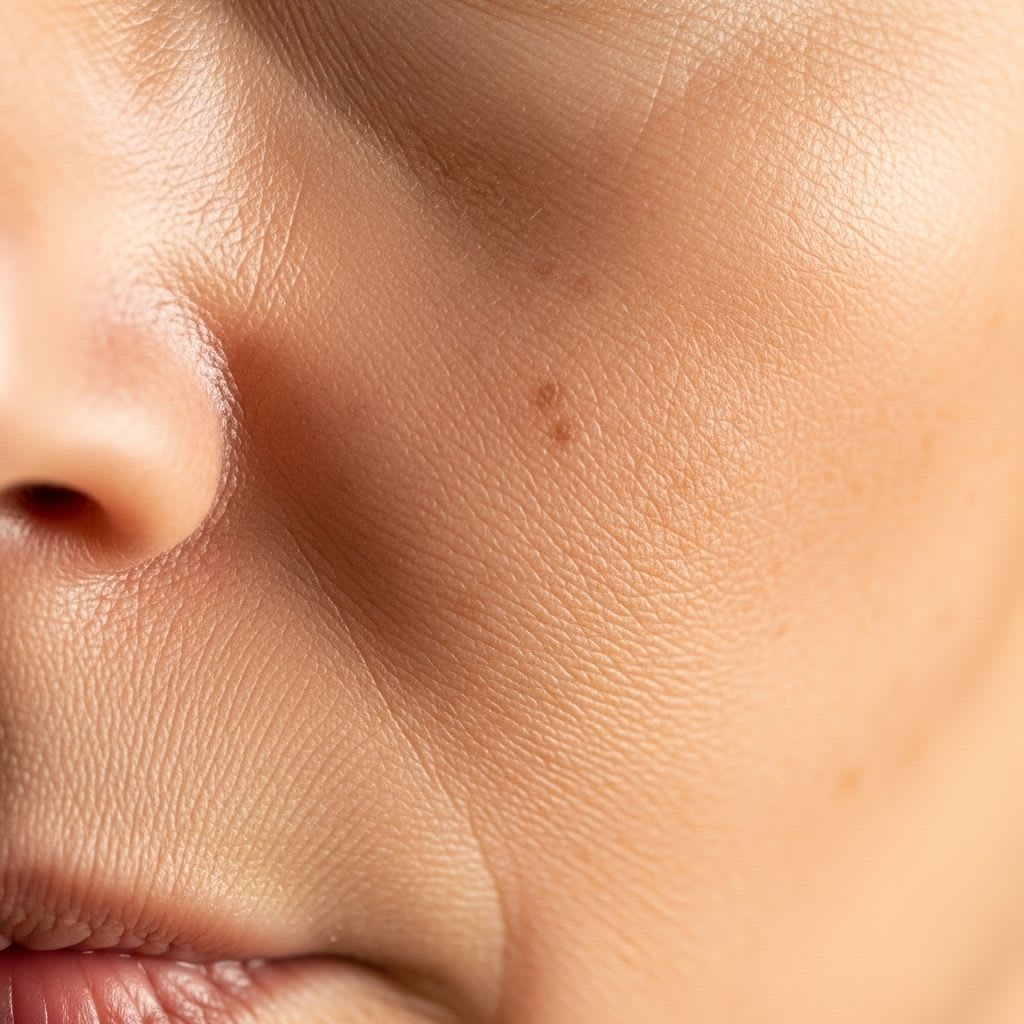
Menopausal skin presents a dual challenge that pre-menopausal foundations weren't designed to address: uneven pigmentation combined with surface texture changes. Declining estrogen triggers melanocyte irregularities, creating age spots, redness clusters, and sallowness in different facial zones. Simultaneously, reduced collagen causes surface irregularities—enlarged pores, fine lines, and rough patches—that catch light differently than smooth skin.
This combination requires foundations that address both issues without worsening either. Heavy pigmented formulas correct tone but emphasize texture. Texture-blurring primers smooth surface but can't correct discoloration. The foundation you choose must balance color-correcting properties with texture-minimizing formulation, which eliminates most conventional products designed for either young skin or single-issue mature skin.
Understanding this dual nature is critical because searching for a foundation that simply 'covers imperfections' leads to products that solve one problem while creating another. Women often report that foundations covering their redness make their pores look enormous, or texture-smoothing formulas leave obvious color variations. The right foundation must be engineered specifically for this convergence of concerns that defines menopausal skin. Learn more about these changes in our complete makeup guide for menopausal skin.
Why Powder Foundations Fail on Textured Menopausal Skin
The Dehydration Trap of Powder Formulas
Powder foundations seem ideal for uneven skin—they're buildable, easy to apply, and marketed as texture-blurring. The reality contradicts this entirely for menopausal skin. Powder formulas absorb the limited moisture menopausal skin produces, which paradoxically makes both texture and tone irregularities more visible. Within two hours, powder settles into every pore, fine line, and rough patch, creating a chalky, aged appearance that emphasizes exactly what you're trying to minimize.
The misconception stems from powder's effectiveness on oily, young skin where excess sebum is the problem. On dry menopausal skin, powder creates a matte, dehydrated surface that accentuates texture through light absorption rather than reflection. Age spots look darker and more defined against the powdered areas, while the powder itself sits visibly in enlarged pores. This is the opposite of the airbrushed effect promised, yet many women continue using powder foundations out of habit from their pre-menopausal routines.
When Powder Foundation Might Work: The Rare Exception
There's one specific scenario where powder foundation doesn't catastrophically fail on menopausal skin: when applied over a deeply hydrating liquid base in extremely humid climates where liquid foundation alone becomes greasy. Even then, it requires mineral powder specifically (not talc-based), applied with the lightest possible hand only in the T-zone, never on textured cheek or forehead areas. This represents less than 5% of use cases—for most menopausal women in most environments, powder foundation is simply incompatible with their skin's needs.
Foundation Formulas That Actually Work for Uneven Tone and Texture
Serum Foundations: Best for Mild to Moderate Concerns
Serum foundations combine skincare ingredients with sheer to medium pigment, addressing both tone and texture through hydration rather than coverage. These formulas contain hyaluronic acid, niacinamide, or vitamin C that actively improve skin while providing coverage. The lightweight consistency means less product accumulation in textured areas, while the buildable nature allows you to add coverage only where tone correction is needed—redness zones, age spots—without overloading the entire face.
Application technique matters enormously with serum foundations. Use a damp beauty sponge to press—never rub—product onto skin. The moisture from the sponge prevents the serum from absorbing too quickly, allowing you to blend seamlessly while maintaining hydration. For uneven tone, apply one thin layer everywhere, then add a second layer only on discolored areas. This creates natural-looking correction without the obvious 'makeup mask' effect that happens when heavy foundation tries to cover everything uniformly.
Luminous Liquid Foundations: For Significant Texture and Tone Issues
When tone unevenness is severe—significant redness, prominent age spots, post-inflammatory hyperpigmentation—you need more pigment than serum foundations provide. The critical factor is choosing luminous or radiant finish liquids, never matte. Light-reflecting particles in luminous formulas diffuse attention from texture by bouncing light away from pores and lines, while simultaneously evening tone through adequate pigment coverage. This dual action is impossible with matte formulas, which emphasize every textural irregularity through flat, light-absorbing finish.
Look for foundations labeled 'hydrating,' 'dewy,' or 'radiant' with medium to full coverage options. The hydration component keeps skin plump, minimizing texture appearance, while coverage addresses tone. Avoid anything marketed as 'long-wear' or 'transfer-proof'—these formulas achieve longevity through drying agents that worsen texture on menopausal skin. For clean formulations that work specifically with hormonal skin changes, explore our guide to non-toxic foundations for menopausal skin.
The Trade-Off: Coverage vs. Natural Appearance
No foundation perfectly hides severe tone and texture issues while looking completely natural—this is the honest limitation the beauty industry rarely admits. Higher coverage formulas that effectively mask significant discoloration contain more pigment particles, which inevitably create some visible texture in enlarged pores or lines. Lighter formulas that sit beautifully on textured skin provide insufficient coverage for prominent age spots or redness.
The practical solution is strategic application: use lighter foundation as a base, then spot-conceal specific tone issues with a higher-coverage concealer that matches your foundation exactly. This minimizes overall product weight while providing correction where needed. Additionally, accepting that foundation looks different on textured menopausal skin than it did at age 30 is essential—the goal shifts from 'flawless' to 'even, healthy, and natural,' which is actually more attractive and age-appropriate than attempting to recreate younger skin's appearance.