
Why Winter Destroys Foundation on Menopausal Skin
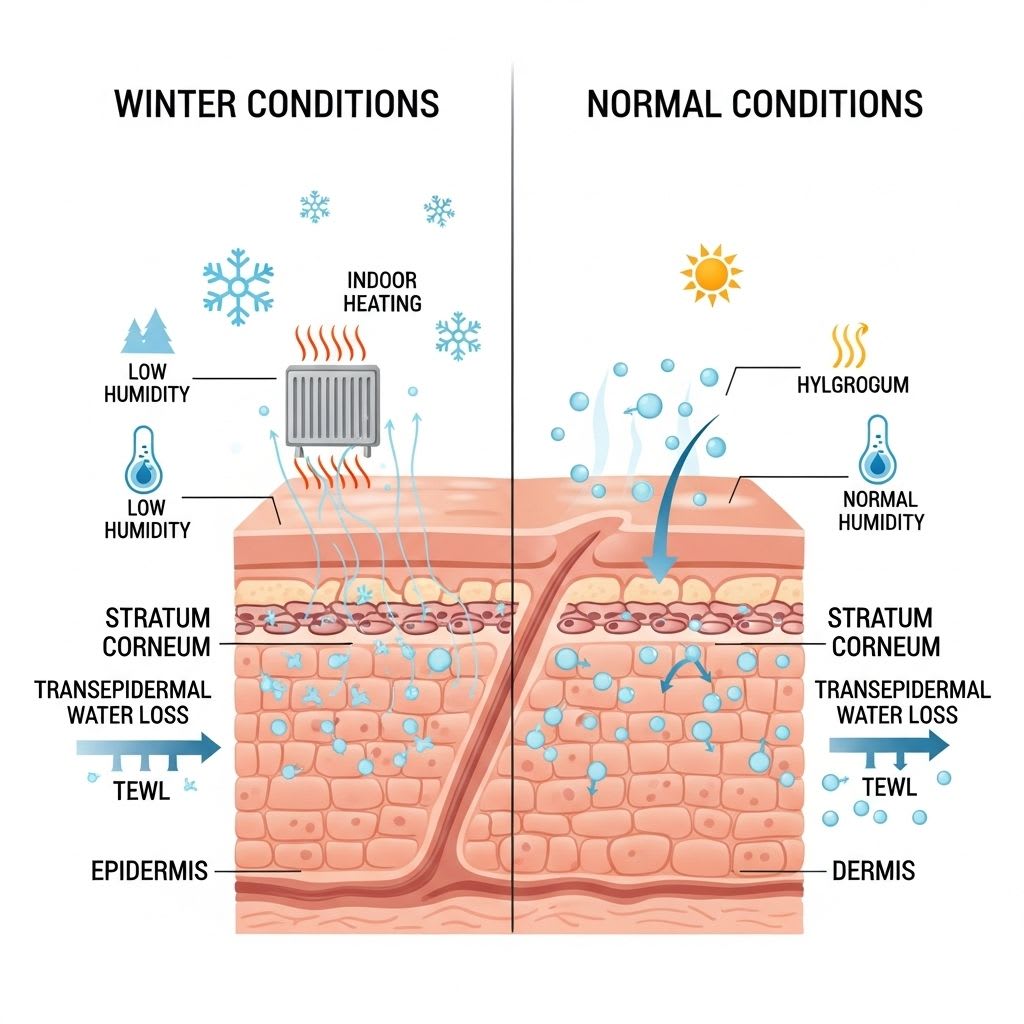
Winter weather creates the perfect storm for foundation failure on menopausal skin through a combination of extreme environmental dehydration and indoor heating that strips moisture faster than mature skin can replenish it. Cold outdoor air holds less moisture, creating humidity levels as low as 10-20% that pull water from skin's surface. Indoor heating further compounds this by creating hot, dry environments that accelerate transepidermal water loss. For menopausal skin already producing 40% less natural oil and struggling with compromised barrier function, this environmental assault causes rapid dehydration that makes foundation separate, flake, and emphasize every dry patch within hours.
The foundation that works beautifully in spring or fall fails catastrophically in winter because formulas designed for normal humidity can't compensate for extreme moisture depletion winter creates. Even hydrating foundations lose their moisture content to the dry air, leaving behind only pigment that clings to flaky patches and settles into dehydration lines. The temperature shock of going from heated indoors to freezing outdoors and back again causes foundation to contract and expand, breaking apart the even application and creating visible separation especially around the nose and mouth where movement is greatest.
What beginners misunderstand is thinking their foundation suddenly stopped working when the environmental conditions changed so dramatically that no year-round formula can handle both summer humidity and winter dryness effectively. Winter foundation for mature menopausal skin requires formulas with extreme hydrating ingredients and occlusive properties that create a protective barrier against environmental moisture loss—characteristics completely unnecessary in warm months but essential for preventing the flaking, caking, and obvious makeup appearance winter creates on dehydrated skin. Understanding this seasonal requirement prevents the frustration of believing your technique failed when actually the formula can't cope with changed conditions. Learn comprehensive seasonal adjustments in our complete makeup guide for menopausal skin changes.
Common Winter Foundation Mistakes on Mature Skin
Myth: Just Add More Moisturizer Under Regular Foundation
The instinct to solve winter foundation problems by layering heavier moisturizer under your regular formula creates separation and pilling issues that make the situation worse. When thick moisturizer hasn't fully absorbed before foundation application, the two products don't bond properly—they slide against each other, creating patches where foundation bunches up or disappears entirely. Additionally, many winter moisturizers contain rich oils that regular foundations aren't formulated to work with, causing the foundation to break apart or oxidize differently than intended, resulting in color changes and uneven coverage throughout the day.
What actually works is switching to winter-specific foundation formulas designed with built-in extreme hydration rather than trying to retrofit summer formulas. These winter foundations contain higher concentrations of humectants like glycerin and hyaluronic acid, plus occlusive ingredients like squalane or shea butter that seal moisture in rather than relying on external moisturizer. Apply regular moisturizer, wait 15 minutes for complete absorption, then use hydrating foundation—this prevents the product conflict while providing adequate moisture. The foundation's integrated hydration works more effectively than layering incompatible products that fight each other throughout the day.
Myth: Matte Foundations Last Longer in Winter
Some women switch to matte foundations in winter believing they'll withstand environmental stress better, but matte formulas are catastrophically wrong for winter mature skin. Matte foundations achieve their finish through oil-absorbing ingredients like silica or clay that pull moisture from skin—exactly the opposite of what dehydrated winter skin needs. On already-dry menopausal skin in low-humidity winter conditions, matte foundations turn skin into a flaky, creased disaster within hours, emphasizing every dry patch and making fine lines appear carved in rather than subtle. The longevity matte formulas might provide is negated by the aged, obviously made-up appearance they create.
Winter foundation for mature skin requires luminous, dewy, or radiant finishes that replace the natural glow winter conditions strip away. These formulas contain light-reflecting particles and moisturizing ingredients that maintain skin-like appearance despite environmental dehydration. The slight sheen they create looks healthy and youthful in winter rather than oily, since mature menopausal skin rarely produces excess oil even in optimal conditions. Accept that winter foundation will have more luminosity than you might prefer in summer—this glow is what keeps you from looking chalky and aged in harsh winter conditions.
Myth: Powder Setting Is Necessary for Winter Foundation Longevity
Setting powder in winter on mature menopausal skin is one of the worst possible choices, yet many women continue this habit from warmer months. Powder absorbs the critical moisture that winter foundation formulas are designed to provide, immediately undoing the hydration benefits. In winter's dry conditions, powder turns dewy or radiant foundations into matte, chalky surfaces within an hour, causing the same flaking and creasing that powder creates in any season but accelerated by environmental dehydration. The powder particles become visible in every fine line and dry patch, creating obvious makeup texture rather than natural skin appearance.
The correct winter approach is zero powder on mature skin, allowing hydrating foundations to maintain their dewy finish throughout the day. If you absolutely must set makeup for extreme longevity, use hydrating setting spray instead—it locks products through moisture-preserving film rather than moisture-absorbing particles. The trade-off is accepting a more luminous finish than powder would create, but in winter this dewiness looks natural and prevents the aged, dry appearance powder inevitably creates on dehydrated mature skin. Menopausal skin produces so little oil in winter that powder's oil-control benefits are irrelevant, while its dehydrating effects are devastating.
Best Winter Foundation Strategy for Mature Menopausal Skin
Formula Requirements: Extreme Hydration with Occlusive Protection
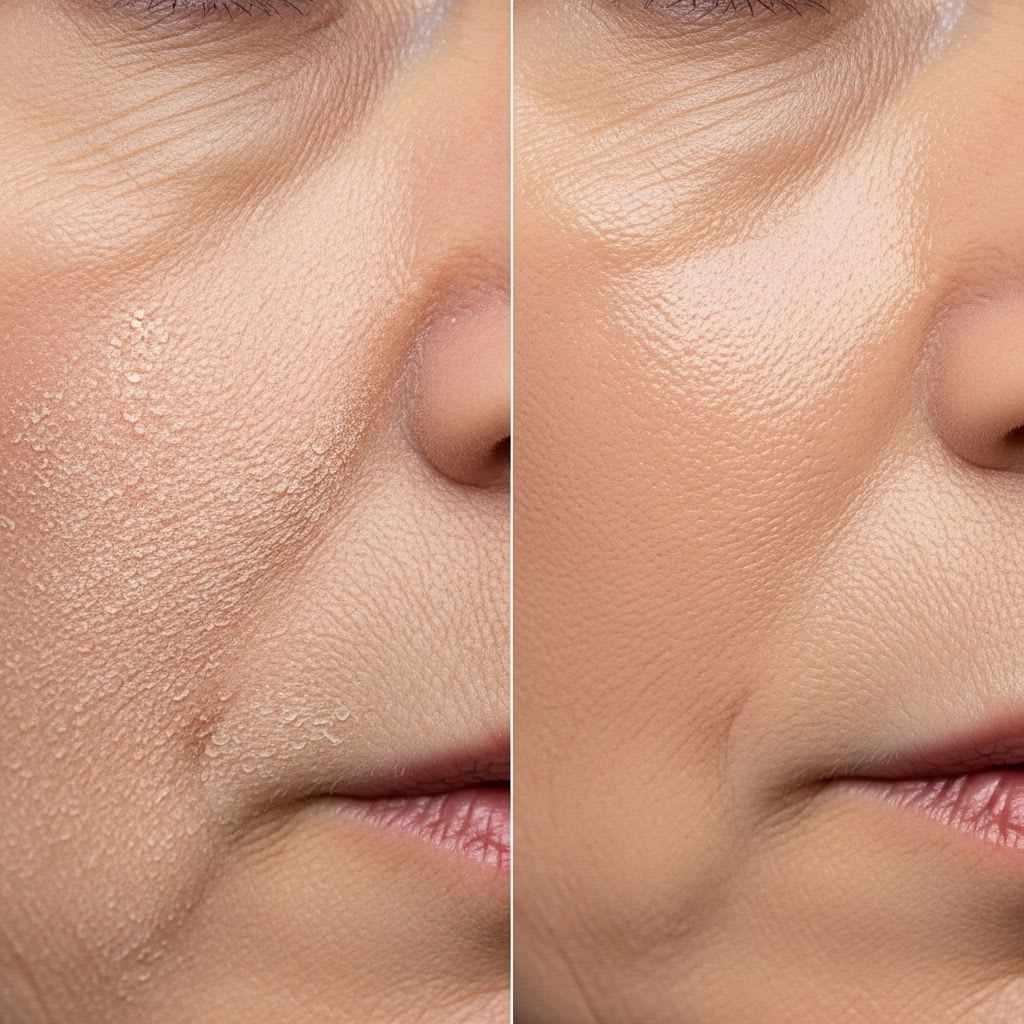
Winter foundation for mature skin needs both humectants and occlusives to combat environmental moisture loss effectively. Look for formulas listing hyaluronic acid, glycerin, or sodium PCA in the first five ingredients—these humectants attract water to skin. Equally important are occlusive ingredients like squalane, shea butter, dimethicone, or petrolatum derivatives that create a protective barrier preventing moisture escape. The finish should be 'dewy,' 'radiant,' 'luminous,' or 'hydrating'—never 'matte' or 'natural matte' which lack necessary moisture.
Specific winter-worthy formulas include Giorgio Armani Luminous Silk Foundation (despite price, the hydration justifies it for winter), L'Oréal True Match Lumi Healthy Luminous for budget-friendly option, or Charlotte Tilbury Hollywood Flawless Filter mixed with regular foundation for extreme luminosity. Some women achieve excellent results using facial oils mixed directly into their regular foundation—add 1-2 drops of squalane or rosehip oil to foundation on the back of your hand before application, creating custom winter-intensity hydration. For additional options, see our comprehensive foundation guide for mature skin. The key is prioritizing hydration over coverage—better to have glowing skin with less-than-perfect coverage than flawless coverage on obviously dry, flaking skin.
Winter Skincare Prep: The 20-Minute Foundation Rule
Winter foundation performance depends critically on intensive skincare preparation with adequate absorption time. Apply hyaluronic acid serum to damp skin immediately after cleansing, wait 2 minutes, then apply rich moisturizer with ceramides or peptides. Wait a full 15-20 minutes before foundation application—this extended time allows skincare to fully absorb and create a hydrated base rather than mixing with foundation and causing separation. The waiting period is non-negotiable in winter; rushing this step guarantees foundation failure regardless of formula quality.
For severely dehydrated skin, add a hydrating primer or facial oil after moisturizer absorption but before foundation. Products like Smashbox Primerizer or The Ordinary High-Adherence Silicone Primer create an additional moisture barrier while providing smooth foundation application surface. Some women achieve best results applying facial oil as the final skincare step, letting it absorb for 5 minutes, then applying foundation over the oil-enriched skin. This creates maximum environmental protection while the oil helps foundation blend seamlessly. The technique requires experimentation to find your skin's ideal preparation sequence, but investing time in winter skincare prep prevents foundation disasters throughout the day.
Application and Maintenance: Adapting to Winter Conditions
Winter foundation application requires damp beauty sponges or brushes to add moisture during application rather than dry tools that absorb foundation's hydration. Dampen your sponge with setting spray or plain water, squeeze out excess, then use it to apply and blend foundation—the moisture helps foundation glide over dry patches without catching or emphasizing texture. Press foundation into skin with bouncing motions rather than dragging, which can disturb underlying skincare or emphasize flaky areas. Build coverage gradually with thin layers rather than heavy single application that's more likely to crack in temperature fluctuations between indoors and outdoors.
Throughout the day, mist with hydrating spray every 3-4 hours to refresh foundation and replace moisture environmental conditions steal. Keep a travel-size hydrating mist in your bag and spritz liberally—this prevents the progressive drying and caking that develops as winter day progresses. If foundation separates around the nose or mouth from temperature changes, gently press with damp fingertips to re-blend rather than adding more product which compounds the problem. The honest reality is that winter foundation on mature menopausal skin requires more maintenance than summer formulas—accept that touch-ups are normal and plan accordingly rather than expecting 12-hour wear without intervention. The goal is maintaining hydrated, natural appearance throughout the day, not achieving perfect immovable coverage that looks increasingly dry and aged as hours pass in harsh winter conditions.