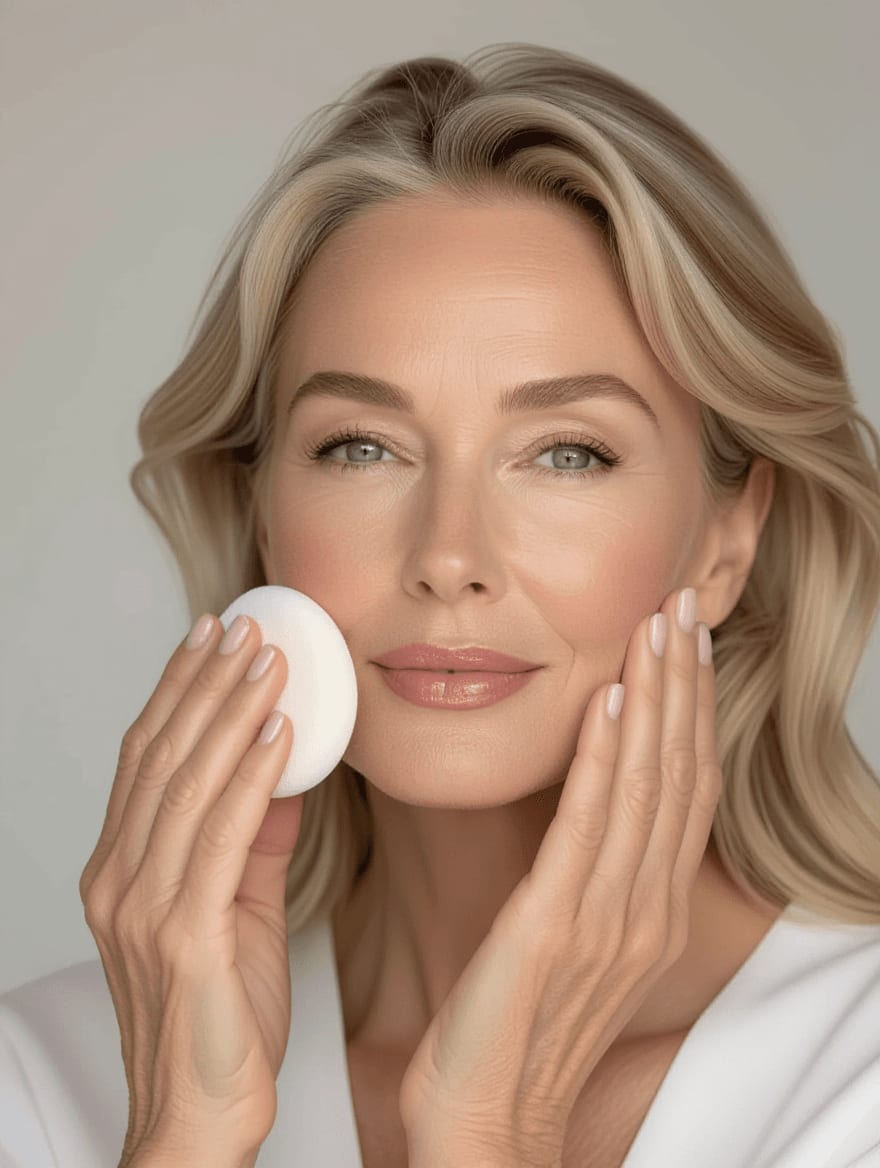
Why Everything You Know About Makeup Changes After 40
The search for best makeup advice after 40 stems from a frustrating reality: techniques and products that worked flawlessly for decades suddenly fail. This isn't about declining skill—it's about fundamental physiological changes that render traditional approaches obsolete. Between ages 40 and 60, your skin loses approximately 1% of collagen annually, estrogen decline reduces natural oil production by 30-50%, and cellular turnover slows from 28 days to 45-60 days. These aren't minor adjustments requiring slight tweaks to your routine; they demand completely different strategies for application, formula selection, and color placement.
What dermatological research reveals about woman applying makeup over 40 specifically: skin barrier function declines by approximately 15% per decade after menopause, altering how products absorb and adhere. The moisture gradient between your dermis and epidermis flattens, meaning your skin's surface becomes drier while deeper layers retain water. This creates the paradox where heavy moisturizers sit on top without penetrating, yet makeup applied directly to skin still looks cakey because the surface texture has deteriorated. Standard beauty advice treats aging as a gradual continuum, but hormonal changes during perimenopause and menopause create accelerated shifts that demand immediate adaptation.
The critical insight that transforms your entire approach: you're not doing the same makeup routine with different products—you're learning an entirely new technique that prioritizes hydration, light reflection, and strategic placement over coverage and precision. The good makeup tips you learned at 25 emphasized flawless coverage and sharp lines because young skin provides a smooth, flexible canvas. Mature skin requires the opposite: sheer layers that move with your face, soft edges that blur imperfections optically rather than concealing them directly, and formulas that continuously hydrate rather than set firmly. For comprehensive guidance on navigating these changes, see our complete makeup guide for menopausal skin changes.
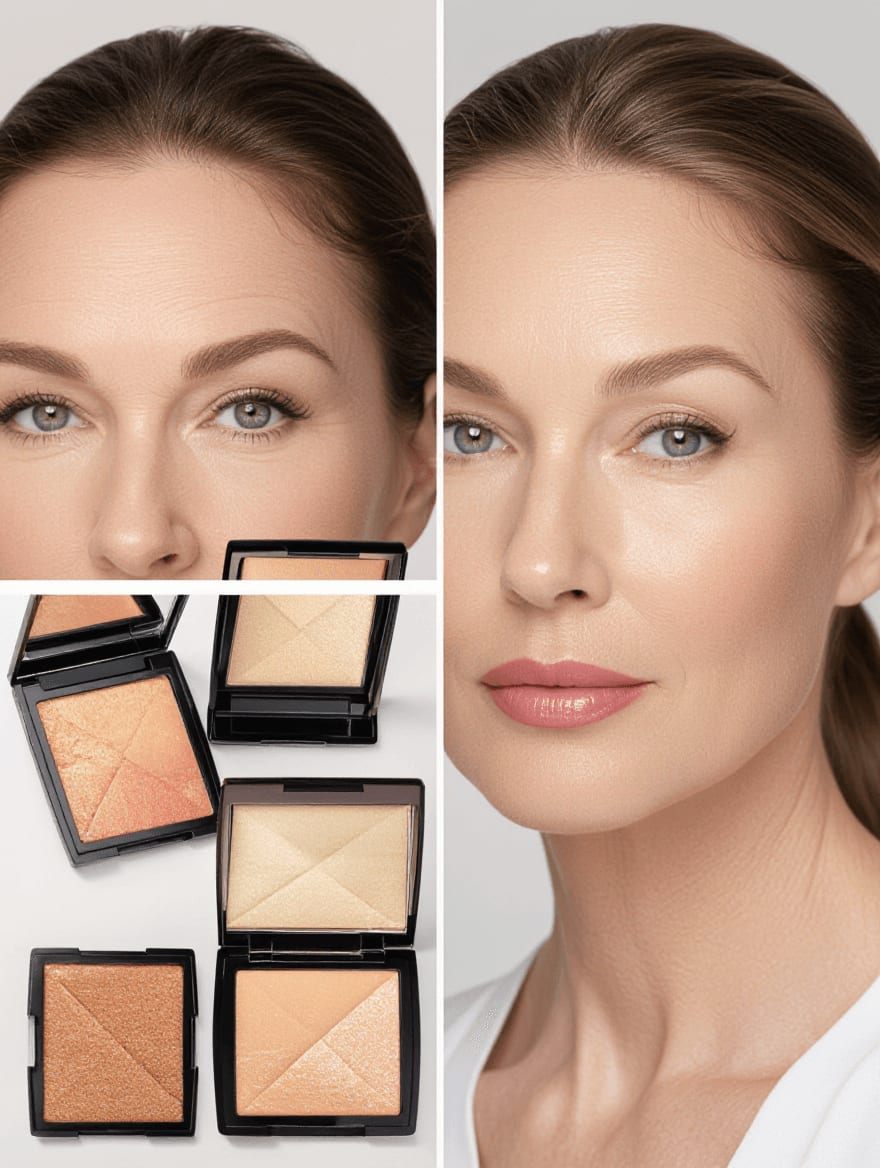
The Makeup Advice You Should Unlearn Immediately
Bad Advice 1: Always Set Everything with Powder
The conventional wisdom about setting makeup with powder made sense when you had naturally oily, resilient skin. But as one of the most damaging great makeup tips that needs abandoning after 40, powder setting accelerates visible aging in multiple ways. Powder absorbs the natural oils your skin desperately needs, emphasizes every fine line and pore, and creates a flat, lifeless finish that reads as older rather than polished. What experienced practitioners do instead: skip powder entirely on most of the face, using it only on the T-zone if absolutely necessary. Hydrating setting sprays provide longevity without the textural devastation powder causes on mature skin.
Bad Advice 2: Concealer Should Be Two Shades Lighter
Here's what beginners misunderstand about concealer application over 40: the contrast created by using significantly lighter concealer actually draws attention to the exact areas you're trying to minimize—under-eye circles, nasolabial folds, and marionette lines. On mature skin with volume loss, this highlighting technique creates a reverse-shadow effect that emphasizes hollowness. The contradiction between popular advice and reality shows that concealer should match your foundation exactly, or be just one shade lighter maximum. You create brightness through light-reflecting particles in the formula, not through stark color contrast that requires heavy blending and looks mask-like on thin mature skin.
Bad Advice 3: Contouring Creates Lifted Structure
The contouring trend that dominated beauty tutorials for the past decade assumes you're working with full, elastic skin that can support dramatic shadow and highlight placement. On mature faces with natural volume loss and sagging, heavy contouring paradoxically emphasizes exactly what you're trying to disguise—it draws attention to hollow cheeks, deepens jowl shadows, and creates muddy streaks in areas where skin has lost elasticity. The trade-off that professionals understand: you can create subtle dimension using cream products one shade darker than your foundation in very specific areas, but the Instagram-style sculpting that works on 25-year-olds looks harsh and aging on mature faces. Strategic blush placement provides far better lifting effects with less risk.
The Application Techniques That Actually Transform Results
The most impactful shift in your makeup approach after 40 isn't about which products you buy—it's about how you physically apply them. Your skin can no longer tolerate the dragging, buffing, and blending techniques that work on resilient young skin. Mature skin bruises more easily, has less elasticity to bounce back from manipulation, and shows redness from friction that takes hours to fade. Every movement must minimize mechanical stress while maximizing product placement precision.
Your essential application principles should include:
- Press and pat, never drag or swipe: Use damp beauty sponges or your ring finger (which applies the least pressure) to gently press foundation, concealer, and cream products into skin. Dragging tugs delicate tissue and emphasizes texture. Patting deposits product without disturbing the skin barrier.
- Build coverage gradually with thin layers: One thick application of foundation looks cakey and settles into lines within hours. Three ultra-thin layers applied with drying time between each creates a flexible, natural finish that moves with your face. Start sheer, assess coverage, and add only where needed.
- Work in upward and outward motions only: Gravity already pulls mature facial features downward. Every makeup stroke should counteract this by moving product up toward temples and out toward ears. This includes blush, highlighter, and even foundation blending—always lift, never drag downward.
- Focus definition above the natural line: On hooded eyes, apply eyeshadow above where you think the crease is. On thinning lips, line slightly outside the natural lip line. On sagging jowls, apply blush higher on the cheekbone than feels natural. Mature features have shifted downward; your makeup placement must compensate by going higher than instinct suggests.
Tool selection matters as much as technique. Dense brushes that worked beautifully at 30 now create too much friction and deposit too much product. Switch to duo-fiber brushes with mixed bristle lengths that provide lighter, more diffused application. Damp beauty sponges become essential rather than optional—they provide the gentle pressing motion mature skin needs while preventing product from sitting on the surface. Your fingers remain the best tools for cream products because they warm formulas slightly, improving blendability while maintaining the lightest possible touch. For comprehensive product recommendations that work with these techniques, explore our guide to the best makeup for women in their 40s.
When Standard Application Advice Fails
Here's the edge case that derails even expert techniques: some women over 40 develop such severe rosacea, eczema, or hormonal sensitivity that literally any physical manipulation of the skin causes flaring, redness, or irritation that persists for hours or days. The standard advice to use gentle patting motions assumes your skin tolerates touch—but when compromised barrier function means even the lightest application triggers inflammatory response, you face an impossible choice between wearing makeup and maintaining skin health. The solution requires abandoning traditional application entirely: use airbrush makeup systems that deposit product through fine mist without skin contact, or embrace ultra-minimal routines using only tinted sunscreen applied with clean, sanitized hands in the absolute minimum strokes necessary. This means accepting less coverage and precision than you'd prefer, but it's the only approach that prevents the inflammation-makeup-more inflammation cycle. Some women find this liberating, reporting that abandoning full makeup forced them to address underlying skin issues through medical treatment rather than cosmetic concealment. Others struggle with feeling unprofessional or unpolished in contexts where makeup feels mandatory, leading to complex negotiations between appearance expectations and physical comfort. The limitation extends beyond application to formula selection itself—many women with severe reactivity discover that the 'cleanest' natural makeup still contains botanical extracts that trigger responses, while some synthetic formulas designed for sensitive skin prove more tolerable. This reverses typical clean beauty advice and requires extensive trial-and-error that feels counterintuitive when every test potentially causes days of discomfort. Yet for women in this situation, finding their specific tolerance threshold—whether that's one tinted moisturizer and nothing else, or a full routine using only specific brands—becomes essential to maintaining both appearance confidence and skin health.