
Why Your 30s Makeup Suddenly Stops Working in Your 40s
The shift happens gradually then suddenly: the foundation that looked flawless at 38 now emphasizes texture you swear wasn't there last month. This isn't your imagination—it's perimenopause beginning. Even before irregular periods signal obvious hormonal changes, declining estrogen starts affecting skin around age 40. Collagen production drops approximately 1% annually, sebum decreases, and cellular turnover slows from 28 days to 35-40 days. These changes mean products formulated for "younger skin" literally don't match your skin's new behavior.
The 40s paradox: You're experiencing the first visible signs of aging while still dealing with occasional breakouts and oil fluctuations. Marketing labels products as either "anti-aging" or "for oily/combination skin," never acknowledging that your 40s require both simultaneously. This decade demands hybrid solutions—foundations that hydrate without feeling heavy, products that blur emerging fine lines without mattifying, formulas that work with unpredictable hormonal shifts. Your broader makeup strategy during menopause must account for this complexity.
What beginners misunderstand: they assume "anti-aging" makeup means heavy, full-coverage formulas that hide everything. In practice, thick products on early-perimenopause skin look worse than lighter coverage because they settle into the fine lines just beginning to form. The best makeup for your 40s provides buildable, flexible coverage that moves with your skin rather than sitting on top of it, acknowledging that your texture is changing but hasn't yet reached the drier, thinner state of post-menopause.
Common Product Selection Mistakes Women Make at 40
Misconception #1: Matte foundations prevent the shine that hormonal fluctuations cause. The reality experienced users discover: matte formulas on early-perimenopause skin create a flat, lifeless appearance that actually emphasizes aging. Your skin is losing its natural radiance as cell turnover slows—matte makeup removes what little glow remains. Satin or natural finish foundations provide oil control where needed while maintaining the luminosity that makes 40s skin look healthy rather than tired.
Misconception #2: Expensive prestige brands automatically work better for aging skin. The contradiction between price and performance: some luxury brands still formulate primarily for younger consumers, while certain mid-range brands specifically research hormonal skin changes. What matters isn't price—it's whether the brand understands the unique combination of concerns 40-something skin presents. A $25 foundation addressing perimenopause outperforms a $75 formula designed for 25-year-olds.
The edge case where standard recommendations fail: If you have melasma or hyperpigmentation intensifying in your 40s—common as hormones fluctuate—typical "radiant" or "luminous" foundations can make dark patches more noticeable. You need specific color-correcting primers underneath light-medium coverage rather than the dewy, minimal coverage approach usually recommended. Additionally, explore specialized eye makeup techniques that work with changing eye area texture.
Best Product Categories and What to Look For
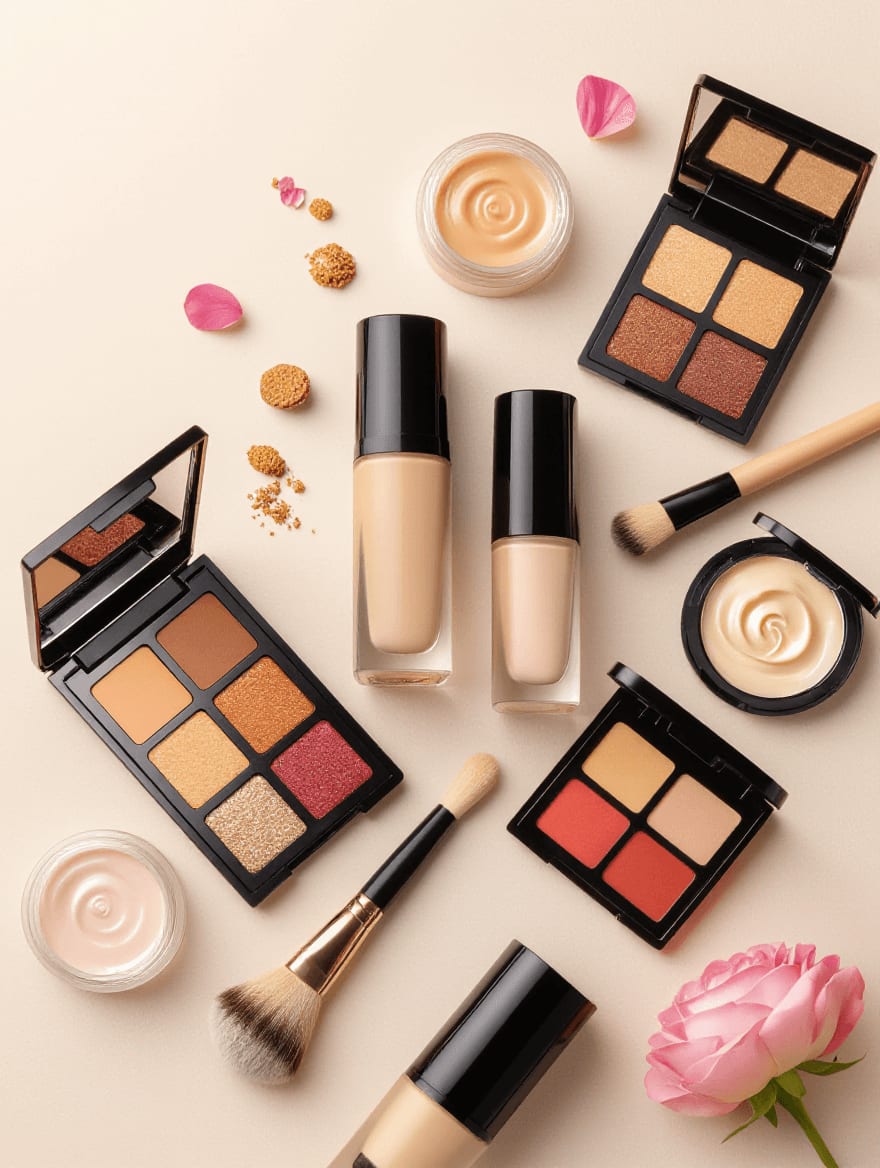
Foundation priorities for your 40s: Choose buildable medium coverage with hydrating ingredients like hyaluronic acid or glycerin listed in the first five ingredients. Look for terms like "radiant," "natural finish," or "skin-like" rather than "matte" or "long-wear." The formula should feel comfortable after 8 hours—slight fading is acceptable, but tightness or flaking signals it's too drying for your changing skin. Brands that specifically research hormonal skin changes typically perform better than those targeting generic "mature skin."
Concealer strategy that works: Your 40s require two different concealers—a creamy, hydrating formula for under-eyes where skin is thinning, and a slightly firmer formula for blemishes that still appear unpredictably. Under-eye concealer should be one shade lighter than foundation and contain light-reflecting particles to combat the shadows deepening as facial fat pads shift. Avoid heavy coverage formulas that crease in the fine lines beginning to form—light coverage applied strategically outperforms thick layers.
Color cosmetics transition: Switch from powder to cream formulas for blush, bronzer, and highlighter. Cream products blend seamlessly into skin that's losing moisture and elasticity, while powder settles into emerging texture and looks dated. Choose buildable, natural-toned shades—your skin is losing some of its natural pigmentation, so the bright colors that worked at 30 now look harsh. Cream formulas in stick form provide the easiest application and most natural finish for 40s skin.
Brand Selection Criteria That Matter
The best makeup brands for women over 40 share specific characteristics beyond marketing claims. They formulate with skin barrier support ingredients like ceramides or niacinamide that address the barrier disruption beginning in your 40s. They offer shade ranges accounting for the subtle tone shifts hormonal changes cause—many women find their perfect shade changes as skin loses yellow undertones or develops redness. They avoid fragrance and potential irritants since hormonal fluctuations increase sensitivity.
The finish framework: Avoid brands whose entire range skews matte or powder-heavy—these formulate for younger, oilier skin. Look for brands offering predominantly satin, luminous, or natural finishes across their product lines. This indicates they understand mature skin needs light reflection and hydration rather than oil control and mattification. Even if you still experience oiliness in your 40s, strategic blotting works better than matte products that flatten your complexion.
What experienced practitioners discover: the best brands for your 40s often aren't the ones dominating social media or beauty counters. They're frequently mid-range brands that invest in researching hormonal skin changes rather than celebrity endorsements. These brands understand the specific challenges of perimenopause—the unpredictability, the combination of aging signs with persistent acne, the need for products that perform across hormone fluctuation cycles rather than just one skin state.
Building Your 40s Makeup Routine That Actually Lasts
The honest limitation: your 40s represent a transition decade where products that work brilliantly one month may perform poorly the next as hormones fluctuate. This isn't product failure—it's your skin's unpredictable behavior during perimenopause. Understanding this prevents the frustration of blaming yourself or constantly switching products. Instead, maintain a core collection of 4-5 reliable items and accept that some days require different application amounts or techniques.
The essential product hierarchy: Invest most heavily in foundation—this determines whether your entire face looks fresh or tired. Choose mid-range to prestige options here. For concealer, prioritize under-eye formula quality over blemish concealer since under-eye area shows aging first. Cream blush can be mid-range—application technique matters more than price. Eye and lip products can vary widely in price point as long as formulas remain creamy rather than powder or matte.
Application evolution required: The techniques that worked in your 30s need modification. Use damp beauty sponges for foundation rather than brushes—they provide gentler application on skin becoming more delicate. Apply products in thin, buildable layers rather than attempting full coverage in one pass. Focus coverage where you actually need it instead of uniform application everywhere. This strategic placement prevents the heavy, made-up appearance that occurs when you treat emerging fine lines and texture the same as smooth 30s skin.
What changes as you progress through your 40s: early 40s often still allow powder products occasionally, especially if you're still experiencing significant oil. By late 40s approaching menopause, you'll likely need to eliminate powder almost entirely. Your shade may shift subtly as skin tone changes—reassess foundation matches annually rather than assuming your color remains constant. Product amounts needed typically decrease—thinner skin requires less product for the same coverage level, so what looked sheer at 42 may appear full-coverage at 48.
The budget reality for quality results: Expect to spend more on makeup in your 40s than your 30s, but not necessarily on more products—on better formulations. A well-selected foundation, quality under-eye concealer, and one excellent cream blush outperform a drawer full of products that don't address perimenopause changes. Budget $100-150 for core products that will last 6-9 months rather than $50 on drugstore options requiring replacement every 2-3 months because they don't perform. The per-use cost actually decreases when products work properly with your changing skin.