
Why Your Old Makeup Brushes Suddenly Feel Scratchy During Menopause
The brushes that felt perfectly fine at 45 now seem to drag and irritate your skin at 55. This isn't the brushes deteriorating—it's your skin fundamentally changing. Declining estrogen reduces skin thickness by up to 1.13% annually after menopause begins, while collagen loss approaches 30% in the first five post-menopausal years. This means skin that once tolerated firm brush pressure now experiences that same pressure as scratching or pulling. Additionally, decreased natural oil production means there's less lubrication between brush bristles and skin surface.
The sensitivity paradox: As skin becomes thinner and more fragile, it simultaneously becomes more reactive. The nerve endings sitting closer to the surface now register sensations that previously went unnoticed. Brushes with synthetic bristles designed for precise application can feel harsh and scratchy. Natural hair brushes that once felt soft may now seem too firm. What you need are tools specifically designed with extra-soft bristles and flexible brush heads that deposit product without requiring pressure against delicate skin.
What beginners misunderstand: they assume professional-grade or expensive brushes automatically work better for mature skin. In practice, many pro brushes are designed for speed and precision on all skin types, using dense, firm bristles that apply product efficiently but can irritate thinning menopausal skin. The best brushes for your changing skin prioritize gentleness and flexibility over professional performance metrics. Your complete makeup strategy during menopause requires this tool adaptation.
Common Brush Selection Mistakes That Damage Mature Skin
Misconception #1: Dense, tightly-packed brushes provide better coverage on mature skin. The reality: dense brushes require more pressure to move product across skin, and that pressure on thinning menopausal skin causes micro-trauma—redness, irritation, and potential broken capillaries. Looser, fluffier brushes with well-spaced bristles deposit product gently through light sweeping motions rather than pressure, preventing the damage that makes skin look worse over time.
Misconception #2: Synthetic brushes are always better for sensitive mature skin. The contradiction: while some synthetic fibers are incredibly soft, many budget synthetic brushes use stiff plastic-like bristles that scratch delicate skin. High-quality natural hair brushes, particularly those using squirrel or goat hair, often feel softer on menopausal skin than low-quality synthetics. However, premium synthetic brushes designed specifically for sensitive skin can match natural hair softness while offering easier cleaning and hypoallergenic benefits.
The edge case where standard brushes fail: If you've developed rosacea or increased facial redness during menopause—common as hormones fluctuate—even soft brushes can trigger flares through friction. In this scenario, switch to damp beauty sponges for foundation and cream products, reserving brushes only for powder application in non-reactive areas. Consider including appropriate tools in your complete makeup kit for comprehensive coverage.
Essential Brushes for Mature Skin and What Makes Them Different
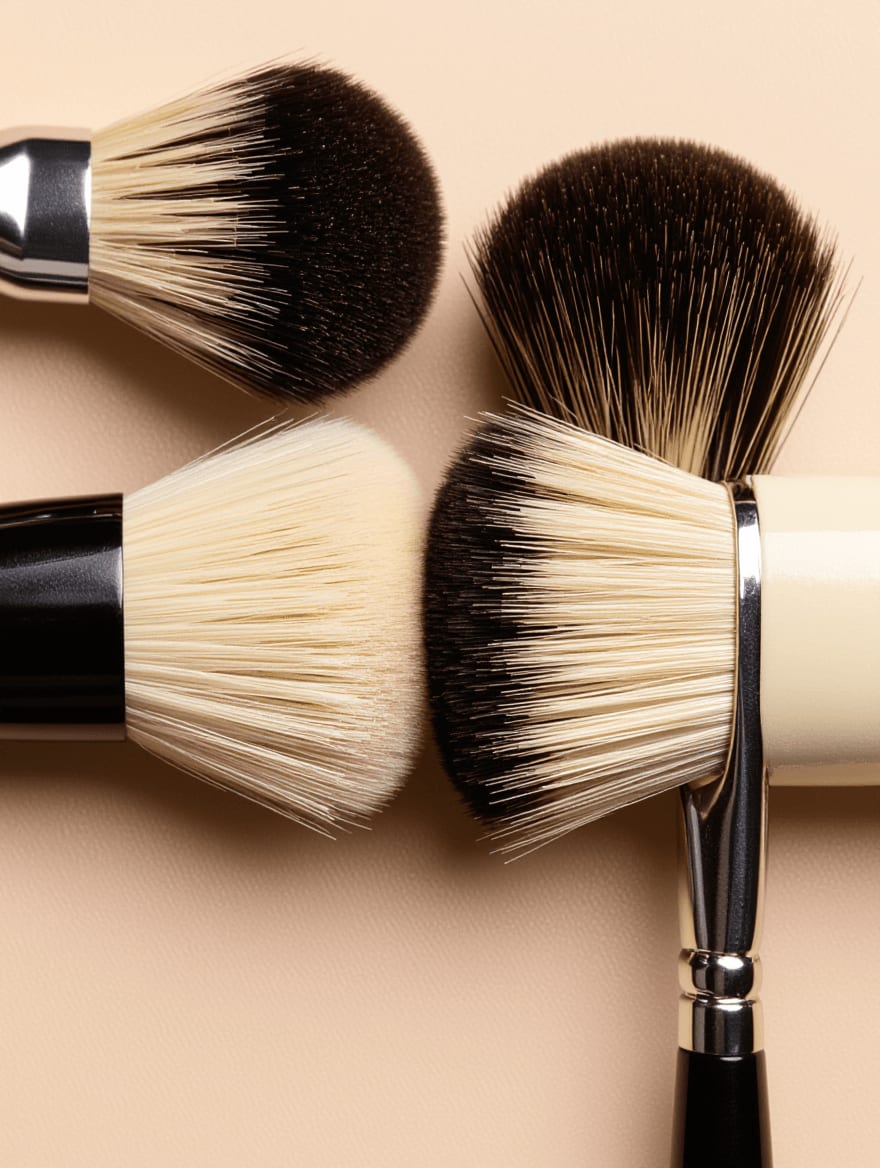
Foundation brush requirements: Choose flat-topped brushes with duo-fiber construction—these have a mix of short and long bristles that create airbrushed finish without heavy pressure. The long bristles deposit product while short bristles blend, eliminating the need to press brush into skin. Avoid kabuki-style dense foundation brushes that require buffing motions—this circular scrubbing irritates menopausal skin and can worsen redness. The brush should feel nearly weightless when applying foundation.
Powder brush evolution: Most mature skin needs minimal powder, but when you do use it, choose oversized, ultra-fluffy brushes with tapered tips. These deposit the lightest possible dusting without concentrating product in textured areas. The brush should be so soft you can barely feel it against skin—if there's any scratching sensation, it's too firm for thinning menopausal skin. Natural squirrel or goat hair excels here, though premium synthetic alternatives designed for sensitive skin work comparably.
Cream product application: For cream blush, bronzer, and highlighter essential to mature skin makeup, choose short, dense synthetic brushes with rounded tops. Synthetic fibers don't absorb cream products the way natural hair does, providing better coverage with less product. The rounded shape allows stippling motions—gentle pressing that deposits color without dragging across delicate skin. These brushes should have some flexibility in the brush head, bending slightly under minimal pressure rather than remaining rigid.
Eye Brushes That Won't Tug Thinning Lid Skin
The eye area becomes especially problematic during menopause as lid skin loses elasticity and begins to crease more prominently. Traditional eye brushes with firm bristles designed for precise color placement now tug on loose lid skin, worsening the hooded appearance many women develop. What works better: ultra-soft, slightly larger eye brushes that deposit color through patting rather than sweeping motions. The increased size means less precision but gentler application that doesn't pull on fragile tissue.
The blending brush priority: Invest most heavily in a premium, feather-soft blending brush for eye makeup. This single tool determines whether eyeshadow looks harsh and obvious or naturally diffused on aging eyelids. Choose brushes with extremely long, tapered bristles that create seamless gradients through the lightest circular motions. The brush should feel like touching a cloud—any firmness means it will create friction that emphasizes crepey lid texture rather than blurring it.
What experienced users discover: they need fewer eye brushes than they owned in their 30s and 40s, but those brushes must be exponentially softer. A collection of 3-4 ultra-premium eye brushes outperforms 15 standard brushes because application technique on mature eyes prioritizes gentleness over variety. The goal shifts from creating complex, defined eye looks to soft, diffused color that enhances without fighting against textural changes.
Brush Maintenance and When to Replace
The honest limitation: even the softest brushes become scratchy and irritating as they age, and this happens faster on mature skin because any bristle damage is more noticeable. Natural hair brushes should be replaced every 1-2 years with regular use, synthetic brushes every 2-3 years. Watch for bristles that feel rough when stroked against your inner wrist—this texture will feel harsh on facial skin. Brushes that shed excessively have likely reached the end of their useful life for mature skin, even if they'd still work fine on younger complexions.
Cleaning frequency that matters: Wash foundation and concealer brushes weekly, powder and blush brushes bi-weekly, and eye brushes after every 2-3 uses. Menopausal skin is more susceptible to bacterial irritation as the skin barrier weakens, making thorough brush hygiene essential. Use gentle, sulfate-free brush cleansers rather than harsh dish soap that can damage delicate bristles and make them scratchy. Never wring or twist brushes—reshape gently and lay flat to dry to maintain the soft texture mature skin requires.
The alternative application methods: Many women find that by late menopause, they prefer alternative application tools over traditional brushes for most products. Damp beauty sponges provide the gentlest foundation application possible, literally bouncing product onto skin without any dragging. Fingertips warmed with body heat blend cream products seamlessly while allowing you to feel exactly how much pressure you're applying. Silicone applicators work well for very specific placement without any bristle contact. The best approach often combines brushes for powder products with these alternatives for everything else.
What changes from early to late menopause: in early perimenopause, you might still tolerate standard brushes with slight modifications to technique—lighter pressure, more sweeping motions. By post-menopause with significantly thinner skin, the margin for error disappears. Brushes must be genuinely ultra-soft, application must be feather-light, and you may need to abandon certain brush types entirely. This isn't weakness or oversensitivity—it's appropriate adaptation to physiological changes that make skin objectively more delicate and reactive than it was previously.
The investment framework: Budget for premium brushes as you would premium skincare—these tools directly affect how your skin looks and feels. Expect to spend $25-60 per brush for the soft, gentle quality mature skin requires, versus the $8-15 standard brushes cost. However, you need fewer total brushes, so the investment balances out. A curated set of 5-6 exceptional brushes serves mature skin better than 20 mediocre ones that irritate with every use, making the per-application cost of quality tools remarkably reasonable.