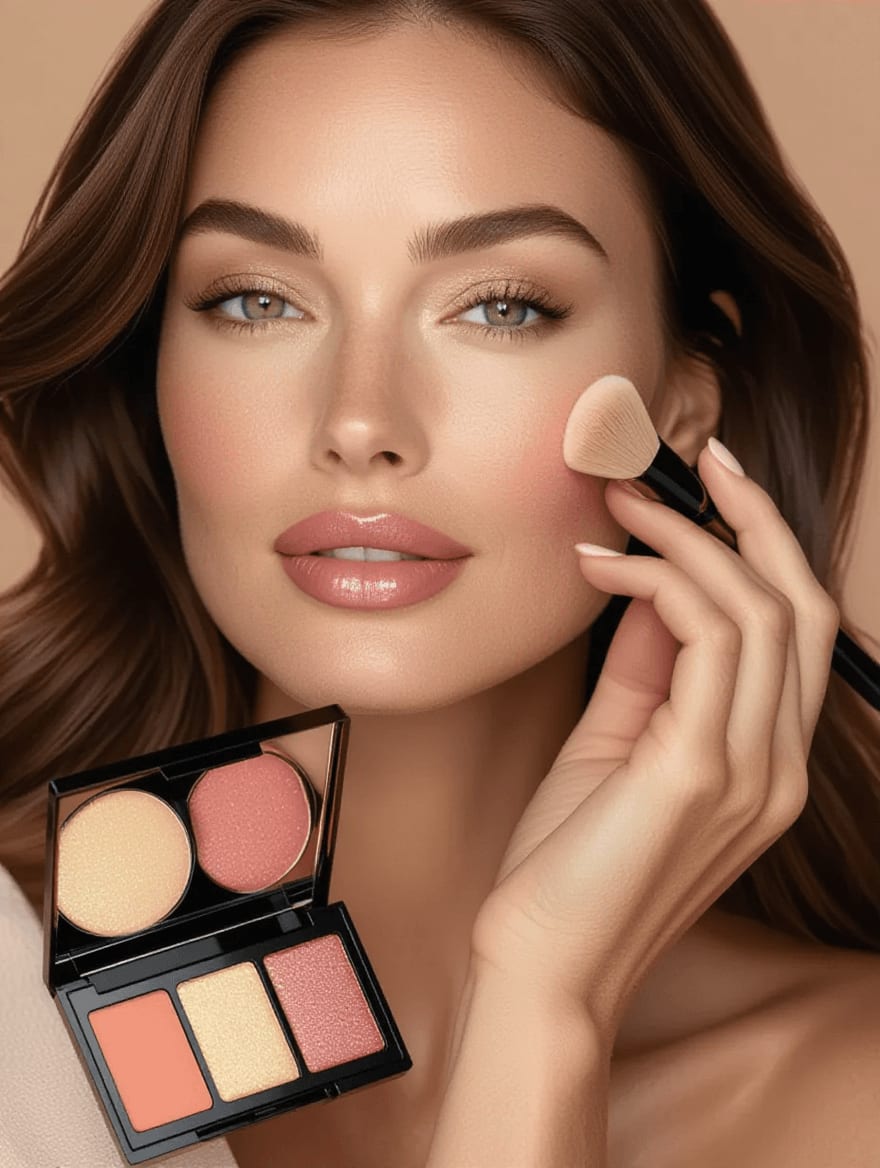
Why Your Makeup Suddenly Stopped Working in Your 40s
The best makeup for women over 40 isn't about switching to products labeled mature or anti-aging—it's about understanding that your skin is undergoing its most dramatic transformation since puberty. Between ages 40 and 50, estrogen levels begin fluctuating wildly during perimenopause, triggering cascading changes that affect every aspect of how makeup performs. Your oil production becomes unpredictable, creating combination skin where you previously had consistent texture. Collagen synthesis drops approximately 1% per year, causing foundation to settle into lines that weren't visible last season. The products that gave you flawless results at 38 now emphasize texture, slide off by noon, or oxidize to unflattering shades because your skin's pH and moisture levels have fundamentally shifted.
Here's what dermatologists know about makeup in your 40s that beauty marketing rarely explains: the issue isn't that you need better products but that you need different product categories entirely. Powder foundations that provided mattifying perfection through your thirties now cling to dry patches you didn't know existed. Matte lipsticks that stayed put all day now emphasize lip lines created by decreasing collagen around the mouth. Shimmery eyeshadows that added dimension now highlight crepey lids from thinning skin. The formulas themselves haven't changed—your skin has, and it requires hydrating cream foundations instead of powders, satin-finish lipsticks instead of mattes, and matte shadows instead of shimmer.
The critical misconception causing makeup frustration after 40: believing you need to completely abandon color and drama. Makeup after 40 advice often pushes women toward neutral, safe choices that can actually wash out your complexion and make you look more tired than youthful. As skin loses pigmentation and develops sallowness from declining estrogen, you actually need more strategic color placement—warmer blushes to counteract grayish undertones, deeper lip colors to restore definition that fades with age, and properly placed highlighter to combat the flatness that comes from volume loss. The shift isn't about using less makeup but using smarter formulas in more intentional placement.
The Foundation Paradox of Perimenopause
Women searching for best makeup for 40 year olds face a unique challenge: your skin might be simultaneously oily and dry in different zones, sometimes changing day to day based on hormone fluctuations. This is why single-formula foundation recommendations fail—what works during the first half of your cycle when estrogen is higher may look completely wrong during the second half when progesterone dominates and skin becomes drier. Professional makeup artists working with women in their 40s often keep multiple foundation formulas, adjusting not just shade but texture based on where the client is in her cycle and what her skin is doing that particular day.
The technique that transforms foundation performance for makeup for forty year olds involves strategic layering rather than full-face application. Apply your most hydrating formula to areas developing dryness and texture—typically around the nose, between brows, and along the jawline. Use a lighter, more breathable formula or skip foundation entirely on areas that still produce oil or where you want skin texture to show naturally. This mixed-approach prevents the flat, masklike appearance that happens when you apply one formula everywhere, and it accommodates the reality that your 40-something skin no longer behaves uniformly across your entire face.

The Simple Makeup Routine That Actually Works After 40
The simple makeup routine for over 40 that professional makeup artists recommend focuses on strategic enhancement of three key areas rather than attempting full-face coverage. Start with cream or serum foundation applied only where you need evening—around the nose, on any discoloration, under eyes if needed. Add cream blush to the apples of your cheeks and blend upward toward temples, which creates the lifted appearance that combats the downward drift from volume loss. Finish with a satin or cream lipstick in a shade slightly deeper than your natural lip color to restore the definition that fades with age. This three-product approach takes five minutes but addresses the specific aging concerns of declining pigmentation, loss of facial volume, and textural changes without looking overly made up.
For makeup tips for women over 40, the most transformative adjustment involves switching from powder to cream formulas across all categories. Cream products contain emollients that prevent the dehydrated, emphasized-texture appearance powder formulas create on declining-moisture skin. Cream blush blends seamlessly into skin rather than sitting on top emphasizing pores. Cream eyeshadow doesn't settle into the fine lines developing on your lids. Cream highlighter creates the appearance of naturally luminous skin rather than obvious shimmer particles that powder highlights deposit. The texture shift alone—regardless of specific brands—makes a more significant difference than any other single change you can make to your routine.
- Hydrating primer with silicones: Fills early wrinkles and creates smooth base without emphasizing texture or dry patches
- Serum or cream foundation: Provides buildable coverage with hydration; apply only where needed rather than full-face
- Cream blush in warm tones: Counteracts sallowness from declining estrogen; blends seamlessly without emphasizing pores
- Soft brown or gray eyeliner: Defines without harsh contrast that emphasizes thinning lashes and translucent lid skin
- Satin-finish lipstick: Provides color without settling into developing lip lines like matte formulas do
- Avoid: Powder foundations and heavy setting powder: Emphasize every dry patch and fine line on moisture-depleted perimenopausal skin
The eye makeup adjustment that makes the biggest visual impact for middle age makeup involves bringing color up and out rather than concentrating it near your lash line. As lids develop hooding and lose visible space, traditional shadow placement in the crease gets completely hidden. Instead, apply your deepest shadow color above where your crease sits when eyes are open, creating a visible contour that doesn't disappear. Extend shadow slightly beyond your outer corner to create lift rather than allowing color to stop where your eye naturally ends, which can emphasize drooping. This lifted placement compensates for the downward migration of facial features that accelerates in your 40s.
For specific product recommendations across all categories with formulas engineered for skin experiencing perimenopausal changes, explore our guide to the best makeup brands and products for women in their 40s that includes tested recommendations for foundation, concealer, blush, and eye products.
When Standard Makeup Advice for Your 40s Completely Fails
The universal recommendation to switch to lighter coverage foundation in your 40s fails for women dealing with hormonally-triggered melasma, rosacea flare-ups, or persistent acne from fluctuating androgens. These conditions—all common during perimenopause—require genuine coverage that sheer, luminous foundations simply cannot provide. The solution isn't accepting visible skin conditions as inevitable aging but finding full-coverage formulas with hydrating bases rather than mattifying ones. Layer thin coats of high-pigment foundation specifically where you need coverage, using lighter formulas everywhere else, rather than following blanket advice that assumes all cosmetics for women over 40 should be sheer and minimal.
Another scenario where conventional wisdom backfires: the advice to avoid shimmer and shine completely after 40. This recommendation assumes all shimmer is created equal and all mature skin has the same texture concerns. Strategic pearl or satin finish on high points of your face—cheekbones, brow bones, cupid's bow—actually creates the appearance of plumpness and youth by reflecting light in areas where volume naturally decreases with age. The problem isn't shimmer itself but large-particle glitter or shimmer placed on areas with pronounced texture. A finely-milled luminizer on smooth areas creates dimensional, youthful glow, while chunky glitter anywhere emphasizes skin irregularities regardless of age.
The critical contradiction in makeup tips after 40 involves lip color intensity. Standard advice suggests softer, more neutral lip shades to avoid looking overdone, but this backfires as your natural lip pigmentation fades and your lip line becomes less defined with age. Pale, nude lipsticks that looked sophisticated at 30 now wash you out and make you appear tired or ill. You actually need stronger, more pigmented lip color in your 40s—not necessarily bright or trendy shades, but deeper versions of your natural lip color that restore the definition and vitality that fading pigmentation removes. A deep rose, berry, or warm coral provides age-appropriate color intensity without looking costume-like.
What actually fails that nobody discusses: assuming makeup techniques from YouTube tutorials created by 20-somethings will translate to 40-something skin. Baking with powder, aggressive contouring, cut creases, and graphic eyeliner wings are designed for smooth, firm, elastic skin with minimal texture—exactly what you no longer have. These techniques don't just fail to flatter mature skin; they actively emphasize every line, pore, and textural irregularity while looking disconnected from your natural features. Instead of adapting trending techniques, focus on classic application methods that have always flattered mature faces: blended transitions, strategic highlighting on actual high points rather than Instagram face-mapping, and makeup that enhances rather than transforms your natural features.
The hidden challenge affecting best makeup for women in their 40s that intersects with perimenopause: your color perception may actually be shifting. Declining estrogen affects the macula in your eye, potentially altering how you perceive color saturation and warmth. Makeup shades that looked perfect to you in good lighting might appear different than they actually do to others. This is why getting a second opinion from someone you trust becomes increasingly valuable in your 40s—not because your taste is wrong, but because your eyes may literally be seeing colors differently than you did at 30. Test makeup in multiple lighting conditions and don't hesitate to ask for feedback on whether colors look as good on you as they do in the package.
For understanding how these makeup adjustments fit into the broader context of hormonal changes affecting your skin, hair, and overall appearance during perimenopause and menopause, see our comprehensive makeup guide for menopausal skin changes that addresses every aspect of beauty adaptation through this major life transition.