
Understanding Mineral Pressed Powder Foundation During Menopause
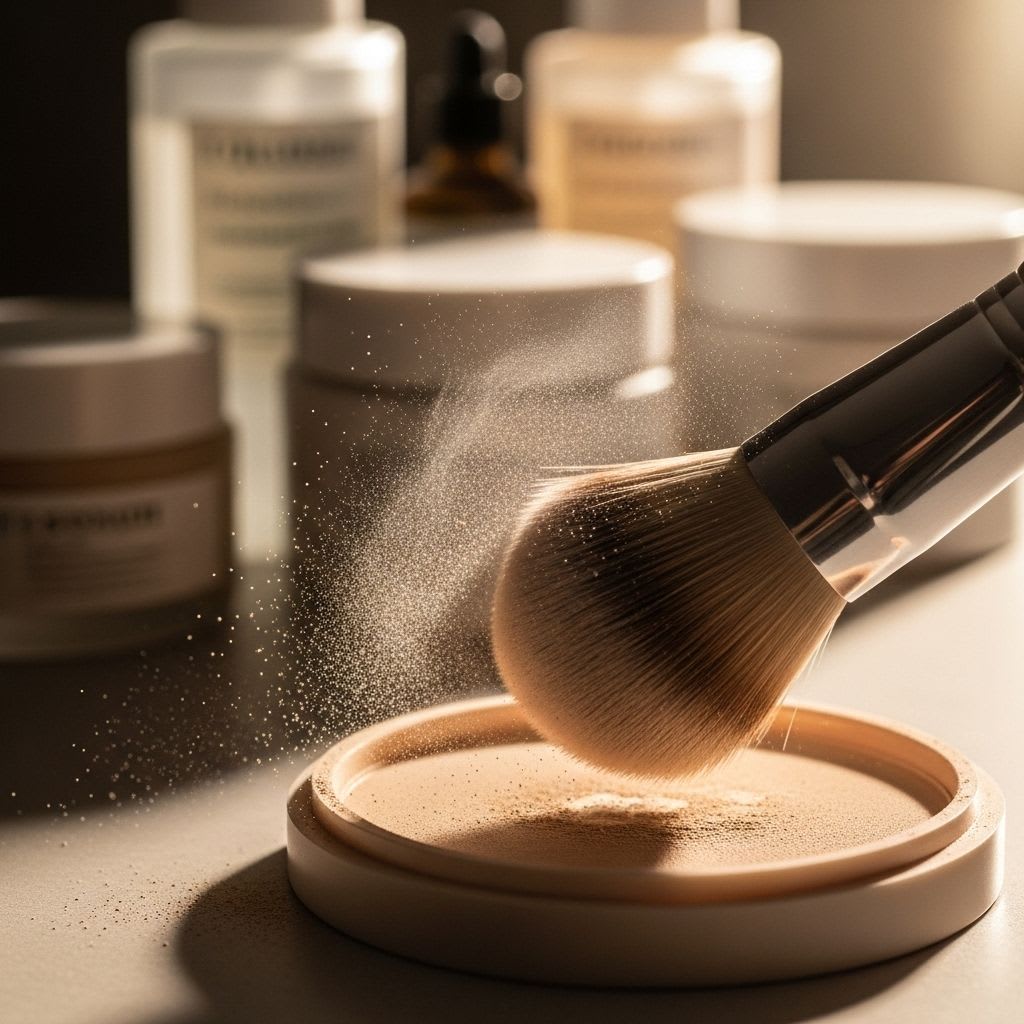
Mineral pressed powder foundations occupy a contradictory space for menopausal skin—marketed as healthier and gentler than liquid formulas, yet inherently problematic for the dehydration that defines hormonal skin changes. The appeal is understandable: these formulas typically contain fewer preservatives, avoid common irritants, and offer buildable coverage without the heaviness of liquid foundation. However, the fundamental nature of powder presents challenges that worsen as estrogen declines and sebum production drops.
The critical difference between pre-menopausal and menopausal mineral powder use lies in how powder interacts with skin moisture. Young, oily skin provides natural lubrication that helps powder blend seamlessly and prevents caking. Menopausal skin lacks this moisture buffer, causing powder particles to sit on the surface rather than melding with skin. Within hours, the powder settles into fine lines and emphasizes texture rather than smoothing it. This explains why women who loved mineral foundation for decades suddenly find it ages them dramatically—their skin chemistry changed, not the product formula. Discover foundation alternatives in our guide to non-toxic foundations for menopausal skin.
That said, mineral pressed powder can still work during menopause if you adapt application completely. The key is treating it as a finishing touch rather than primary coverage, applying it over well-hydrated skin with proper prep, and accepting that it requires more maintenance than liquid formulas. This represents a mindset shift from the quick, convenient application mineral powder promises in advertising.
Common Myths vs. What Actually Works
Myth: All Mineral Foundations Are Essentially the Same
The mineral makeup category contains dramatic formulation differences that matter enormously for aging skin. Jane Iredale formulas typically include micronized minerals ground to ultra-fine particles (less than 10 microns), plus added peptides and antioxidants positioned as skincare-makeup hybrids. Bare Minerals original formula uses larger mineral particles and focuses on pure mineral content without skincare additives, creating a more matte finish.
For menopausal skin, particle size determines success. Finer particles in Jane Iredale blend more seamlessly on dry, textured skin and reflect light better to minimize lines. Bare Minerals' larger particles can emphasize skin texture and create a chalky appearance on dehydrated skin. However, Bare Minerals has released newer formulas like BarePro that address this with smaller particles and added hydration. The misconception that all mineral powders perform identically leads women to choose based on price or brand familiarity rather than formulation specifics that actually impact results.
Myth: Mineral Powder Is Better for Sensitive Menopausal Skin
Marketing positions mineral makeup as inherently gentler, but menopausal skin reactions depend on individual sensitivities, not product category. Bismuth oxychloride, common in many mineral powders including some Bare Minerals formulas, causes irritation in approximately 15-20% of users—particularly those with compromised skin barriers common during menopause. Jane Iredale avoids bismuth oxychloride but includes dimethicone and other silicones that some women find comedogenic as pores change size with aging.
The evidence shows that 'mineral' doesn't guarantee compatibility. Some women develop sensitivities to titanium dioxide or zinc oxide (the primary mineral ingredients) during hormonal transitions, experiencing redness or breakouts they never had before. Conversely, some liquid foundations with synthetic ingredients prove gentler for their specific skin than any mineral formula. The honest answer: test products individually rather than assuming category superiority. Check comprehensive foundation options in our complete makeup guide for menopausal skin changes.
Jane Iredale vs Bare Minerals: The Practical Comparison
Coverage and Finish Trade-offs
Jane Iredale PurePressed Base offers medium buildable coverage with a satin-to-luminous finish that works better for dry menopausal skin. The formula contains pine bark extract and pomegranate extract positioned as antioxidants, though their concentration is too low for significant skincare benefits. The real advantage is the light-reflecting finish that diffuses fine lines rather than settling into them. However, this luminosity can look overly dewy on combination skin zones or in humid climates.
Bare Minerals Original Foundation provides light-to-medium coverage with a natural matte finish. Women with remaining oil production or those preferring a more natural, skin-like finish often prefer this formulation. The downside: the matte finish can emphasize texture on very dry skin and requires impeccable skincare prep to avoid a flat, aged appearance. The newer BarePro formula bridges this gap with a more refined finish, but loses some of the original's natural appearance.
The practical reality: neither works optimally on unprepared menopausal skin. Both require intensive hydration underneath—hyaluronic acid serum, rich moisturizer, and a 10-minute wait before application. The difference is that Jane Iredale forgives minor prep failures better due to its built-in luminosity, while Bare Minerals punishes inadequate hydration by emphasizing every dry patch.
When Standard Recommendations Fail: The Oily-Yet-Dehydrated Paradox
Some menopausal women experience simultaneous oiliness and dehydration—their skin produces sebum but lacks water content. This creates a situation where Jane Iredale's luminous finish looks greasy while Bare Minerals' matte formula emphasizes dehydration lines. Neither brand's standard recommendations work because they assume skin is either oily or dry, not both.
The solution requires mixing approaches: use hydrating skincare to address water loss, wait for absorption, then apply a mattifying primer only to oily zones (usually T-zone), and use Jane Iredale on dry areas while Bare Minerals goes on oily sections. This selective application acknowledges that menopausal skin often doesn't behave uniformly. Alternatively, consider formulas similar to Jane Iredale like Lily Lolo or Alima Pure, which offer varied finish options within the same mineral powder category, allowing finish customization by face zone.
Alternatives Similar to Jane Iredale
If you like Jane Iredale's approach but want alternatives, Colorescience Pressed Mineral Foundation offers similar micronized particles with added sun protection (SPF 20), though at a higher price point. Glo Skin Beauty Pressed Base provides comparable coverage and finish with slightly better shade range for deeper skin tones. For budget-conscious options, Physicians Formula Mineral Wear uses similar technology at one-third the cost, though with less shade variety and slightly larger particles that may emphasize texture on very dry skin.
The honest limitation: all pressed powder foundations require more work on menopausal skin than liquid or cream alternatives. If you're struggling despite perfect technique, the issue may be format rather than brand. Many women transition to liquid mineral foundations or tinted moisturizers during menopause and reserve pressed powder only for touch-ups or minimal makeup days. This isn't giving up—it's recognizing that hormonal skin changes sometimes demand different solutions than products you've loved for years.