
Why Concealer Suddenly Looks Obvious After Menopause
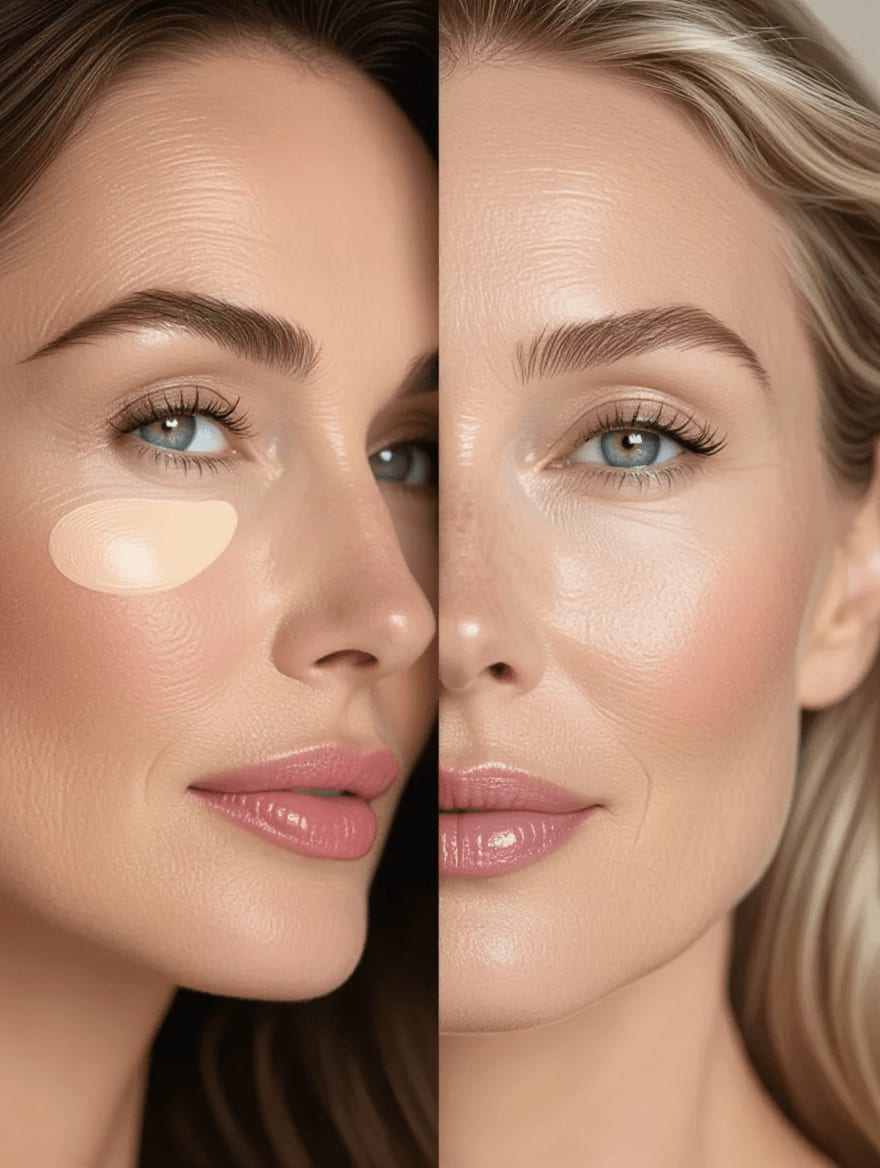
The concealer that looked seamlessly natural in your 30s becomes visibly detectable on menopausal skin because of fundamental texture and moisture changes that standard formulas can't accommodate. Skin barrier disruption during hormonal transition reduces the skin's ability to hold water, causing the under-eye area—already the thinnest facial skin at 0.5mm—to become noticeably crepey. When concealer meets this dehydrated, textured surface, it settles into fine lines within hours, creating visible streaks and patches that announce 'I'm wearing makeup' rather than mimicking bare skin.
Additionally, menopausal skin loses its natural luminosity as sebum production drops by 40% and cell turnover slows significantly. This creates a paradox: the concealer needs to provide coverage while simultaneously replacing the skin's lost light-reflecting properties. Most concealers are formulated to do one or the other—full coverage formulas sit on the surface like a mask, while sheer tinted moisturizers lack sufficient pigment to neutralize dark circles. The result is either obvious makeup or inadequate coverage, with no middle ground that looks genuinely skin-like.
What beginners misunderstand is that 'natural looking' on mature skin doesn't mean minimal coverage—it means coverage that mimics the optical properties of healthy skin. Young skin reflects light uniformly due to moisture content and smooth surface texture. Menopausal skin reflects light erratically because of dehydration and texture variation. A truly natural concealer must compensate for these changes through specific light-reflecting particles, optimal hydration levels, and texture that moves with skin rather than sitting rigidly on top. Understanding this distinction is critical because searching for 'sheer' or 'lightweight' concealer often leads to formulas that simply don't cover enough, while 'full coverage' options look like paint. The sweet spot requires specific formulation characteristics rarely found in mainstream products. Learn more about under-eye makeup strategies in our comprehensive eye makeup guide for women over 40.
Common Mistakes That Make Concealer Look Artificial
Myth: Brightening Shades Create a Fresh, Natural Look
The widespread advice to choose concealer 1-2 shades lighter than your skin tone creates one of the most obviously unnatural effects on mature faces. This brightening approach assumes you have the smooth, elastic skin to support a highlighted under-eye—when applied to textured, thin menopausal skin, lighter concealer creates a reverse raccoon effect where the under-eye appears like a pale, chalky mask distinct from the rest of your face. The contrast becomes especially obvious in natural lighting or photographs, where the lightened area looks flat and artificial against surrounding skin.
What actually works for natural appearance is exact skin matching with strategic color correction underneath. Apply a thin layer of peachy or salmon color corrector only where genuine darkness exists—typically in the inner corner and center under-eye. Then top with concealer that matches your exact skin tone, not a shade lighter. This neutralizes darkness through color theory while maintaining uniform skin appearance. The corrector does the work of brightening by canceling blue or purple tones, while the skin-matched concealer creates seamless integration. This two-step approach looks infinitely more natural than simply painting a lighter stripe under the eyes.
Myth: Matte Finish Looks More Natural and Sophisticated
Many women gravitate toward matte concealers believing they look more polished and less obvious than dewy formulas, but matte finishes are catastrophically unnatural on mature under-eyes. Natural skin—even dry skin—has subtle light reflection from moisture and natural oils. Completely matte concealer creates a dead, flat appearance that immediately reads as makeup because skin never naturally looks that way. Additionally, matte formulas are typically more drying, accelerating the creasing and caking that makes concealer obvious by afternoon.
The evidence-based choice is natural or satin finishes with subtle light-reflecting particles—not shimmer or glitter, but micro-particles that diffuse light the way healthy skin naturally does. These formulas contain enough moisture to prevent that flat, powdery look while still providing coverage. The finish should mimic the appearance of well-hydrated bare skin: soft, slightly luminous, but not shiny or greasy. This contradiction between what feels sophisticated (matte) and what actually looks natural (subtle sheen) is where many women make mistakes. Trust what looks natural in the mirror and photos, not what marketing suggests should look elegant.
Myth: High Coverage Means Less Natural Appearance
There's a common assumption that to look natural, you must use sheer or light coverage concealer, but this creates the opposite problem on mature skin with significant dark circles. Insufficient coverage forces you to apply multiple layers, which builds up texture and looks more obvious than a single layer of properly formulated medium coverage. The buildup settles into fine lines and creates that 'I applied too much concealer' appearance that screams artificial.
The key is finding concealers with concentrated, buildable pigment in a thin, hydrating base—you can achieve full coverage with a single thin layer rather than multiple applications. These formulas deposit maximum color payoff with minimal product, maintaining the thin, skin-like texture that looks natural. The application method matters equally: press tiny amounts into the skin with fingertips or a damp sponge rather than swiping on thick layers. Natural-looking coverage comes from strategic, precise application of the right formula, not from choosing inadequate products that force you to overcompensate with quantity.
Formula and Technique for Genuinely Natural Concealer
The Ideal Formula: Creamy, Hydrating, Medium-Coverage
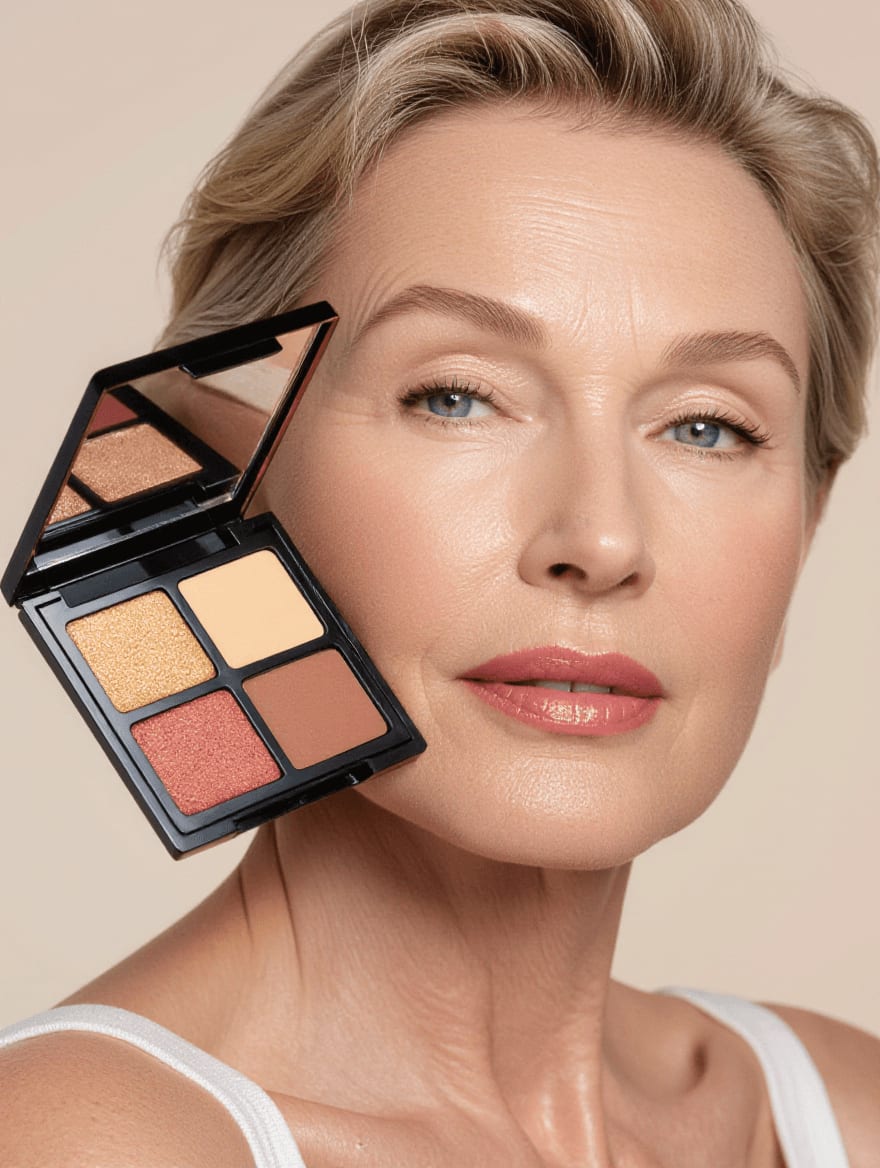
Natural-looking concealer for menopausal skin has specific formulation requirements that distinguish it from both heavy coverage and sheer tinted products. Look for creamy liquid or cream concealers with hydrating ingredients like hyaluronic acid, glycerin, or squalane. The texture should be thin enough to blend seamlessly into skin but pigmented enough to neutralize darkness in one layer. Avoid thick, mousse-like textures that sit on the surface, and skip watery formulas that separate and require multiple coats.
The finish designation should be 'natural,' 'satin,' or 'radiant'—never 'matte' or 'ultra-matte,' which look flat and artificial. Ingredients to prioritize include light-reflecting pigments (often listed as mica or titanium dioxide in small amounts) that diffuse light rather than creating obvious shimmer. Some of the most natural-looking concealers for mature skin contain skincare actives like peptides or caffeine, which treat the under-eye area while providing coverage. These hybrid formulas often perform better because they're designed for skin health first, coverage second. For vegan or clean beauty preferences, explore options in our guide to cruelty-free makeup for mature skin.
Shade Selection: Undertones Matter More Than Depth
The most common reason concealer looks unnatural is incorrect undertone selection, which matters far more than whether the shade is slightly lighter or darker. Menopausal skin often shifts undertones as circulation changes and pigmentation evolves—many women find their skin becomes more neutral or slightly yellow-toned even if they were previously cool-toned. Wrong undertones create an ashy, grayish cast (if concealer is too cool) or an orange, muddy appearance (if too warm) that never looks like real skin no matter how well blended.
Test concealer on your jawline in natural daylight, not on your hand or inner wrist—these areas have different undertones than your face. The concealer should disappear into your skin within seconds of blending. If you can still see a distinct line or color difference, the undertone is wrong. For dark circles, you need two products: a color corrector in peachy-orange tones for fair to medium skin or deeper orange-red for dark skin tones, applied first in a thin layer only where darkness exists. Then apply your exact-match concealer over the corrector. This corrector-then-match technique creates natural results that single-step brightening concealers cannot achieve on mature skin with genuine pigmentation issues.
Application Technique: Less Product, More Precision
Natural-looking application requires strategic placement rather than coating the entire under-eye area. After color correcting darkness, apply concealer only where you need coverage—typically an inverted triangle from inner corner to center under-eye, blending outward. Use your ring finger or a small damp beauty sponge, pressing product into skin with gentle tapping motions rather than rubbing or swiping. The concealer should be thinnest at the edges, feathering imperceptibly into bare skin with no visible line of demarcation.
The edge-case where standard advice fails: very textured or crepey under-eyes sometimes look more natural with no concealer directly on the crepey area, only on the inner corner and outer corner where skin is smoother. This creates the illusion of brightened eyes without emphasizing texture. The trade-off is accepting visible darkness in the center under-eye, but the overall effect appears more youthful and natural than heavy coverage over bad texture. Some women alternate strategies: full correction for special events, minimal strategic correction for daily wear. The goal isn't perfection—it's maintaining the appearance of real skin that happens to look well-rested. Natural-looking concealer on mature skin requires accepting that you're working with changed skin, not trying to recreate your 25-year-old under-eyes through makeup alone.