
Understanding Clean Beauty Claims for Menopausal Skin
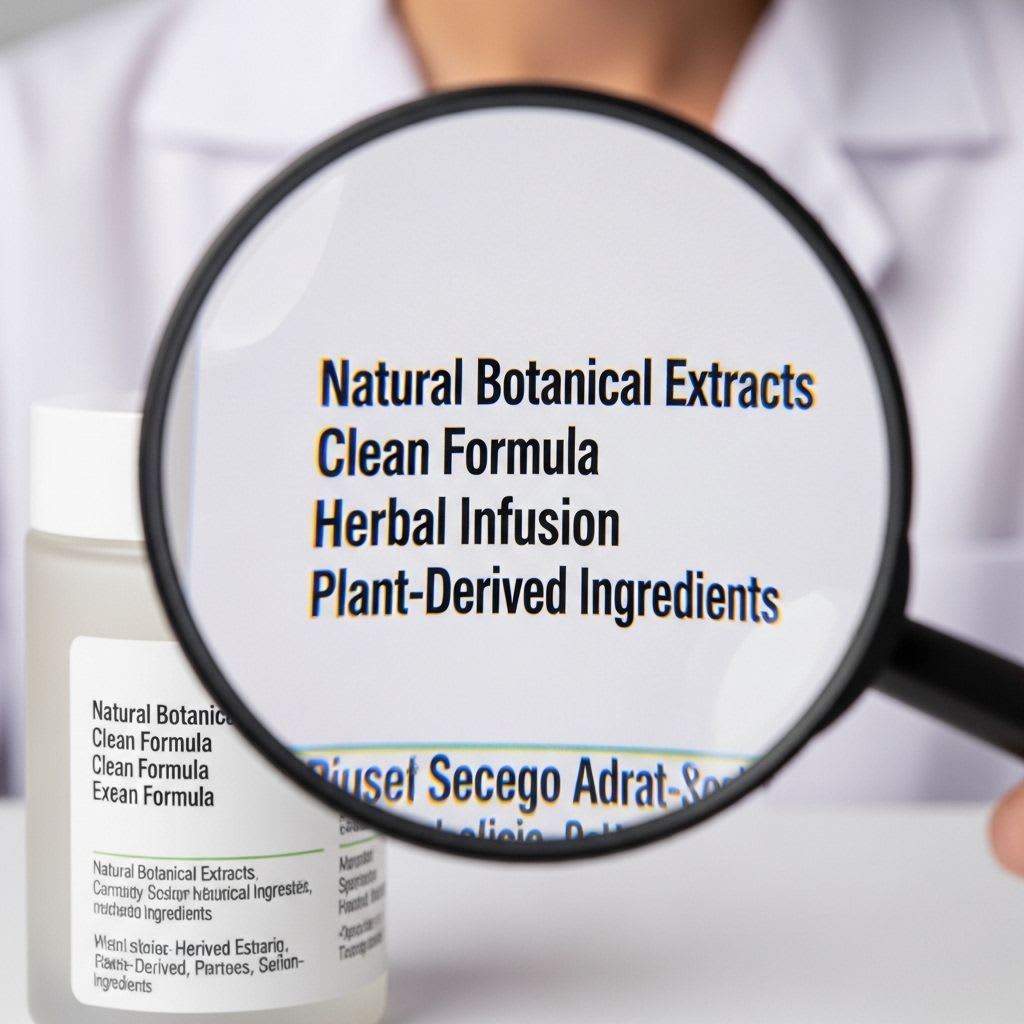
The terms 'natural,' 'non-toxic,' 'clean,' and 'chemical-free' have no legal definitions in cosmetics, allowing brands to use them freely regardless of actual formulation safety. A foundation can be labeled 'natural' while containing synthetic preservatives, or 'non-toxic' despite including ingredients banned in Europe. For menopausal skin specifically, this matters because compromised skin barrier function during hormonal transitions increases absorption of everything applied topically—both beneficial and potentially problematic ingredients penetrate more deeply when estrogen-depleted skin loses its protective integrity.
What 'clean foundation' should actually mean for mature skin: formulations free from known endocrine disruptors (parabens, certain UV filters), penetration enhancers that exploit weakened barriers, and volatile organic compounds that evaporate quickly from dehydrated skin causing further moisture loss. However, many clean beauty brands replace synthetic preservatives with essential oils that trigger more contact dermatitis in menopausal women than the synthetics they replaced. The evidence shows that 'natural' doesn't equal safer—poison ivy is natural, and many plant extracts in clean foundations cause reactions that synthetic alternatives never would.
The practical approach requires scrutinizing specific ingredient lists rather than trusting marketing terms. Look for foundations preserved with safe synthetics like phenoxyethanol rather than fragrant essential oils, those using plant-derived squalane for hydration rather than petroleum-based alternatives, and formulas with mineral UV filters instead of chemical ones. This selective reading of ingredients matters more than any 'clean' certification. For comprehensive guidance on non-toxic options, review our detailed non-toxic foundation guide.
Common Misconceptions About Chemical-Free Foundation
Myth: Chemical-Free Foundation Exists
The term 'chemical-free' is scientifically meaningless—water is a chemical (H₂O), as is every substance with molecular structure. When brands claim 'chemical-free foundation,' they typically mean free from synthetic chemicals, but this distinction has no toxicological relevance. Synthetic vitamin E (tocopherol) is molecularly identical to plant-derived vitamin E, while 'natural' arsenic remains deadly regardless of source. This misconception causes women to avoid genuinely beneficial synthetic ingredients like hyaluronic acid (which can be biosynthesized) that menopausal skin desperately needs for hydration.
What matters instead: ingredient safety profiles based on research, not origin. Some synthetic ingredients like dimethicone (silicone) are completely inert, don't penetrate skin, and provide beneficial slip that helps foundation glide over dry menopausal texture without dragging. Meanwhile, 'natural' fragrance from essential oils contains dozens of volatile compounds that commonly trigger contact allergies. The contradiction: clean beauty marketing convinces women to avoid safe synthetics while embracing allergenic natural extracts, often resulting in worse skin outcomes than conventional foundations would produce.
Myth: Organic Foundation Provides Better Coverage and Wear
Organic certification relates to agricultural practices for botanical ingredients—it says nothing about foundation performance, coverage, or longevity. In fact, truly organic foundations often wear poorly on menopausal skin because they lack the film-forming polymers and long-wear technologies that help makeup adhere to moisture-depleted, textured mature skin. Women frequently report organic foundations separating, oxidizing, or fading within 3-4 hours, requiring constant touch-ups that conventional long-wear formulas don't need.
The honest trade-off: you can have certified organic ingredients or you can have foundation that lasts 8-10 hours without touch-ups, but achieving both simultaneously is currently near-impossible with existing technology. For daily wear where you're near a mirror and can touch up, organic formulas work adequately. For long days without bathroom access or special occasions requiring photography, conventional or hybrid clean formulas with some synthetic staying power work better. This isn't failure—it's acknowledging current formulation limitations. Explore broader clean options in our clean makeup guide for mature skin.
Choosing Non-Toxic Formulations That Actually Work
Prioritize Ingredient Exclusions Over Certifications
Rather than seeking products with the most certifications, identify specific ingredients you want to avoid based on your concerns and skin reactions. For menopausal women, priority exclusions include endocrine disruptors (parabens, BHA/BHT, certain UV filters like oxybenzone), dehydrating alcohols (alcohol denat., isopropyl alcohol), and fragrance (both synthetic and natural essential oils). These specific exclusions address actual concerns for hormonal skin rather than vague 'toxin' fears.
Create a personal avoid-list based on your reactions and research rather than accepting brand-defined 'clean' standards that may exclude harmless ingredients while including problematic ones. For instance, some clean brands ban all silicones despite their safety and benefit for mature skin, while including coconut oil that causes breakouts in 40% of menopausal women experiencing hormonal acne. This personalized approach requires more initial effort but results in finding foundations that work for your specific skin rather than conforming to arbitrary clean beauty rules that may not serve you.
Hybrid Clean Formulas: The Practical Middle Ground
The most functional non-toxic foundations for menopausal skin combine clean base ingredients with select synthetic performance enhancers. These hybrid formulas use plant oils and botanical extracts for hydration and nutrition, mineral pigments for color, but incorporate safe synthetics like hyaluronic acid for moisture retention, dimethicone for smooth application, and modern preservatives for stability. This approach delivers the clean-ingredient benefits without performance compromises that make purely natural foundations frustrating to use.
Look for brands describing themselves as 'clean clinical' or 'green science' rather than '100% natural'—these typically use evidence-based formulation strategies that prioritize both safety and efficacy. The key distinction is whether the brand can explain why each ingredient is included and provide safety data, versus simply avoiding everything synthetic on principle. For mature skin that needs reliable performance from foundation while minimizing questionable ingredients, hybrid clean formulas currently represent the best available option until green chemistry advances allow purely natural formulas to match conventional performance.
When Clean Foundations Fail: The Sensitivity Paradox
The frustrating reality is that clean, natural foundations cause more allergic reactions in some women than conventional formulas. Essential oils used as natural preservatives and fragrance contain allergenic compounds like linalool, limonene, and geraniol that trigger contact dermatitis more frequently than synthetic preservatives like phenoxyethanol. Plant extracts for skin benefits introduce protein molecules that can provoke immune responses. Women with sensitive menopausal skin often find conventional fragrance-free, hypoallergenic foundations work better than natural alternatives marketed as gentler.
If you develop redness, itching, or irritation from clean foundations, the issue is likely specific botanical ingredients rather than your skin rejecting natural products generally. Try progressively simpler formulas—look for foundations with under 15 total ingredients, no essential oils or botanical extracts beyond those absolutely necessary for formulation, and synthetic rather than natural preservatives. This often resolves sensitivity issues while still avoiding concerning ingredients like parabens and phthalates. The honest limitation: there's no perfect foundation that works for everyone—even within clean beauty, extensive trial is required to identify what works for your specific skin chemistry and sensitivity profile.