
Why the Right Shoulder Specialist Changes Everything
Most women with frozen shoulder spend months seeing the wrong practitioners before reaching a specialist who can actually help. A GP can rule out serious pathology. A physiotherapist can guide exercise. But when conservative treatment stalls — or when the question is whether surgery is appropriate — you need an orthopaedic surgeon who specialises specifically in shoulder conditions, not one who divides their practice between hips, knees, and everything else.
This distinction matters because frozen shoulder, especially in menopausal women, is notoriously undertreated. Research increasingly links the condition to hormonal changes, yet many orthopaedic generalists are not up to date on this connection. A shoulder specialist who works with a high volume of perimenopausal patients will be far more likely to consider hormonal context, recommend appropriate investigations, and tailor the treatment plan accordingly. Perimenopause body aches and muscle and joint pain are an often-missed backdrop to shoulder conditions that the right specialist will factor in.
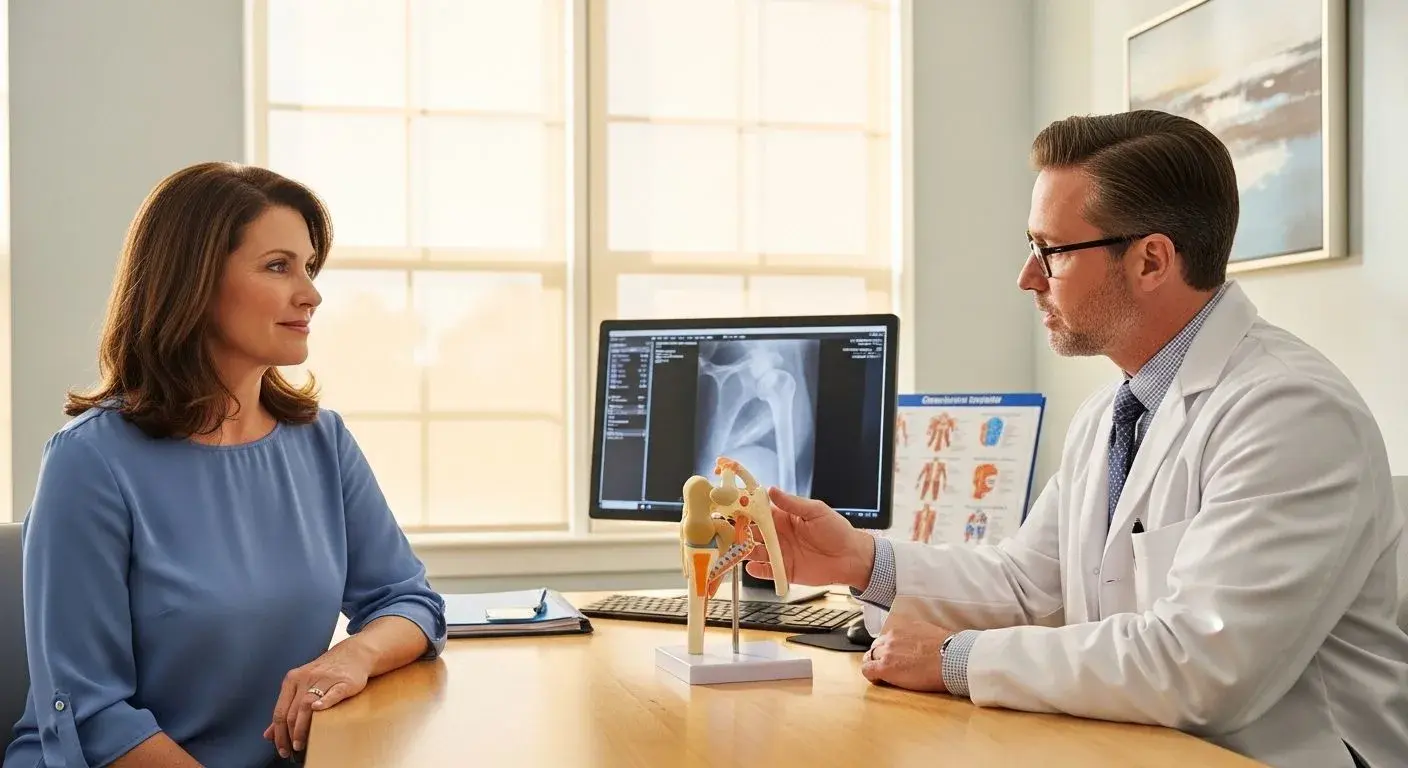
What Separates the Best Shoulder Specialists from the Rest
Not all orthopaedic surgeons who list shoulder work on their website are true shoulder specialists. Here is what to look for when selecting the right doctor.
- Fellowship training in shoulder and elbow surgery: This is a post-residency subspecialty. It signals a surgeon who has deliberately focused on the shoulder joint.
- High annual case volume: Surgeons who perform more than 100 shoulder procedures per year consistently show better outcomes in research. Ask directly when you call to book.
- Conservative-first approach: The best specialists try injection therapy, physiotherapy referral, and hydrodilatation before recommending surgery. Be wary of surgeons who jump quickly to the operating room.
- Familiarity with female-specific factors: Diabetes, thyroid conditions, and hormonal changes including perimenopause are all associated with frozen shoulder. A good specialist will ask about these at assessment.
One common misconception is that 'shoulder replacement near me' search results will surface the best surgeons. Location matters, but proximity alone is not a quality indicator. It is worth travelling further for a genuine sub-specialist in complex or recurrent cases.
When to Escalate From Physio to a Shoulder Surgeon
Most frozen shoulder cases — roughly 70 to 90 percent — resolve without surgery. However, certain situations warrant a surgical consultation sooner rather than later.
- No improvement after 6 months of consistent physiotherapy and at least one corticosteroid injection.
- Severe sleep disruption persisting beyond the acute phase.
- Complete inability to perform daily tasks such as dressing, driving, or grooming.
- Concern about a secondary cause such as a rotator cuff tear, calcific tendinopathy, or glenohumeral arthritis.
For menopausal women, hair thinning and joint pain often share the same hormonal root. Dermatologist-recommended hair growth products for women can help address one of those concerns while you focus on your shoulder recovery.
Frequently Asked Questions
What is the difference between an orthopedic surgeon and a shoulder specialist?
An orthopedic surgeon treats the entire musculoskeletal system, while a shoulder specialist has completed additional fellowship training focused specifically on shoulder and elbow conditions. For complex cases like advanced frozen shoulder or recurrent dislocations, a subspecialist typically delivers better outcomes.
Does frozen shoulder always need surgery?
No, most frozen shoulder cases resolve without surgery. Conservative treatments including physiotherapy, corticosteroid injections, and hydrodilatation resolve symptoms in 70 to 90 percent of patients. Surgery is considered only when 12 to 18 months of conservative management has failed.
How do I find the best shoulder doctor near me?
Ask your GP for a referral to an orthopaedic surgeon with fellowship training in shoulder surgery. You can also search databases on national orthopaedic association websites. Always ask about annual case volume and subspecialty focus before booking a private consultation.
Can menopause cause shoulder problems that need a specialist?
Yes, oestrogen loss during menopause increases the risk of adhesive capsulitis and other shoulder conditions. A shoulder specialist who understands this link will often coordinate with your gynaecologist or menopause specialist to address the hormonal component alongside physical treatment.
Sources
- Adhesive Capsulitis: Diagnosis and Management. pubmed.ncbi.nlm.nih.gov — PubMed / NIH
- Frozen Shoulder. mayoclinic.org — Mayo Clinic
- Shoulder Surgeon Fellowship Training Standards. healthline.com — Healthline