
What Dermatologists Actually Recommend (and Why It Is a Short List)
The hair growth product market is enormous. The list of products dermatologists will put their name behind is short. The gap between the two exists because most products on store shelves are formulated to thicken and coat existing hair, not to stimulate follicle activity or address the hormonal and physiological roots of shedding.
When dermatologists recommend hair growth products for women, they consistently cluster around a few categories:
- Topical minoxidil (2% or 5%): The only FDA-approved topical treatment for female pattern hair loss. Available over the counter. The 5% foam formulation is now considered acceptable for women and produces results slightly faster than 2%. It must be applied consistently — missing weeks resets progress. Dermatologists typically say: start here before anything else.
- Ketoconazole shampoo (1-2%): Originally an antifungal, ketoconazole has demonstrated a modest anti-androgenic effect at the scalp and appears to reduce DHT activity locally. The 1% version is available OTC; the 2% is prescription. Dermatologists often recommend it as an adjunct, not a standalone treatment. Used 2-3 times weekly alongside minoxidil, it supports the scalp environment.
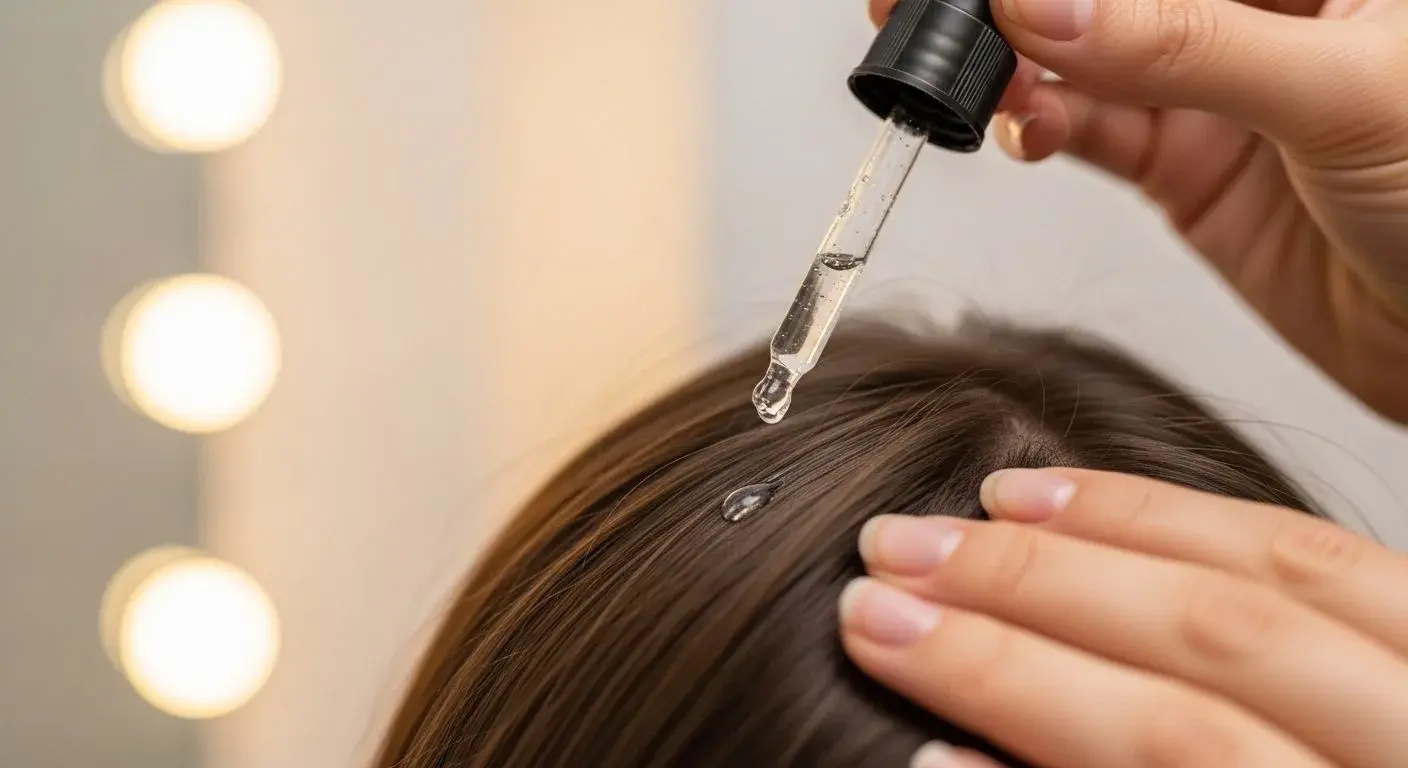
- Caffeine-based scalp serums: Several peer-reviewed studies support topical caffeine as a mild DHT inhibitor at the follicle level. Products like Alpecin and The Ordinary Multi-Peptide Hair Serum fall into this category. Evidence is not as strong as minoxidil but dermatologists increasingly view them as useful additions for mild thinning.
- Peptide and growth factor serums: Products containing copper peptides, GHK-Cu, or biomimetic peptides targeting follicle signaling pathways have grown in clinical interest. While large-scale trials are still limited, early evidence and consistent real-world reports make them a reasonable choice for women seeking non-pharmaceutical options.
Just as dermatologists approach menopausal skin holistically, hair care during this period works best as part of a broader routine. Our guide to the best skincare for menopausal skin covers how to address both simultaneously.
What Most Buyers Get Wrong When Choosing Hair Growth Products
Two widely shared beliefs steer women toward products that cannot help them — and away from the ones that can.
Misconception 1 — 'Biotin supplements grow hair.' Biotin (B7) will support hair growth only if you have a biotin deficiency, which is genuinely rare in women eating a varied diet. The majority of women taking biotin supplements have normal biotin levels, and multiple dermatology studies have failed to show meaningful growth benefits in non-deficient women. The reason biotin products proliferate is simple: they are inexpensive to manufacture, safe to take, and create no liability. If you have had labs done and your biotin is normal, redirecting that spend toward topical minoxidil will produce better results.
Misconception 2 — 'Natural or clean = more effective and safer for hair.' Rosemary oil is frequently cited as a natural alternative to minoxidil, based on a single 2015 study that showed comparable efficacy at 6 months. That research has not been consistently replicated at scale. Rosemary oil is a reasonable low-cost supportive option, but calling it equivalent to minoxidil overstates the evidence. For women with moderate to significant thinning, choosing rosemary oil over minoxidil because it feels 'cleaner' delays effective intervention.
One key trade-off to know: Minoxidil causes an initial shedding phase in weeks 2-8 of use. This is normal and expected — the follicle is cycling old hairs out to begin a new growth phase — but it causes many women to stop before they see results. Dermatologists universally report this as the most common reason treatment fails. Push through the shed; the outcome on the other side is worth it.
How to Build an Effective Hair Growth Routine: What to Buy and in What Order
Dermatologists advise against layering too many actives simultaneously when starting out. Here is a practical protocol for women building a product routine from scratch:
- Month 1-3: Start minoxidil only. Apply 5% foam once daily to dry scalp at the part and crown. Document your baseline with photos in consistent lighting. Do not add other actives yet — you need a clean baseline to evaluate what is working.
- Month 3 onward: Add a ketoconazole or caffeine shampoo. Use 2-3 times per week, leaving on the scalp for 1-2 minutes before rinsing. This is your maintenance layer, not your primary growth driver.
- Month 4-6: Evaluate and optionally add a peptide serum. If progress is slower than expected, a copper peptide or multi-peptide scalp serum can be applied on non-minoxidil days. Look for products containing GHK-Cu or Redensyl on the label.
- If plateau occurs: See a dermatologist. Prescription spironolactone or oral minoxidil (low-dose) may be appropriate. Oral minoxidil at 0.25-1mg daily is gaining rapid traction in dermatology clinics and is now considered a strong option for women who cannot tolerate topical application.
Hair and skin share the same hormonal environment during menopause. Products that support skin barrier recovery can complement a hair growth routine by reducing systemic inflammation, which affects follicle health. See our guide to the best skin creams for menopause for recommendations that work alongside your hair care protocol.