
Why Tinted Moisturizer Needs Different Primers Than Foundation
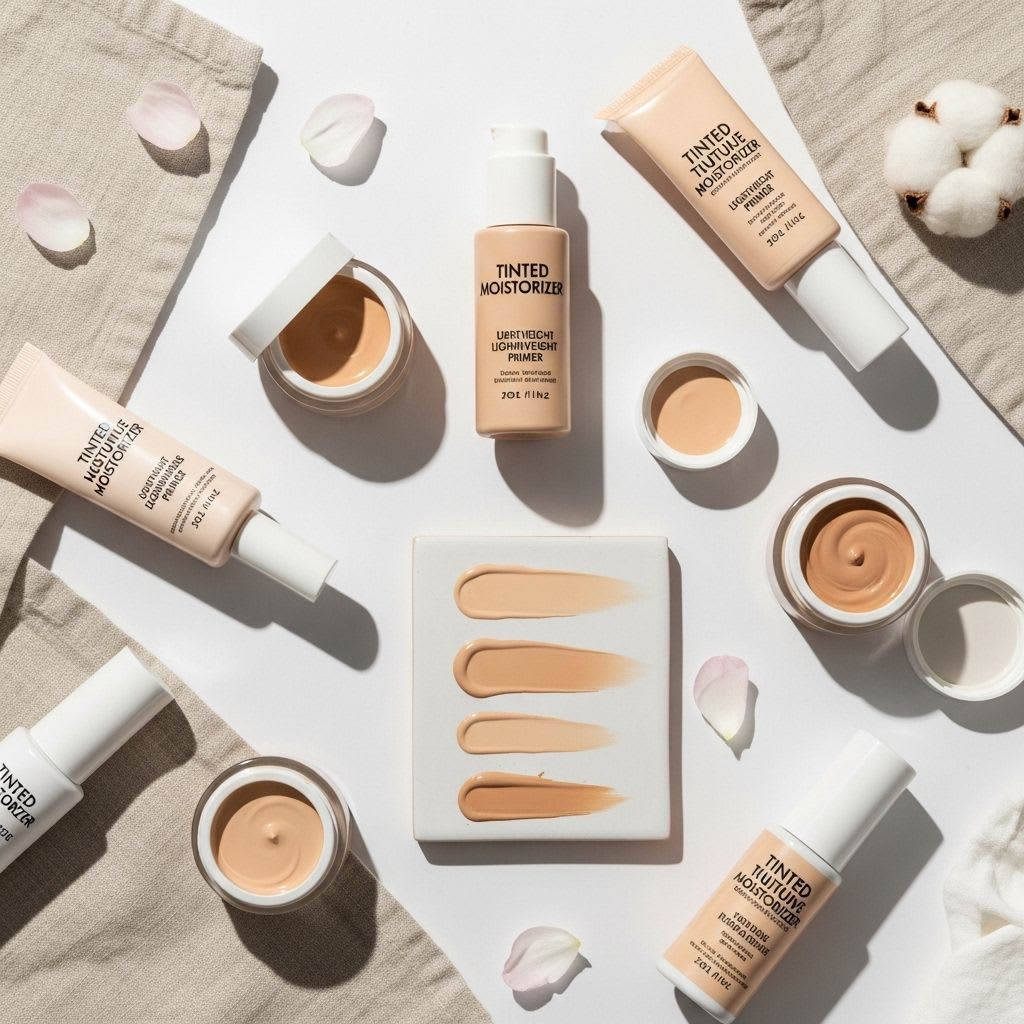
Tinted moisturizer behaves fundamentally differently than foundation because it contains higher water and emollient content with less pigment concentration. This makes it ideal for menopausal skin that needs hydration over heavy coverage, but creates compatibility challenges with standard primers. Heavy silicone-based primers that work beautifully under full-coverage foundation cause tinted moisturizer to separate, pill, or slide off within hours because the two formulas can't bond properly.
The core issue is ingredient polarity: most primers are silicone-dominant (oil-based), while tinted moisturizers are water-based emulsions. When you layer incompatible polarities, they repel each other like oil and vinegar, creating that characteristic balling-up effect when you try to blend tinted moisturizer over primer. What's worse, the lightweight nature of tinted moisturizer means it has less binding power than foundation, so it can't muscle through incompatible primers—it simply fails to adhere.
Many women abandon primer entirely when using tinted moisturizer, but this sacrifices longevity and pore-blurring benefits. The solution isn't eliminating primer but choosing formulas specifically designed for compatibility with lightweight, water-based coverage. This becomes especially critical during menopause when skin texture issues make proper product layering essential. For broader makeup guidance, see our complete menopause makeup guide.
What Works: Water-Based and Gel Primers
Gel-Based Hydrating Primers Match Tinted Moisturizer Chemistry
The most successful primers for tinted moisturizer have a gel or serum consistency rather than silky-smooth silicone textures. These water-based formulas contain humectants like hyaluronic acid, glycerin, or aloe that share chemical compatibility with tinted moisturizer's water phase. When you check ingredient lists, water should be the first ingredient, and you should see minimal or no dimethicone, cyclopentasiloxane, or other silicones in the first five ingredients.
These primers feel different on application—slightly tacky or gel-like rather than instantly smooth. This tackiness is actually beneficial, creating a gripping surface that helps lightweight tinted moisturizer adhere better and last longer. The hydration they provide also addresses menopausal skin's primary need, making them dual-purpose products that prep skin while improving tinted moisturizer performance. Apply to damp skin and allow 2-3 minutes of absorption before applying tinted moisturizer for optimal results.
Tinted Primers Can Replace Separate Primer and Tinted Moisturizer
For menopausal skin that struggles with product layering, tinted primers offer an elegant solution by combining both functions in one product. These hybrid formulas contain higher pigment concentration than standard primers but less than tinted moisturizers, providing sheer, buildable coverage while priming skin. They eliminate compatibility issues entirely because there's no layering of different formulas.
The trade-off: tinted primers typically offer less coverage than dedicated tinted moisturizers and less pore-blurring than dedicated primers. However, for minimal-makeup days or when skin texture makes layering problematic, they provide 80% of the benefits with none of the separation or pilling issues. Look for tinted primers with SPF 30+ so you're also covering sun protection, turning a three-step routine (primer, tinted moisturizer, sunscreen) into a single product. This simplification particularly appeals to women who find menopausal skin too unpredictable for complex routines.
Common Problems and Honest Limitations
When Pilling Happens Despite Using Compatible Products
Even with perfectly matched water-based formulas, pilling can occur if you haven't allowed sufficient absorption time between layers. Menopausal skin absorbs products more slowly than younger skin due to changes in barrier function and cell turnover. What used to require 30 seconds to absorb might now need 3-5 minutes, and rushing this timeline causes products to interact on the skin's surface rather than in successive layers.
The fix requires patience: apply primer, then complete other tasks (brush teeth, do hair) before applying tinted moisturizer. Additionally, use pressing motions rather than rubbing when applying tinted moisturizer over primer. Rubbing generates friction that causes incompletely absorbed primer to ball up, while pressing deposits product without disturbing the primer layer. If pilling persists despite timing adjustments, you're using too much primer—reduce to half a pea-size amount for the entire face. Learn more about pore management in our guide to primers for large pores.
The Coverage vs. Longevity Dilemma
Here's an honest limitation: primers that work best with tinted moisturizer are hydrating gel formulas, but these provide minimal longevity enhancement compared to silicone primers under foundation. You might achieve 4-6 hours of wear versus 8-10 hours with traditional primer-foundation combinations. This is the trade-off for choosing lightweight, skin-friendly coverage over heavy, long-wearing makeup.
If you need tinted moisturizer to last all day, consider these adaptations: set with a light dusting of translucent powder only on areas that fade first (typically around the nose and chin), use setting spray rather than powder everywhere else, or plan for one mid-day touch-up rather than expecting 12-hour wear. The reality is that tinted moisturizer's lightweight nature—the quality that makes it ideal for menopausal skin—inherently means shorter wear time than heavier coverage. Accepting this trade-off rather than fighting it leads to better results and less frustration.
When Your Moisturizer Is Already Doing Primer's Job
A misconception beginners have: every makeup routine requires separate moisturizer, primer, and base products. For menopausal skin using tinted moisturizer, this often creates unnecessary layers that emphasize texture. If you're using a rich, hydrating moisturizer and your skin looks plump and smooth 5 minutes after application, adding primer before tinted moisturizer may be redundant.
Test this: apply your regular moisturizer, wait 5 minutes, then apply tinted moisturizer directly. If it glides on smoothly, adheres well, and lasts 4+ hours without separation, you don't need primer at all—your moisturizer is providing the grip and hydration that primer would add. Only add primer if you experience specific problems: tinted moisturizer sliding off, pores remaining visible, or coverage fading within 2 hours. This minimalist approach often works better on menopausal skin than complex layering, challenging the beauty industry assumption that more products equal better results.